
Granite Construction Secures $50M Contract for California Dam Spillway Replacement
Granite Construction has been awarded a roughly $50 million contract to replace the spillway at Pacific Gas and Electric's Tiger Creek Regulator Dam in Amador County, California. The project, which began in May and is slated for completion in May 2028, aims to enhance dam safety, operational reliability, and regulatory compliance. Granite previously completed a $600,000 preconstruction contract for the facility in 2024.
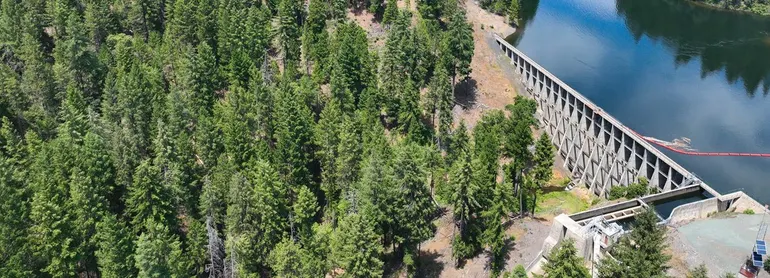
Granite Construction has commenced work on a significant infrastructure project in its home region: replacing an aging spillway at a dam owned by Pacific Gas and Electric (PG&E). The Watsonville, California-based contractor announced on July 22 that it won a contract valued at approximately $50 million to replace the spillway at PG&E's Tiger Creek Regulator Dam, located in Amador County, California. The project site, near Pioneer, California, sits in the heart of the state's Gold Country.
Project Scope and Background
The Tiger Creek Regulator Dam, a slab and buttress structure originally constructed in 1931, is part of PG&E's Mokelumne River Hydroelectric Project. The replacement initiative aims to enhance long-term dam safety, improve operational reliability, and ensure compliance with updated regulatory and engineering standards.
Granite's scope of work includes building a new spillway crest structure and chute, installing a temporary cofferdam to enable dry-condition construction, performing excavation and rock anchoring, and placing mass and structural concrete. The firm will also decommission the existing spillway and construct a new permanent access road to support ongoing maintenance of the new structure.
This award follows a $600,000 preconstruction contract that Granite completed for the facility in 2024, which supported early planning and constructibility assessments.
Company Expertise and Regional Context
Bob Mihal, Granite's area manager, highlighted the company's track record in the region: "We have a long history of building critical dam projects for many clients in Northern California including the Folsom Dam Auxiliary Spillway Control Structure, Mormon Island Auxiliary Dam, Lost Creek Dam, and Log Pond Dam. Our team brings deep technical expertise and a collaborative approach, and we look forward to serving PG&E and strengthening our partnership on critical infrastructure that supports the region's communities."
California's Sierra Nevada foothills are dotted with dams that provide both electricity and water storage throughout the state, and maintenance of these structures has received increased scrutiny over the past decade. In February 2017, the main spillway of Oroville Dam—the nation's tallest at 770 feet—developed a gaping hole, and water nearly overtopped the structure's emergency earthen spillway. Repair costs for that incident exceeded $1 billion.
Nationally, there are 88,616 deficient non-federal dams that would cost $158 billion to rehabilitate, according to a 2023 report from the Association of State Dam Safety Officials.
Granite's work on the Tiger Creek Regulator Dam began in May, with completion slated for May 2028.