
NYC DDC Commissioner on Alternative Delivery Models and Compressed Schedule Strategies
The New York City Department of Design and Construction (DDC) manages a $34 billion project portfolio. New Commissioner Paul Ochoa plans to expand the use of alternative delivery methods like design-build and leverage the extension of the joint bidding law to accelerate project delivery. This article is a summary of the exclusive interview.
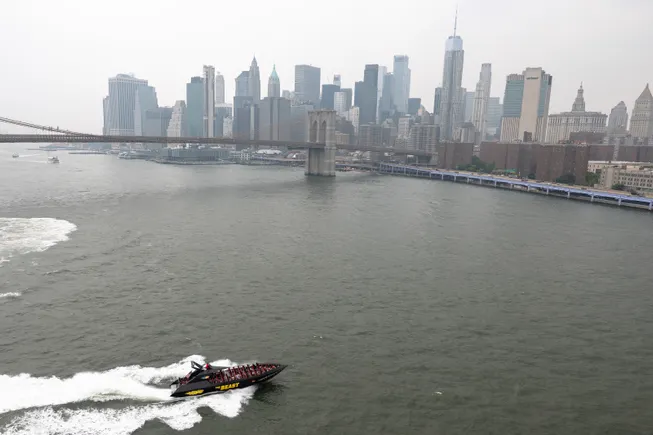
New York City is known for its constant construction, and now the Big Apple is working to shorten its project delivery timelines.
The New York City Department of Design and Construction (DDC) manages a $34 billion portfolio of construction projects across the five boroughs. Earlier this year, Mayor Zohran Mamdani appointed Paul Ochoa as DDC Commissioner, with the goal of delivering these projects more efficiently.
To achieve this, Ochoa plans to expand the use of design-build-led projects while exploring other alternative delivery methods. He told Construction Dive that the extension of New York City's Joint Bidding law, which allows the city to bundle public infrastructure projects into a single contract, could also serve as a boost.
According to the mayor's announcement, Ochoa joined the New York City Department of Transportation (DOT) in 2022 as Executive Deputy Commissioner. Previously, he served as Chief Strategy Officer at the Department of Sanitation and as Director of City Legislative Affairs in the Mayor's Office.
The following is Ochoa's conversation with Construction Dive about accelerating project delivery, design-build, and the challenges facing New York City's public construction projects.
Editor's note: The following has been edited for clarity and brevity.
Q: You've been in office for several months now. What's the biggest takeaway so far?
Paul Ochoa:DDC has a dedicated and professional team of engineers, designers, and project managers who do important work.
As Commissioner, I know I need to help with administrative matters, including recruitment and retention, timely promotions, and overall morale. Over the past few months, I've been on a 'listening tour.'

I've been meeting one-on-one with staff and visiting as many construction sites as possible. During these visits, I speak not only with our teams but also with elected officials and sponsor agencies to understand what's working and what can be improved.
I also welcome industry partners to join the conversation on how to speed up projects. Ultimately, our goal is to deliver high-quality projects to New Yorkers faster.
Q: Project delivery speed is a major focus. Where do you see the biggest opportunities for improvement?
Paul Ochoa:Our mission is to deliver projects for more than 20 city agencies and three library systems, each with its own unique challenges. My goal is to help DDC manage external factors that have slowed us down in the past, while empowering our passionate and talented engineers, architects, and project managers to continue their important work.
This includes strengthening collaboration with our sponsors and oversight agencies. We should all focus on returning health centers, libraries, recreation centers, plazas, or streets to the communities we serve as quickly as possible.
Q: How do you see design-build and other alternative delivery methods changing DDC's project delivery model?
Paul Ochoa:DDC has proven the success of the design-build delivery model on several major projects.
We've also used the construction management-build (CM-build) model in emergency situations, and we're excited about several CM-build projects currently in active procurement.
Alternative delivery is something the private sector has long embraced, and if we want to focus on project delivery, it's crucial that DDC and other agencies have multiple delivery tools at their disposal.
Not every project fits the same model, but we should be able to choose the approach we think is best for the city. I look forward to continuing the conversation on alternative delivery at the city and state levels, as well as with our design and construction industry partners.
Q: Which projects or initiatives are you most looking forward to?
Paul Ochoa:DDC manages a $34 billion capital program that will improve the city's public buildings and streets.
This includes library renovations, critical infrastructure such as the East Side Coastal Resiliency and Brooklyn Bridge-Montgomery Coastal Resilience projects, as well as modern recreation centers coming to communities in the Bronx and Queens.
I'm especially looking forward to pedestrian-friendly projects that incorporate street safety features, such as pedestrian islands at large intersections, sidewalk extensions, and spaces where people can sit and rest, as well as infrastructure that improves the cycling experience and provides faster, smoother bus service for New Yorkers.
Q: What other trends do you think are worth watching?
Paul Ochoa:To address stronger storms, busier streets, and a growing population, we must accelerate the pace of design and construction. We're taking an all-hands-on-deck approach, but it requires collaboration at all levels of government.
This also includes pushing for a long-term extension of the important Joint Bidding law in Albany, which allows us to more efficiently manage municipal work and private utility disruptions under a single contract.