
Opinion
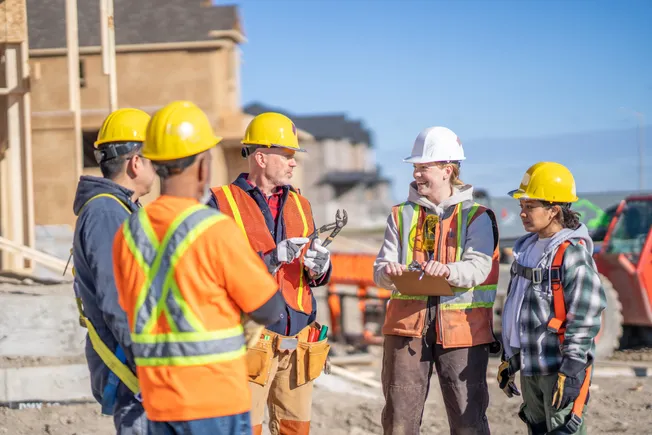
Let’s make Labor Day 2026 all about employee ownership
Ahead of Labor Day 2026, Swinerton's national retirement plan manager Lana Smith writes about her 28 years of experience with employee ownership, noting that there are fewer than 6,500 ESOPs nationwide, with the construction industry accounting for nearly one-fifth. She believes employee ownership enhances company quality and employee well-being, and calls for expanding ESOP coverage.
We need to start tracking buildings like Carfax tracks vehicle histories
By analyzing a steel column buckling incident during the renovation of a 37-story building in Manhattan, this article points out the systemic deficiencies in document continuity and asset identity tracking within the construction industry. The author proposes that buildings need a persistent identity identifier similar to vehicle identification numbers and Carfax reports, to connect records, inspections, permits, and renovation information throughout their entire lifecycle, avoiding historical discontinuities caused by personnel turnover or system changes.

Builders need to be prepared for uneven state, federal DBE rules
On July 28, a federal court in Texas ruled that race-based provisions in the minority and small business contracting programs of the City of Houston and the Midtown Management District are unconstitutional and permanently enjoined their enforcement. The ruling, based on the Supreme Court's 2023 logic in education affirmative action cases, may trigger more challenges to state and local MWBE programs. Meanwhile, federal DBE programs have eliminated race and gender presumptions through an interim final rule, while states such as New York and Illinois are still expanding or maintaining their own MWBE programs. Contractors face conflicting compliance requirements in mixed-funding projects and need to adopt prudent strategies.

FEMA and NOAA cuts leave builders out in the cold during hurricane season
With budget cuts at FEMA and NOAA, architecture, engineering, and construction firms face reduced federal support during the 2026 hurricane season. This article analyzes key funding changes, impacts on the industry, and proposes six recommendations to enhance operational resilience.
Construction’s warning lights are blinking. Most firms aren’t looking at the dashboard.
Economic warning signals in the construction industry are flashing frequently, but most companies turn a blind eye to the dangerous signs in their own financial indicators. This article, written by Chris Coleman, head of the construction services group at RubinBrown accounting firm, proposes specific suggestions such as establishing a monthly settlement process, tracking project losses, monitoring unbilled work and change orders, and being alert to abnormal bidding, to help companies respond to market downturns in advance.

AI best fits contractors when it unifies the language within firms
The construction industry has long faced operational fragmentation, and introducing AI without a unified data foundation will only create more chaos. Palantir deployment expert Jesse Velay-Vitow and technical lead Jonas Lang write that the solution lies in establishing an enterprise-level ontology—a digital model that reflects how the company actually operates. This model must cover the entire company, adapt to blue-collar workers, augment rather than replace human labor, and reintegrate business functions. Through collaborations with partners such as McCarthy Building Cos., Thomas Cavanagh, and Lennar, they summarize the specific application value of ontology in scenarios such as time cards, equipment management, contracts, and procurement.

Inaccurate time records are a huge contractor compliance blind spot
Sales interviews with over 180 mid-sized construction contractors show that nearly half focus on attendance efficiency, but only 4% are aware of compliance risks. The U.S. Department of Labor recovered over $259 million in back wages in fiscal year 2025, with a single enforcement action in the construction industry involving over 3,000 investigations. Experts point out that the evidentiary power of time records in legal disputes is far more significant than most contractors imagine.

Changes to Pell Grants are a win for America’s workforce
As the U.S. approaches its 250th anniversary, Pell Grant eligibility expands to trade and technical programs, addressing skilled trades shortages. Chris Nelson of Stanley Black & Decker discusses the impact on workforce development and economic leadership.
Hazard prevention isn’t enough. Construction must automate and eliminate danger.
On May 18, 2026, two construction workers in Chester County, Pennsylvania, died when a truck entered a work zone. In 2024, the U.S. still recorded 850 work-zone fatalities. Brian Kleiner, Dean of the Myers-Lawson School of Construction at Virginia Tech, writes that the industry should move beyond personal protection toward systematic hazard elimination and automation to achieve the goal of zero fatalities.
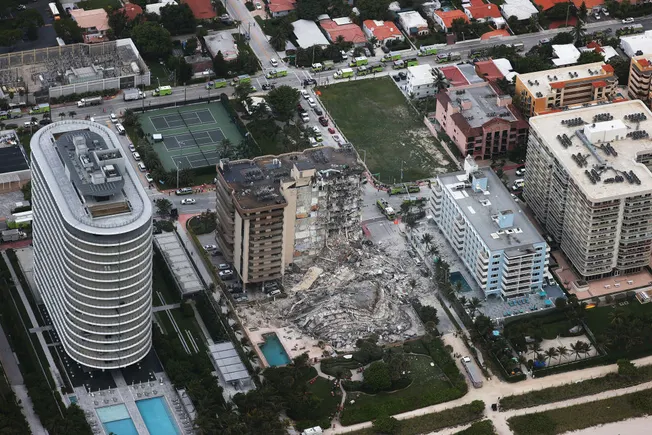
Periodic inspections alone can no longer keep aging buildings safe
On the fifth anniversary of the collapse of the Champlain Towers South, Florida structural engineer Greg Batista writes that periodic inspections alone can no longer address the risks of building aging. As technology costs decline and regulations evolve, continuous structural monitoring is becoming the industry's new standard, helping engineers shift from reactive to proactive prevention.