
Potential Changes in US-Mexico Border Wall Construction: If the Project Is Halted, Can Contractors' 'Blacklist' Risk Be Resolved?
As the US election approaches, if Biden wins and fulfills his promise to stop border wall construction, will contractors who participated in the federal project still face obstacles in state and local public works bidding due to political stances? This article combines city bans, industry organization protests, and legal expert perspectives to analyze the legal boundaries of 'blacklist' policies and practical paths for contractors to repair their reputations.
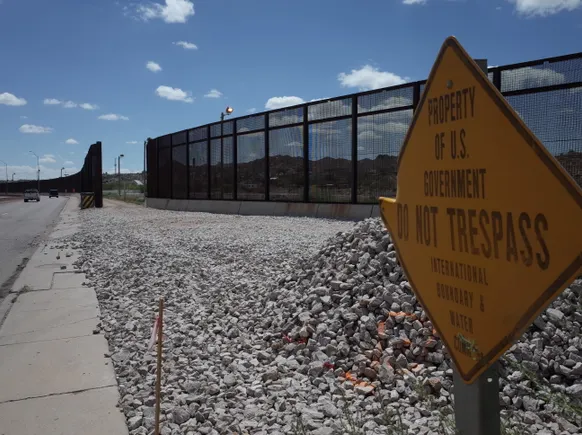
This story is the second in a two-part series examining the potential ripple effects of Biden's victory on contractors and subcontractors involved in the construction of the U.S.-Mexico border wall.Click here to read the first part。
When the Trump administration began planning replacement and new construction projects for the U.S.-Mexico border wall, political opposition emerged immediately. In fact, resistance to the border wall project had already appeared during Donald Trump's 2016 presidential campaign—when he proposed the plan and insisted that the U.S. would force Mexico to pay for it.
Once the federal government began accepting bids for the project, multiple state and local agencies issued stern warnings to contractors: if they participated in border wall construction, they would be barred from taking on public projects within their jurisdictions. Some agencies even promised to exclude companies that merely bid on the controversial project.
San Francisco was among the first cities to pledge it would no longer consider working with border wall contractors and suppliers. Other city officials, such as those inLos Angeles, Austin, Texas, Oakland, California, and Tucson, Arizona, also joined the chorus, stating that the border wall project was divisive and would harm both immigrant and non-immigrant residents.
"In Austin, we build bridges, not walls," said Mayor Steve Adler when the city council passed the relevant ordinance in 2018.
In response, construction employer organizations such as the Associated General Contractors of America called on the office of the U.S. Attorney Generalto take action against agenciesthat sought to prevent contractors from bidding on public projects solely because of their involvement in the border wall project.
The Campaign Promise Variable
Two years later, President Trump is seeking re-election having overseen the completion of 370 miles of barrier wall, with plans to build hundreds more,according to White House data. However, if Democratic presidential nominee Joe Biden wins the election, he has vowed not to build any additional border wall.
In that scenario, do contractors or other businesses that provided services for the border wall still need to worry about being blacklisted from state and local projects?
Jordan Howard, director of the Associated General Contractors of America's federal and heavy construction division, noted that if contractors are merely required to disclose their participation for transparency purposes, it is unlikely to create legal problems, as such information is already public.
Scott Heimberg, a lawyer at Akin Gump Strauss Hauer & Feld LLP in Washington, D.C., said that at the federal level, refusing to allow a contractor to participate in federal projects must be based on reasonable grounds. Nevertheless, contracting officers still have some discretion in determining what constitutes a "responsible bidder"; if a contractor believes there is unfairness in the procurement process, it can challenge that decision.
He added that at the state and local level, whether a contractor can be excluded from a specific project due to participation in another project depends on each jurisdiction's procurement regulations. But even state and local governments, if they want to prevent a contractor from bidding, would likely need to provide an acceptable reason.
Looking Ahead and Reputational Considerations
Regarding the blacklisting of contractors who participated in legal federal projects, Howard said the Associated General Contractors believes such actions are unconstitutional. The organization has not yet heard of any contractor being formally blacklisted at the state or local level for participating in the border wall project.
But Brian Turmail, vice president of public affairs and strategic initiatives at the Associated General Contractors, pointed out that to some extent, these "name-and-shame" policies have indeed caused substantial harm to contractors—they may have discouraged some companies from bidding on the border wall project from the outset.
Regarding the potential impact of the public attention generated by these cities on the reputation of border wall contractors, Brian Fraley, owner of Fraley Construction Marketing, believes public attention is often fleeting.
"Time does indeed dull the sting of negative publicity," he said.
But that doesn't mean the issue won't be reignited in the future, Fraley cautioned—especially when contractors are politically active, as opponents of the border wall could use it against them in campaigns.
"Contractors should be ready to proactively fight back when facing smear campaigns," he said. "An even better strategy is to continuously invest in public relations and build up reputational capital, so that when 'arrows' come flying, you already have a thick enough 'shield.'"