
Does Climate Change Constitute a Worker Safety Issue?
The remnants of Hurricane Ida caused widespread flooding across the northeastern United States, highlighting the direct threat of extreme weather to workers. Although most corporate leaders have not prioritized climate change, regulations and practices have already pushed employers to focus on issues such as heat illness prevention and emergency planning. This article combines case studies and expert opinions to analyze how climate change is reshaping worker safety strategies.
Earlier this month, the remnants of Hurricane Ida hit parts of the northeastern United States, and social media posts documented the impact of the storm system. Particularly striking were videos from cities like New York, where heavy rain triggered flooding that caused water to pour into some subway stations.
What the hell @NYCTSubway @MTA #newyork #newyorkcity pic.twitter.com/HissEixp9s
— ICONI3 (@ICONI3) September 2, 2021
In an interview with local TV station WNYW, Janno Lieber, acting chairman and CEO of the Metropolitan Transportation Authority, described how the storm repeatedly triggered flooding, overwhelmed street drainage systems, and forced the closure of several subway lines. Lieber said: "We all know that the New York subway system is not a submarine. In many cases, it's actually—in Brooklyn, where I live, the subway is an open cut on the ground. So we are indeed vulnerable to weather and water, especially when, like last night, the drainage and sewage systems at the surface and street level are overwhelmed."
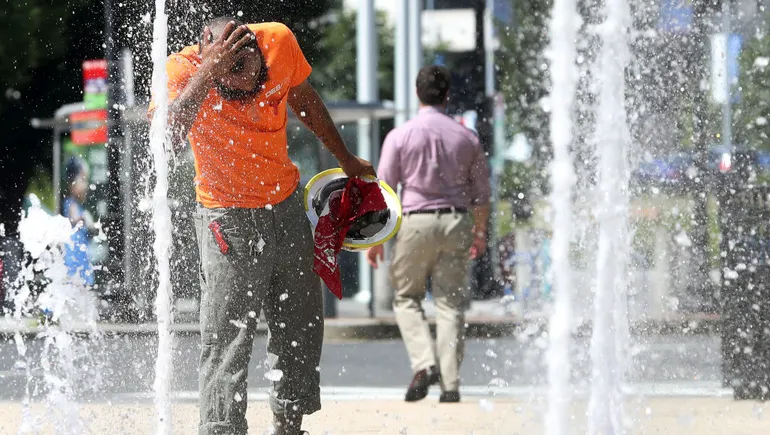
Whether it's sudden heavy rain or heat indices exceeding 100 degrees Fahrenheit, over the past year, cities and communities across the United States have experienced a variety of extreme weather events. The 2021 report from the Intergovernmental Panel on Climate Change states that global warming will intensify extremely wet and extremely dry climate events and seasons this century, such as heat waves, heavy precipitation, and droughts in some regions.
For employers, the key is that these weather events can directly affect workers. According to news outlet NJ.com, the remnants of Ida disrupted rail, bus, and light rail operations in many parts of the Northeast during the midweek evening rush hour, including in New Jersey. In Philadelphia, flooding submerged the Vine Street Expressway—a major section of Interstate 676 running through the city center. Local NPR affiliate WHYY reported that transportation departments spent days pumping "thousands of gallons of water" from the area before the road could reopen.

However, despite the likelihood that extreme weather events will become more severe and frequent in the future, climate change does not appear to be a significant item on the list of future concerns for organizational leadership. In an August survey of 333 in-house corporate legal and business leaders, the law firm Seyfarth Shaw found that only 14% of respondents listed climate change as one of the top three "macro trends" expected to impact their business landscape over the next 5 to 10 years. This is far lower than the 55% who listed advanced technology and automation as important trends, and the 47% who listed labor market evolution and diversity, equity, and inclusion.
Patrick Joyce, a labor and employment attorney at Seyfarth Shaw, said that whether or not employers are aware of its impact, climate change is already an issue they are thinking about. This is partly due to regulatory considerations. For example, several states on the U.S. West Coast have implemented heat illness prevention requirements, some of which were newly introduced in 2021. In Oregon, the state's Occupational Safety and Health Administration issued two emergency temporary rules in July to protect workers from heat-related illness, just as the region was experiencing record-breaking heat waves.
Specifically, Oregon employers were required to set up one or more shaded areas; provide adequate and free drinking water; and ensure that when the heat index reaches or exceeds 80 degrees Fahrenheit, all employees have received training on topics such as personal risk factors for heat illness. Additional requirements apply when the heat index exceeds 90 degrees Fahrenheit.
Joyce, based in Seattle, personally experienced the 2021 heat wave. On June 28, the city recorded its all-time highest temperature of 108 degrees Fahrenheit. Joyce said: "It was truly incredible and unprecedented. Clients began to focus not only on outdoor workers but also on various facilities where indoor heat becomes a problem."

The heat wave also disrupted plans for some employees to return to physical offices due to the pandemic. Joyce noted that across the Pacific Northwest, employers changed these plans during the heat wave, but in cities like Seattle, sending employees home to work remotely may not have truly benefited those lacking protections such as air conditioning at home. Joyce added that while employers in the region may be familiar with summer requirements for providing drinking water, indoor heat is a relatively new challenge, especially for facilities lacking air conditioning technology.
However, for other forms of extreme weather, such as heavy rainfall events, the pandemic may have actually helped employers with emergency preparedness, said William J. Conaty Bradford Bell, professor of strategic human resources at Cornell University's School of Industrial and Labor Relations: "Given the events of the past year and a half, many employers are better prepared to handle such situations, partly due to the shift to remote work. But more broadly, even before the pandemic, organizations were adopting remote work, even on a part-time basis, to be able to respond when such events occur and offices close."
This advantage does not alleviate the reality that many workers, including those at highest risk when extreme weather strikes, do not have the option to work remotely. According to a 2014 article by researchers at the U.S. National Institute for Occupational Safety and Health, climate change could lead to increased occupational hazards and exposures, as well as new forms of these risks, especially for outdoor workers, emergency responders, commercial fishermen, agricultural workers, and various other laborers.
According to Bell, employers that rely on on-site operations can take steps to protect employees. In the most extreme cases, employers in industries such as manufacturing may temporarily shut down. Business continuity planning can also allow managers and employees to triage critical situations, but this requires employers to focus on well-being and safety in training. Bell continued: "They need to do scenario planning. When the next big crisis hits, what do we do?"
Some businesses have gained a reputation for emergency preparedness in natural disasters. The regional restaurant chain Waffle House has even been used as a risk management case study by federal emergency management coordinators. In 2018, a former Waffle House executive spoke to HR Dive about the company's use of "jump teams" and other logistical tricks to reopen quickly even under local mandatory evacuations.
Although Joyce said that more clients are asking about emergency response planning, he noted that many employers do not have plans in place to address the hazards of extreme weather events. He added: "This is something employers should develop and think about so that when these situations arise, they can quickly pivot to these plans and take steps to communicate with employees."

On the issue of extreme heat, employers received a key update from the White House last week: the White House announced plans for OSHA to develop a federal standard on heat-related illness in the workplace. According to the announcement, a notice of proposed rulemaking will be published next month, followed by a public comment period. Joyce said regulators have "talked for years" about creating a rule, but federal OSHA currently lacks a heat regulation. He added that the upcoming regulation may outline points the agency uses to determine whether employers might violate the General Duty Clause of the Occupational Safety and Health Act regarding protecting workers from heat-related illness.
Joyce said employers can address heat-related illness by developing policies and procedures, including ensuring access to water and rest, and providing training so that employees and managers can recognize signs of heat stress and illness. For employers in industries like construction, such preparedness may already be common. But in any case, employers need to ensure that communication about policies reaches an appropriate level, he added.
Bell said that addressing climate change also requires a cross-functional approach; "for organizations that do remote work well, it's not just an HR matter. It also involves real estate, IT, and various other resources." Joyce said that although employers may not realize the extent to which their organizations are actually preparing for and responding to climate change, HR teams need to be aware that this issue is likely to persist into the future. He added: "It's not going away. Unfortunately, it's going to get worse."