
What is the COVID Risk in Construction? The Divergence Between Data and On-Site Experience
The COVID-19 infection risk in the U.S. construction industry presents vastly different pictures depending on data sources and statistical methods: some state data show relatively high proportions of infections and deaths in construction, while contractors generally report no cluster transmissions on sites. The absence of nationwide tracking data and inconsistent state-level statistical approaches make it difficult to determine the industry's true risk.
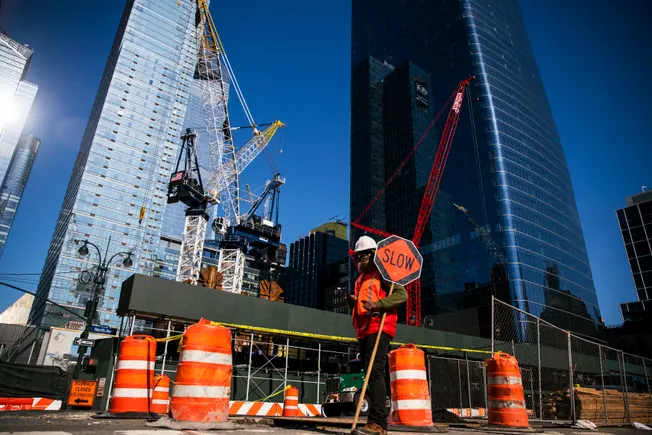
How high is the risk of construction workers in the United States contracting COVID-19 at work? The answer depends on who you ask, where you look, and the type of data available—or even whether data is available at all.
There has been a persistent contradiction between existing COVID-19 data for the construction industry and the experiences reported by contractors on job sites.
For example, a recent report from the Colorado Department of Public Health and Environment showed that during the first year of the pandemic, more construction workers in the state died from COVID-19 than in any other industry. Construction accounted for 12% of all working-age deaths in the state, while construction employment made up only 6.6% of total employment in Colorado.
Other data is equally noteworthy: construction workers in Texas were five times more likely to be hospitalized for COVID-19 than workers in other industries; construction ranked second in COVID-19 cases among all industries studied in Utah; and in Washington state, construction ranked sixth in total outbreaks.
A different perspective from the job site
However, these results seem to contradict reports from contractors and industry organizations that no virus transmission occurred on job sites. During a webinar last week by the Associated General Contractors of America (AGC), Chris Carson, president of Carson-Mitchell, based in Springfield, Missouri, said that the only delay his job sites experienced was not due to an outbreak, but because a site supervisor contracted the virus. With the supervisor out sick, construction could not proceed as planned, and the company lost weeks of time.
Carson said, "As for job site shutdowns themselves, no, we have never experienced that since the pandemic began."
Brett Strassel, an executive at Hedrick Brothers Construction, a general contracting company based in West Palm Beach, Florida, said he had not heard of any job site closing due to worker infections.
Strassel said, "The only cases I've heard of were decisions made by owners, and that was in the early spring of 2020 at the start of the pandemic. But as far as I know, in our area, no projects—whether for our friends or competitors—have had to shut down due to COVID-related medical issues."
National data gap
Admittedly, the lack of a timely, unified national data tracking system for workplace outbreaks makes it difficult, or even impossible, to track actual COVID-19 cases on construction sites.
Although contractors are required to submit OSHA 300 log reports for workplace COVID-19 cases, the agency does not release cumulative data from these reports until November of the following year—meaning 2020 data still requires a two-month wait. (OSHA has set up a website to track COVID-19 deaths inspected by the agency, but it does not break down results by industry.)
Another challenge is that other available data, even within the same type of dataset, can tell conflicting stories.
For example, according to a report from the National Governors Association, 18 states published specific outbreak data on their websites beyond long-term care facilities. Of these, 8 states broke down data to the industry level, including construction.
But even among these states, the results are inconclusive.
Take Michigan, for example, which tracks COVID-19 clusters in construction and manufacturing together; this category accounted for the most ongoing clusters outside long-term care facilities, with 39 out of 250 total cases.
However, in Illinois, which tracks construction and manufacturing separately, the numbers show a significant difference: since July 1, the state has tracked only 10 outbreaks in construction, while factories and manufacturing had 205, the highest among all industries in the state.
In Louisiana's cumulative data, construction accounted for 12 of the state's 1,347 outbreaks, less than 1%, far below the 184 clusters reported at industrial sites.
In North Carolina, 20 of 1,969 clusters involved construction and contractors, just 1%. This is higher than agriculture's 10 and food processing's 11, but far lower than meat and poultry processing's 47, and manufacturing's 124—the latter accounting for 6.2% of all outbreaks.
In Massachusetts, industrial sites, including construction, non-food manufacturing, warehouses, and distribution centers, accounted for only 9 of over 7,100 clusters, a negligible proportion.
In Vermont, the construction and carpentry industries experienced 6 to 9 outbreaks during the first year of the pandemic, far lower than manufacturing's 22.
In Washington state, similar to Colorado, construction accounted for 8% of all workplace COVID-19 cases but only about 6% of the workforce, indicating a somewhat elevated infection rate.
However, data experts point out that this elevated proportion may stem from the fact that construction workers must leave home to work every day, thus automatically facing more exposure risk than those who worked remotely during the pandemic.
Although extracting a consistent pattern from these numbers is challenging, one point is worth noting: in states like Michigan that combine construction with manufacturing, construction case numbers are higher; while in states like Illinois, North Carolina, and Vermont that track them separately, construction's share appears smaller.
A model, or a warning?
These mixed results raise a broader question for construction and the business world at large—as companies strive to bring employees back amid the surge of variants this fall: Is construction a model for safely returning to work, or a cautionary tale of workplace virus transmission during the COVID-19 pandemic?
For some, the construction industry's natural tendency to use personal protective equipment like masks and face shields in daily operations, along with always having safety protocols in place, strongly supports the industry's claim of a "clean record."
Brian A. Wolf, a partner and attorney in the Fort Lauderdale office of Smith, Currie & Hancock, a law firm specializing in construction law, said, "They are a model because they have done an excellent job tracking and monitoring job sites and personnel, ensuring everyone follows guidelines. I truly believe they have done better than any other industry." He added, "Unless you have all the data points, it's hard to criticize the construction industry itself."
For Laura Guzman, vice president of marketing and communications at XL Construction, based in Milpitas, California, the data cited here tells a different story from what she sees on site.
Guzman said, "Some of the data results seem to contradict our experience because our infection rate is very low, and fortunately, that has kept our projects moving forward. I feel we have figured out some methods."
One of those methods is implementing phased plans as conditions change. For example, when cases decreased this summer, the company began reopening, relaxing mask requirements for vaccinated workers, and planning to return to the office around Labor Day.
But when the Delta variant caused a surge in cases, the company tightened again. "When things started to look like they were getting out of control, we took a deep breath and said, 'Don't keep pushing forward. Let's take the right precautions.' Because the pandemic changes every week. By now we all know how things will go."
Natural advantages
For Ezra Laniado, owner of Landmark Construction Crew, a commercial contractor based in Los Angeles, the mere ability to work outdoors and not be confined to enclosed spaces gives construction an advantage over other industries.
Laniado said, "I think we have an advantage because when you're framing a new building, everything is outdoors. I'm not a doctor, but working indoors is the higher-risk environment."
However, for other contractors, construction has been both a model and a warning during the pandemic.
Kyle Peacock, CEO of Peacock Construction, based in San Francisco, said, "This is the first pandemic I've experienced. I'd like to say construction has always held the flag of extreme safety, but I think there have been challenges, and people have indeed struggled to cope."
Meanwhile, by using check-in technology at his job sites to ask workers about symptoms, vaccination status, and COVID-19 exposure, Peacock said his sites have achieved zero workplace transmission since the pandemic began.
Peacock said, "Interestingly, the cases that show up on our sites—not transmitted on site, but people coming to work sick—when you ask, 'How did you get infected?' they'll tell you they went to a party with 200 people over the weekend."
However, until more complete data emerges, the true answer is likely to remain a matter of speculation.
Matthew Thibault contributed to this article.