
Construction Inclusion Week: Why Six Top CEOs Are Drawing a Red Line Against Workplace Hate
After more than 20 hate incidents on North American construction sites in the past 18 months, CEOs of six industry giants announced the launch of the inaugural Construction Inclusion Week on October 18, covering over 200,000 workers. They vowed to eliminate hateful behavior through firings and termination of subcontracts, and to promote industry diversity.
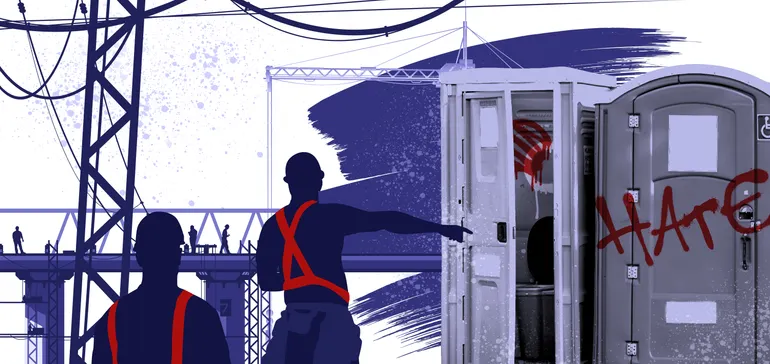
If you are a construction worker who likes to hang nooses at work sites, scrawl racist or sexist slogans in bathrooms, or post hateful comments on social media, then consider this your two weeks' notice: you need to start looking for a new career.
That is the message and unified stance from the CEOs of six leading construction companies to more than 200,000 workers—whose paychecks they collectively sign. The move comes on the eve of the inaugural Construction Inclusion Week, which kicks off on October 18.
The action stems from more than 20 incidents of hate on North American job sites over the past 18 months, including multiple instances of nooses placed in work areas and racist graffiti scrawled in bathrooms.
"Everyone has a choice," said Dan Johnson, CEO of Minneapolis-based M.A. Mortenson. "We have made the choice to pursue diversity, inclusion, and embrace equity. If you don't want to do that, you don't have to work here."
In addition to Mortenson, industry giants Gilbane Building Co., DPR Construction, Turner Construction, McCarthy Building Companies, and Clark Construction Group are founding sponsors of the initiative.
| Company | Number of workers (employees + partners) | 2020 revenue (in billions of dollars) |
|---|---|---|
| Turner | 110,000 | $14.4 |
| DPR | 20,000 | $6.5 |
| Gilbane | 23,000 | $6.4 |
| Clark | 15,000 | $5.8 |
| Mortenson | 15,000 | $4.8 |
| McCarthy | 30,000 | $4.7 |
Source: Company interviews
The six CEOs told Construction Dive they are now leading this initiative to change the industry's image, make construction sites better workplaces for all who want to participate, and improve diversity, equity, and inclusion in the construction industry. They also want to send a clear signal to haters: they are no longer welcome on job sites—and they are already acting on it.
"Now we have the opportunity to do the right thing."
—Peter Davoren, CEO of Turner Construction
"We are terminating subcontracts and putting them in default when they don't cooperate with our investigations into who is responsible for hateful acts," said the blunt-spoken CEO of New York-based Turner, Peter Davoren.
Turner led the industry's fight against hate last year. It shut down sites where nooses or racist graffiti appeared and added clauses to contracts requiring subcontractors to be accountable for exclusionary behavior on site. For example, a drywall subcontractor in Seattle and steelworkers who found a noose at the Denver International Airport site were fired after Turner failed to get adequate cooperation from their companies.
"We have made the choice to pursue diversity, inclusion, and embrace equity. If you don't want to do that, you don't have to work here."
—Dan Johnson, CEO of M.A. Mortenson
Similarly, Gilbane CEO Mike McKelvy said he has fired several workers who posted racist content on social media and linked it to Gilbane. "We weren't actively searching people's Facebook pages," McKelvy said, "but people who know our company culture saw the posts, knew they worked at Gilbane, and contacted us saying: 'I don't think this represents your company's image.'"
Why they are doing this
Although the goals of Construction Inclusion Week sound ambitious, the founders view the initiative's success or failure as a battle for the minds and hearts of the industry's workers.
"This is mission-critical," Johnson said. "Unless we embrace diversity, equity, and inclusion, we cannot achieve our company and industry goals. Demographics are changing, and if we only recruit and retain from a shrinking pool, that's unsustainable."
"If you really want to foster an inclusive mindset on our job sites, we have to be able to talk about 'what is hindering it?'"
—George Pfeffer, President of DPR
In fact, 88.6% of construction workers are white, compared to 78% of the overall workforce. Against this backdrop, the proactive push for diversity and inclusion by these six companies highlights the larger challenge the construction industry faces in trying to bring job sites into the 21st century.
"Those of us who have been in the industry a long time realize that general contractors have never had a great reputation or image," Davoren said. He believes the "caste system" on job sites—where different workers are placed in a hierarchy and management sits above everyone—has led to the industry's exclusionary environment. "Now we have the opportunity to do the right thing."
How it happened
In addition to participating in the Associated General Contractors of America's (AGC) "Culture of CARE" inclusion initiative, these companies decided to tackle inclusion and diversity head-on, the CEOs said, because these issues are too important to delegate to others.
"If we have to wait for associations to set policy, that won't work," Davoren said. "The only way we gain critical momentum is on our own."
Nevertheless, AGC and the Associated Builders and Contractors (ABC) will both participate in Construction Inclusion Week.
"We want to create a better environment so these incidents don't happen again in the industry. That's our goal going forward."
—Ray Sedey, CEO of McCarthy
McKelvy said the group hopes its weight in the industry will draw attention. "As a group of founding companies, we have some influence," McKelvy said. "We might be able to stand up and say: 'This can make a huge difference.'"
Or as Davoren put it: "The whole group covers hundreds of thousands of construction workers. Now you're moving the needle."
George Floyd's legacy
The initiative began with conversations between Turner and Gilbane about how to respond to the social unrest following the murder of George Floyd in 2020. Soon after, as nooses and offensive graffiti on job sites drew media attention, the issue of combating hate in the industry became critical.
The construction giants quickly expanded to six companies, with Mortenson, DPR, McCarthy, and Clark joining, and in the summer of 2020 they formed the "Time for Change" coalition.
"Through those conversations, it evolved into the idea that we really should have a week where the entire industry comes together for these uncomfortable conversations," McKelvy said.
And so, Construction Inclusion Week was born.
The companies, chaired by Gilbane and co-chaired by DPR, have invested resources in the initiative, including a website offering sample tool talks, videos, calls to action in English and Spanish, and a comprehensive PR campaign. The effort is at least initially self-funded by the companies, with no external sponsors.
More than 1,000 other companies have signed up directly to participate, and Turner says its more than 10,000 partner companies will participate in site-wide inclusion stand-downs, with a different theme each day:
- Monday:Leadership commitment and accountability for diversity, equity, and inclusion
- Tuesday:Unconscious bias
- Wednesday:Supplier diversity
- Thursday:Jobsite culture
- Friday:Community outreach
Measuring inclusion
The initiative mirrors the industry's annual Safety Week, which is partly credited with improving construction safety records to the point where nonfatal injuries requiring time off work fell 48% between 2003 and 2019. The CEOs say they want to see similar measurable outcomes in inclusion.
"The more people we reach, the more it has to start affecting our industry's metrics."
—Mike McKelvy, CEO of Gilbane
"We've all seen the success of Safety Week and the contrast between the industry's safety situation then and now," said Robert Moser, CEO of Bethesda, Maryland-based Clark Construction. "It had a transformative impact; safety is no longer someone else's job but a core value for everyone. That's our goal for inclusion too."
Currently, only 6% of construction workers are Black, half the 12.1% in the overall workforce. Asians make up 2%, compared to 6.4% of all employment; women make up 10.9%, even though they represent 46.8% of all workers nationwide. Hispanic or Latino workers (measured as ethnicity, not race) make up 30% of construction workers, compared to 17.6% across all occupations.
"We know the demographics of the industry," McKelvy said. "I have no illusions that we can have a huge immediate impact in just one week a year. But of course, the more people we reach, the more it has to start affecting our industry's metrics."
Turner is conducting an internal equity audit and says it will publish it next year. So far, it has tracked its college recruiting efforts. The company says that in the 2019-2020 academic year, 10% of its new hires were Black, and this year that figure rose to 18% as it strengthened recruiting at historically Black colleges and universities.
"Safety Week had a transformative impact; safety is no longer someone else's job but a core value for everyone. That's our goal for inclusion too."
—Robert Moser, CEO of Clark Construction
"We are also looking at pay gaps between men and women, and between Black and white workers," Davoren said. "The numbers are ugly, but our goal is to find equity gaps, then close them and show progress year over year."
At McCarthy, CEO Ray Sedey said another measurable outcome will be a reduction in the number of hateful acts on job sites. "We want to create a better environment so these incidents don't happen again in the industry," Sedey said. "That's our goal going forward."
Another metric will be industry-wide participation.
"If you really want to foster an inclusive mindset on our job sites, we have to be able to talk about 'what is hindering it?'" said George Pfeffer, president and chairman of the management committee of DPR Construction, based in Redwood City, California. "I think in the first year, the key is how many people are willing to participate and act. Remember, this is an industry thousands of years old. We know this is a journey and won't change overnight. But I very much hope that in three, five, ten years, we see more diversity in all aspects of our industry."


