
Construction Industry Diversity Data Raises Concerns: How Three Contractors Are Breaking Through
Diversity data in the construction industry has remained low for a long time, but some contractors are driving change by setting goals, adjusting subcontracting processes, and strengthening community partnerships. This article presents the specific practices and outcomes of XL Construction, Turner & Townsend, and PCL Construction.
This article is the second in a series exploring diversity and inclusion on U.S. construction sites.Click hereto read the first article.
When it comes to diversity and inclusion, the construction industry is still in its infancy. Compared to the overall workforce, construction is disproportionately white and male. Although Hispanic or Latino workers (an ethnic, not racial, category) make up 30% of construction workers, they are largely in entry-level positions with limited advancement opportunities. Turner Construction CEO Peter Davoren has called this top-down hierarchy the industry's "caste system."
These numbers are concerning on their own, but for contractors, the issue is becoming more urgent as clients and government agencies increasingly impose diversity and inclusion requirements. "This trend has been slower to reach construction; other industries moved faster, but now it's construction's turn," said Linda Foggie, senior vice president at Turner & Townsend, a New York-based contractor and owner's representative. "Companies need to be prepared."
Despite the industry's poor overall numbers, a growing number of companies are deliberately working to diversify their workforce and create inclusive environments for everyone willing to pursue a career in construction. Construction Dive spoke with three construction companies taking action to understand how they are tackling this challenge.
XL Construction: Pushing diversity from both directions

Chris Bailey, senior vice president of integrated solutions at Milpitas, California-based XL Construction, said the company sets a 25% participation goal for underutilized business enterprises (UBEs) on its projects, encompassing minority- and women-owned subcontractors and trade partners. Current participation is around 18% (up from 14% a year ago) — short of the target but showing progress. UBE participation by sector is as follows:
- Life sciences: 8%
- Corporate office: 10%
- Municipal: 16%
- Healthcare: 23%
- Education: 25%
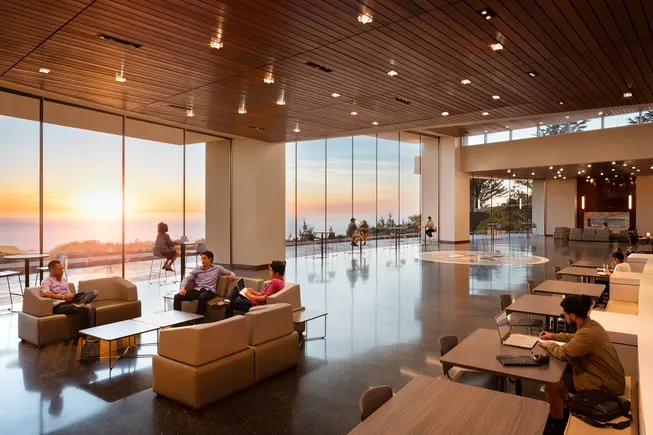
The education sector's high participation rate is partly due to XL's 21,000-square-foot environmental science building project at Skyline College in San Bruno, California (pictured above). Like many in the industry, XL has intensified its focus in this area since the murder of George Floyd and the subsequent social unrest in 2020, while also responding to calls from clients — at least in some sectors.

"We see higher UBE participation in sectors where federal entities or county mandates drive it, because it becomes part of the project's vision and expectations," Bailey said. "Education, healthcare, and municipal projects are all requiring us to address this." However, corporate office sectors such as life sciences and large Silicon Valley tech companies have been slower to prioritize project inclusion and diversity, partly because UBE firms are typically smaller and undercapitalized.
"These sectors are highly specialized, and owners are not inclined to hand critical parts of the technical process to small businesses," Bailey noted. "So life sciences and tech have more resistance to accepting minority-owned firms." Bailey's recommendations include:
Provide flexible arrangements for small businesses.Smaller, newer businesses — as well as women- and minority-owned firms — often struggle to meet bonding requirements, experience modification rates (EMRs), insurance, and equity requirements for large projects. To overcome these barriers, XL has adjusted its subcontractor screening process. "For trade partners with limited track records, we contact their insurance carriers and ask for proof of no on-site accident claims over the past two years," Bailey said. "We're not lowering standards; we're being more understanding of the constraints and burdens UBEs must overcome to be fully compliant."
Build a database of minority- and women-owned subcontractors and trade partners.XL pressures clients in life sciences and tech to prioritize diversity and inclusion, matching the company's internal subcontractor review and hiring processes. For example, XL's trade partner database includes 380 prequalified UBEs, and the company deliberately seeks suppliers from it to meet its internal 25% UBE bid target on every project.
Push clients to prioritize diversity and inclusion."We've found that diversity can't be implemented in three business units while ignoring the other two," Bailey said. "We don't think that way. In life sciences and tech, we face a push-pull situation. We're pushing our clients to change, telling them we have good representation in other business units and that this matters to us. Even if you're not ready to push, we'll hold firm."
Turner & Townsend: Diversity in practice at Hudson Yards

At Turner & Townsend, Foggie has also noticed an increase in client demands for diversity. Government project mandates used to be the norm, but now more private clients are setting specific goals, requiring 20% participation from underutilized business enterprises.

"There's clearly increased interest in the private sector now," Foggie said. "Companies are actually asking and requiring you to discuss these issues and tell them what you can do." One example is the $3 billion 30 Hudson Yards project in Manhattan. The company worked with the owner and tenants Wells Fargo and WarnerMedia on interior fit-outs. As a result, minority- and women-owned business enterprise (MWBE) participation reached 49% for the Wells Fargo portion, and 28% of spending on the WarnerMedia portion went to MWBEs.
To achieve these numbers, Foggie implemented processes from the start of the project to help general contractor Structure Tone meet its targets. Foggie's recommendations include:
Invest more time in planning and relationship building."You have to sit down and spend more time during the planning phase to set everyone up for success," Foggie said. "When you bring in a general contractor and tell them to achieve 20% inclusion, if they lack the right contacts or a roadmap, failure can sometimes be inevitable — for both the GC and the diverse businesses."
Leverage outreach programs and partnerships.Foggie launched outreach programs to ensure her projects were on the MWBE radar. "We hire specialized firms to contact organizations like the Women's Business Enterprise National Council and national Hispanic business groups to publicize that the project is moving forward," she said. "You have to create that awareness, because a lot of deals are done on the golf course — but not everyone plays golf." She then arranges meet-and-greets with the general contractor or major contractors in specific areas like electrical or plumbing on large projects. "We don't force them to use these firms, but we create relationships," Foggie said.
Like XL's Bailey, she believes understanding the capabilities of firms in the MWBE network is critical to everyone's success, especially in the eyes of large contractors focused on execution and risk rather than inclusion. "We get to know their capabilities deeply, because the most important thing is assigning work that fits their size," Foggie said. "Even if they accept a large subcontract, you need to assess whether they can actually complete it."
Ensure clear communication.Finally, Foggie works with general contractors and major contractors to ensure payment terms and schedules for MWBEs are clear. "Small companies need faster payment cycles," she said. "Many times, they can't front 120 days of cash."
Ultimately, this process is more complex than repeatedly awarding projects to the same pool of large contractors, but it helps achieve owner goals while channeling a portion of spending on billion-dollar projects back into affected communities. "Honestly, it's more work for the owner's representative and the client," Foggie said. "But if you want to achieve this, it's an investment in the community where you're building. In my view, the extra effort is worth it."
PCL Construction: The power of workforce development

Priscilla Chavez joined Denver-based PCL Construction in 2016 as a diversity and inclusion manager. One of her first challenges was changing the company's established subcontractor hiring process, which had been in place since its founding in 1906.

"People are creatures of habit, and after operating for over 100 years, it's easy to think, 'If it ain't broke, don't fix it,'" said Chavez, now PCL's business development manager. Her recommendations include:
Start at the top.Her solution was to first secure buy-in from the top of the organization so that inclusion initiatives could be effectively embedded into existing processes. She believes this is critical for other contractors. "The first thing I did was truly understand how PCL operates," Chavez said. "You need to understand how projects are estimated, how sites are mobilized, and how staffing works, so you can make recommendations based on that understanding."
In addition to seeing more clients with diversity and inclusion requirements, Chavez said municipal authorities with project approval power increasingly want to know who will be working on construction. "All private developers have to create community benefit plans," she said. "If they're building a skyscraper or other structure, at public hearings the community asks, 'What do we get out of this?'" Increasingly, the answer is hiring community members to do the work.
Partner with community organizations.In Los Angeles, for example, she worked with the Los Angeles/Orange Counties Building and Construction Trades Council to ensure local workers made up 70% of her projects' workforce. "That's a metric I can show developers or elected officials, because it means taxpayer money," Chavez said. "People earn and spend money where they live, and there's also reason to believe this helps combat gentrification and displacement."
One example is the Destination Crenshaw project, a 1.3-mile open-air exhibition celebrating Black art and culture along Crenshaw Boulevard in the heart of Los Angeles' Black community. On that project, about half of PCL's workers were local, and more than 30% were Black or African American. Across PCL's overall workforce, Black workers make up just over 10%, compared to 6% in the national construction workforce.
PCL's workforce development program has also created 600 new construction careers, with about 60% of California participants having prior criminal records through a partnership with the Anti-Recidivism Coalition. "Our model holds that even if someone doesn't come from a construction family, even if they have a justice record, or might be considered nontraditional, it's okay to hire them," Chavez said.
Be proactive.Overall, PCL has a $1.5 billion project pipeline with diversity, equity, and inclusion (DEI) components. For Chavez, these results stem from a simple question she posed to her team when she joined: "What's possible when it comes to our DEI efforts?" She said, "We've had tremendous success in the structures we build and everywhere we work. What would it look like if we added more intention?"