
What Does Katerra's Bankruptcy Mean for Construction Technology and the Modular Industry?
Katerra, a construction startup that received over $2 billion in investments from SoftBank and others, with a valuation once reaching $4 billion, filed for bankruptcy in June 2021. Its failure stemmed from excessive vertical integration, rapid expansion, and insufficient market acceptance. Industry observers believe that Katerra's lessons will prompt later entrants to advance modular construction and construction technology more cautiously, while funding in this sector still hit record levels in 2021.
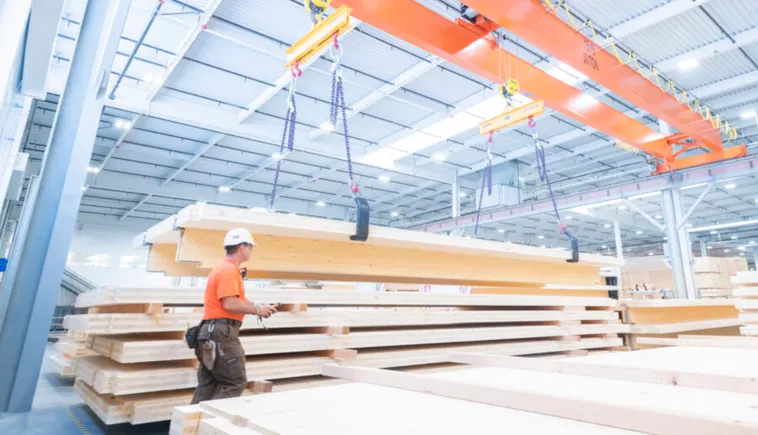
When co-founder and former CEO Michael Marks left Katerra in May 2020, the company aiming to disrupt the construction industry was already at its end. Since then, one of the most promising construction startups in history has experienced a rapid downfall. Katerra burned through over $2 billion in investor funds, most of which came from Japanese conglomerate SoftBank, with other financial backers including Soros Fund Management and the Canada Pension Plan Investment Board.
Just 13 months after the company replaced Marks with Chief Operating Officer Paal Kibsgaard, Katerra filed for Chapter 11 bankruptcy protection. Late this summer, Katerra sold its assets in Tracy, California for $21.25 million and its plant in Spokane, Washington for $50 million.
The journey from unicorn to bankruptcy
- 2015: Founded by Michael Marks and Fritz Wolff.
- April 2017: Valuation reached $1 billion.
- November 2017: Named to LinkedIn's Top Startups list.
- January 2018: Raised $865 million in a new funding round led by SoftBank Vision Fund.
- January 2019: SoftBank Vision Fund led a $700 million funding round, raising valuation to $4 billion.
- November 2019: Co-founder and board member Fritz Wolff left amid layoffs and project halts.
- December 2019: Cut 200 jobs, closed its Phoenix modular construction plant, and moved manufacturing to the lower-cost, more automated Tracy facility.
- January 2020: Signed a $650 million contract with Saudi Arabia to build 8,000 homes.
- April 2020: The COVID-19 pandemic spread, affecting its San Marcos, Texas project and others in Washington state and New Jersey.
- May 2020: As part of an additional $200 million SoftBank investment, COO Paal Kibsgaard replaced Michael Marks as CEO.
- June 2020: Cut another 7% of staff, mainly in the U.S.
- March 2021: SoftBank-backed lender Greensill Capital filed for bankruptcy.
- June 2021: Katerra filed for bankruptcy protection.
- August 2021: Sold Tracy assets for $21.5 million and the Spokane plant for $50 million.
"Katerra failed in many ways, and I knew it wouldn't work," said Ken Lowney, president and CEO of Lowney Architecture, an Oakland, California-based firm with experience in prefabricated multifamily housing. "Buying your own supply chain, we now know, was a bad idea. An ecosystem of smaller companies working together to supply a factory is better than a vertically integrated factory."
But what exactly happened to Katerra? Does its failure foreshadow doom for other companies in modular and construction technology?
The attempt to disrupt construction
Katerra's business proposition was simple: take over every part of the construction process. The company positioned itself as the architect, engineer, general contractor, and subcontractor on its projects. Its goal was to own construction projects from property acquisition through design, construction, and management.
Marks, who founded the company in 2015, was formerly CEO of electronics manufacturing company Flextronics. His vision included using large-scale manufacturing to streamline the construction process.

At first, the company was highly successful—raising over $200 million between 2015 and 2017. During this period, Katerra achieved unicorn status. In 2017, it opened a 250,000-square-foot manufacturing plant in Spokane, Washington, and launched local projects such as the Pine Valley Branch apartment complex in Spokane and the River House senior apartments in Spokane Valley. It also had a 200,000-square-foot plant in Phoenix producing entire wall panels, including windows, insulation, wiring, and plumbing. The Wall Street Journal published an article about Katerra in July 2017 titled "Why You Want to Build Skyscrapers Like an iPhone."
SoftBank's favor
The company's rise to the top of construction startups coincided with increased funding in construction technology and growing interest in modular construction among contractors. "I think Katerra's strategy made intellectual and logical sense—we try to manufacture more away from the job site," said David Brian Ward, CEO of construction tech startup Safe Site Check In and a tech entrepreneur. "That way, the job site is more about assembly rather than actually building everything, which is often the norm today. It made sense in theory."
This success caught SoftBank's attention in 2018. SoftBank Vision Fund—a nearly $100 billion investment vehicle—led an $865 million funding round in January 2018. At the time, SoftBank CEO Masayoshi Son could not foresee that years later he would list Katerra as one of his company's biggest investment failures.
"If venture capital is a casino, Masayoshi Son is the whale placing the biggest bets," Ward said. "He's only interested in world-changing ideas and amazing growth rates, driven by a deep fear of missing out."
After SoftBank injected $865 million, Katerra went on a spending spree. That same year, the company acquired three organizations, all aimed at strengthening its vertical integration goals. Ward said the company seemed to want to do everything. Katerra acquired Michael Green Architecture, known for promoting and designing wood and mass timber buildings, in May 2018, followed by architecture and design firm Lord Aeck Sargent in June 2018, and general contractor Bristlecone Construction Corp. in October 2018. "They tried to assemble the entire supply chain from scratch through acquisitions," Ward said. "That never made sense to me."
At its peak in the first half of 2019, the company was valued at over $4 billion.
Trouble begins to show
By the second half of 2019, major signs of trouble emerged. The company faced increased scrutiny, especially after WeWork, another high-flying SoftBank-backed startup, had just gone through its IPO debacle. Within just one month, the co-working company ousted CEO Adam Neumann, indefinitely postponed its IPO, and saw its valuation drop from $47 billion to about $10 billion.

Meanwhile, Katerra had laid off more than 100 people, exited about six apartment and hotel projects in the U.S., and closed its Phoenix plant. By November 2019, co-founder and board member Fritz Wolff quietly left amid project halts and layoffs. But these signs of struggle did not stop Katerra from continuing to expand; in fact, it backfired. Just months before the COVID-19 pandemic forced global lockdowns, Katerra signed a $650 million contract to build 8,000 homes in Saudi Arabia, part of a larger $40 billion deal reached with the Saudi government in October 2018. In addition to Saudi operations, Katerra also entered India and began building projects there.
"Katerra tried to boil the ocean. They wanted to do everything from root to branch," Ward said. "Thinking you can acquire companies and effectively merge them in the short term is naive... They tried to solve every productivity problem in the construction supply chain at once."
A recovery that never materialized
Katerra, already struggling, ultimately received a fatal blow from the COVID-19 outbreak. Due to pandemic-related challenges, the company shelved several projects, including those in San Marcos, Texas, Washington state, and New Jersey, and its projects in India were also halted. As a last-ditch effort, SoftBank provided $200 million in financing in May 2020 as life support, but at the cost of Marks being ousted.
However, Katerra's best days were already behind it. Last summer, the company announced another 7% staff cut, mainly U.S. employees. This was the fifth round of layoffs since fall 2019. In March 2021, SoftBank-backed lender Greensill Capital filed for bankruptcy after losing insurance on its debt restructuring business. Months later, Katerra filed for Chapter 11 bankruptcy protection, partly attributed to the impact of the COVID-19 pandemic.
Lessons learned
According to observers, the biggest problem Katerra never solved was convincing developers and contractors to give up their traditional subcontractors. Developers and contractors "have very strong ties with their own engineers, suppliers, and construction relationships," said Peter Lewis, chairman and president of Wharton Equity Partners, a real estate private equity firm that also runs a venture capital firm focused primarily on real estate technology. He said this is a major challenge common to construction tech and real estate tech. In other words, when developers or contractors are involved in a project with significant capital and risk, they tend to stick with what they know rather than try new technologies or processes.
"It's not at all like building cars or something similar; industrial construction is very different from an automotive factory because every project is different," Lowney said. "Most modular multifamily companies have tried to standardize everything. They say, 'Look, if you want to use our factory, you have to use this one-bedroom, this two-bedroom, this studio, and that's it.' But it never worked, and no one stuck with it."
Therefore, construction technology that can immediately show return on investment is crucial for attracting user retention. "I think Katerra was ahead of its time," Lewis said. "Unfortunately, what usually happens is that pioneers are often the losers. Then others follow behind and figure out what they did wrong."
Success in construction tech will come down to proving the need for the technology, providing immediate ROI, and ensuring workers can use it on the first try, according to Ward. "I think the benefit that comes out of this is learning lessons," Ward said. "People will learn from it and become smarter—either in one part of the vertical supply chain, or in a certain type of construction, or in a certain method of construction, horizontal or vertical."
The 2021 construction tech funding boom
Despite losing billions on Katerra, investors are still pouring record amounts into other construction-related sectors. According to a Construction Dive analysis of Crunchbase data, total funding in construction tech so far in 2021 has exceeded $2 billion, up more than 100% from 2020, and government funding could further drive growth if the infrastructure bill passes.
"This is huge. The money that will be invested in offsite manufacturing infrastructure in the coming years, partly due to the upcoming new bill, will be historic," Lewis said. "Additionally, seeing the development and invention of new products, new technologies, and new materials that are cheaper, more durable, and easier to transport—I think we will see more prefabrication in manufacturing plants."
Although its actual impact remains minimal to this day, other companies in the industry are watching Katerra's achievements and failures. Investors remain optimistic about future opportunities in the modular construction business. Its legacy will continue to loom over the modular construction industry as a promising approach that made sense to many.
For example, Veev, a technology-driven real estate development company focused on modular prefabrication, raised over $100 million in March 2021 for its modular prefabricated home construction platform. Other construction tech companies, such as construction finance platform Built Technologies, raised $88 million in a new funding round in February 2021. DroneDeploy completed a $50 million Series E round in the same month. Numerous other companies also raised millions.
"We need to be creative and start exploring new materials," said Amit Haller, CEO of Veev. "If we think we're a little smarter than Katerra in automation, transportation, etc., we will fail. As Einstein said, doing the same thing over and over again and expecting different results is insanity."
Lowney said that the proportion of multifamily housing built in factories is currently extremely small, meaning the industry has huge growth potential. "We are now entering a new era," Lewis said. "I expect a revolutionary change in construction practices over the next 10 years."