
Amazon Slows Fulfillment Center Investment, Where Will It Turn Next?
Amazon nearly doubled its operational capacity over the past two years, with fulfillment center count growing by 30%. As the e-commerce boom cools, the company's CFO stated that fulfillment center spending will moderate, and future growth may align with other business segments. Experts believe Amazon will increase transportation investment to enhance delivery control and reduce costs.
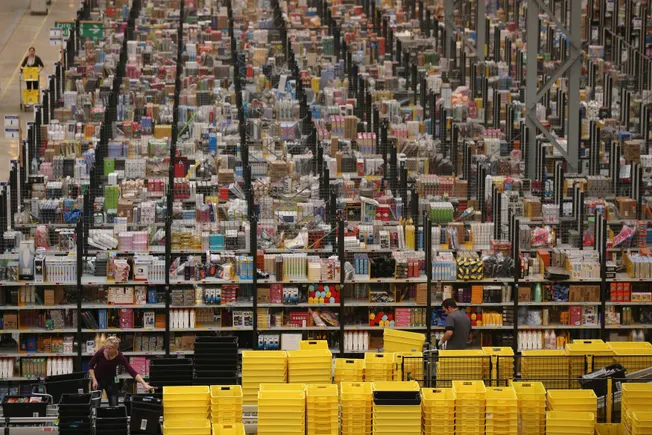
Over the past two years, Amazon has massively absorbed warehouse space across the United States, building new fulfillment centers to meet surging demand. Now, this rapid expansion may be slowing, as the company shifts its focus to other parts of the supply chain—including greater investment in transportation.
Amazon's vast physical warehouse footprint is a key pillar of its strategy. Its own fulfillment centers, sortation centers, and delivery stations allow it to have deeper control over the supply chain, thereby fulfilling the delivery speed promised to Prime members.
"Delivery speed is the core driver of e-commerce growth," said Jason Murray, co-founder and CEO of Shipium, who previously served as Amazon's vice president of supply chain and retail services. "Prime treats this as a primary fact. No matter what you do in marketing, checkout, one-click ordering, etc., speed is what drives everything."
Amazon's warehouse footprint is a reflection of this philosophy. CFO Brian Olsavsky said on a February earnings call that the company nearly doubled its operational capacity over the past two years to keep up with demand. Fulfillment center expansion played a significant part—according to data from supply chain consulting firm MWPVL International as of February 16, the number of Amazon's U.S. fulfillment centers grew by 30% in 2021.
But investment alone has not been enough to get Amazon to its desired delivery speed. One-day delivery levels for Prime service have not yet returned to pre-pandemic levels. Therefore, Amazon is more closely examining other operational investments to enhance its delivery capabilities.
"We see (fulfillment center spending) moderating," Olsavsky said, adding that future growth may align with other business areas.
Experts believe this change is likely to occur as the e-commerce boom triggered by the COVID-19 pandemic cools down.
How Amazon's powerful fulfillment footprint meets demand
The surge in online orders prompted retailers to adjust or accelerate their logistics plans. As the pandemic spread, foot traffic in physical stores declined, and many consumers turned more to online shopping. In June, Olsavsky said Amazon had been working to catch up with supply-demand matching—according to Amazon's 10-K filing, fulfillment costs as a percentage of net sales rose from 15.2% in 2020 to 16% in 2021.
Adding facilities in more markets allows Amazon to expand capacity while bringing inventory closer to customers for faster, cheaper delivery. Other companies in the e-commerce space are taking similar steps.
"Since last year, e-commerce's share of leasing has stabilized but remains higher than pre-pandemic levels," said Heather Belfor, director and head of U.S. research at Prologis, whose largest customer is Amazon. "Amazon is clearly still a major player in e-commerce, but the market is very diversified because users need more logistics space throughout the supply chain."
For example, Walmart is opening its own fulfillment centers and investing in automated supply chains to advance its Prime competitor, the Walmart+ subscription service. Target Executive Vice President and COO John Mulligan said on a Q4 earnings call that the company has four delivery facilities under development "with plans for more to follow." These retail giants can also leverage their physical stores across the country for omnichannel fulfillment, a key move as companies work to control the costs of delivering online orders.
Amazon's delivery footprint far exceeds that of retail giants
Meanwhile, the slowdown in Amazon's fulfillment center construction seems to have already begun. According to MWPVL data, the fulfillment center growth rate for 2022 is currently projected at 22%. Company president and founder Marc Wulfraat noted that this figure is affected by many existing projects being delayed to this year due to long supply chain lead times.
Nevertheless, Amazon's position is unmatched among e-commerce platforms, said Jean-Paul Rodrigue, professor of global studies and geography at Hofstra University, who studies freight delivery. According to MWPVL data, its domestic delivery infrastructure footprint is about 173 million square feet larger than that of Walmart and Target combined.
"You do have (omnichannel) competition, but Walmart is essentially just expanding its services—it's not the same thing," Rodrigue said.
Amazon prepares to increase transportation investment
Even as Amazon slows fulfillment center growth while competitors try to strengthen their own delivery capabilities, other areas of its operations still receive significant attention. Olsavsky hinted at an "additional level of investment" in transportation capacity in 2022.
Wulfraat said that with more personnel and vehicles involved in moving goods, Amazon could deliver packages to rural areas of the United States without relying on UPS and the U.S. Postal Service.
"We think that's their goal—they want full control over their own destiny in delivery," Wulfraat said. "We believe they ultimately do want to phase out UPS and USPS as partners. There are many clues that lead us to believe this."
Greater control over transportation will help Amazon withstand rising costs. Amazon reported higher third-party carrier costs in Q4—which prompted the company to invest in its own capacity.
Observers believe Amazon may have longer-term pursuits. The company could build more delivery stations to prepare customer orders for last-mile service; explore investments to further insulate against global supply chain disruptions; or find ways to further penetrate the difficult fresh grocery market.
"Everyone buys groceries, and they buy a lot," Murray said. "They have to find a way to stay relevant in that space. I think Whole Foods is doing okay, but it hasn't been a game-changer."
Company observers agree that Amazon is not satisfied with its current fulfillment network, and "moderating" is a relative term for a company that has distinguished itself by investing in and expanding its fulfillment network at an unparalleled pace. Olsavsky even noted on the Q4 earnings call that future fulfillment center spending could pick up again.
"I think they are slowing down or decelerating," Wulfraat said. "But they haven't stopped. That's certainly not the case."