
Stockpiling, Ghost Orders, and Temporary Warehouses: The New Survival Rules for the Construction Industry Supply Chain
With building material prices soaring and deliveries delayed, contractors are resorting to unconventional measures such as stockpiling, ghost orders, and temporary warehouses to keep projects on schedule. Industry data shows that nonresidential building input prices have risen by over 24% year-over-year, the highest since 1987. Experts predict that supply chain pressures will persist at least until the end of the year.
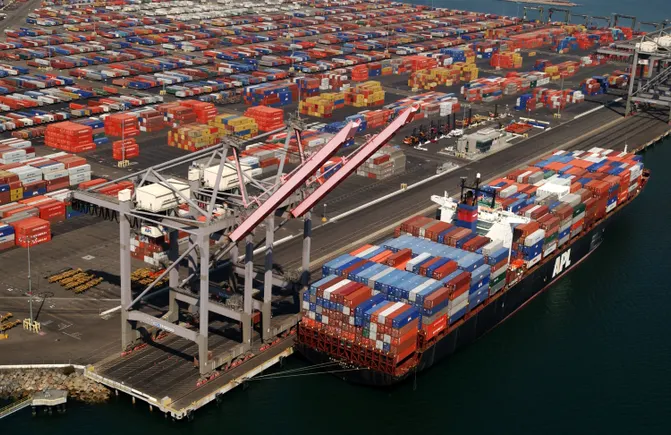
Even industry veterans have rarely experienced such a difficult materials hunt: roofing materials, steel joists, or steel pipe, the prices of these basic building materials have risen at least 50% in a year, and delivery times have at least doubled, or even longer. To survive, some contractors have begun stockpiling supplies.
Contractors are rushing to lock in supplies before competitors. Cash is king, credit is scarce, and quotes are valid for as little as five days.
The ripple effect of the supply chain is forcing contractors to ensure every nail and screw is in place before breaking ground. They are starting to lease or build their own warehouses to stockpile materials, while flooding suppliers with 'ghost orders,' which strains relationships with suppliers who also need to maintain partnerships with loyal customers.
"This is as severe as the worst of the pandemic," said Erin Roberts, global construction and engineering leader at Ernst & Young. "Demand is surging after a brief pause, but supply chains are severed, and that is creating chaos."

Supply shortages combined with surging demand have driven the largest annual increase in construction input prices since records began in 1987. According to an analysis by the Associated Builders and Contractors (ABC) of U.S. Bureau of Labor Statistics producer price index data, nonresidential construction input prices have risen by more than 24% on average over the past year.
"Inflation remains hot, hot, hot," said Anirban Basu, chief economist at ABC. "This year, contractors nationwide see virtually no relief in sight."
The Associated General Contractors of America (AGC) has quantified the predicament with data:
Construction material price increases (12-month change through January 2022)
| Building materials products | Increase |
|---|---|
| Steel rolled products | 112% |
| Steel pipe | 78% |
| Nonresidential building structural metals | 60% |
| Metal joists and reinforcing bars | 55% |
| Plastic building materials | 35% |
| Aluminum rolled products | 33% |
| Copper and brass rolled products | 25% |
| Architectural coatings | 24% |
| Gypsum products | 23% |
| Lumber and plywood | 21% |
| Insulation materials | 19% |
| Asphalt felt and coatings | 18% |
Source: AGC analysis of U.S. Bureau of Labor Statistics producer price index data for January 2022 (processed goods important to construction). Figures are rounded.
Construction professionals are playing the role of diplomats, working to manage owner expectations while material bills and storage costs climb.
"I'd rather look at materials than look for materials," said Peter Tuffo, southern region president of Boston-based Suffolk Construction, speaking of his building supply. "We're at the point now where we're stockpiling materials and hunting for them. If we have to move them twice, we move them twice. But you know what? The cost of moving them twice is far less than the loss of having no work that month."
Long lead times
Chris Bailey, senior vice president of integrated solutions at XL Construction, measures the pain in months, listing the most scarce materials on the West Coast.

"We recently learned that open web steel joists are quoted into 2023," Bailey said from the company's headquarters in Milpitas, California. "Additionally, many materials that took weeks before the pandemic now have lead times stretching to months."
The most challenging materials he faces and their lead times include:
- Roofing and roof insulation (8-10 months)
- Steel joists (8-10 months)
- Metal panels (8-10 months)
- Aluminum windows and curtain walls (6-12 months)
- Precast concrete wall panels (6-10 months)
- Structural steel (6-8 months)
- Metal studs and cold-formed steel (2-4 months)
Roofing materials are now as scarce as hen's teeth.
Granger Hassmann, vice president of preconstruction at Minneapolis-based Adolfson & Peterson Construction, is blunt: "The whole roofing industry is a mess right now, it's absurd. Manufacturers aren't even offering competitive quotes. Unless you actually place an order, they won't give you a bid price."

EPDM (ethylene propylene diene monomer) roofing membrane, widely used in commercial buildings, is now nearly impossible to find.
"Everything is getting harder to source, including any product with 'poly' in its name," said Paul Moffat, vice president of preconstruction at Detroit-based contractor Barton Malow.
Where did all the warehouse space go?
Companies are scouring for materials and trying to store them, which has triggered another shortage.
"The warehouse market nationwide is extremely tight; you almost have to sign a lease before or during construction to secure space... We've been reaching out to vacant big-box retail centers to help fill the gap," said Amy Rodbell, a broker in the Atlanta office of commercial real estate firm Newmark.
To survive, some contractors have started building their own warehouses.
"They're putting up temporary structures on or near job sites to store materials not yet used. This could offset most or even all of the savings from pre-purchasing materials," said Jacob MacIntyre, director of customer acceleration at Quickbase, who focuses on the construction market.
This has completely upended the construction industry's traditional lean operating model.
"Everyone has realized that what we need is not 'just-in-time,' but 'just-in-case,'" said Roberts of Ernst & Young.
The bane of 'ghost orders'
Jake Romano, manager of a residential plumbing contractor outside Toronto, Ontario, Canada, is struggling to get everything from toilets to PVC pipe.
"Some of our competitors have bought up nearly all the toilets on the market. Their warehouses are packed to the rafters," Romano said.
Manufacturers are responding by restricting sales.
"It's the new world's way of saying 'I can't fulfill all your needs,'" said Chris Fitzgerald, global vice president at Univar Solutions, a chemical and sealant giant based in Downers Grove, Illinois, which supplies some of the hard-to-get 'poly' products. If a product is in short supply, he might only give a customer 70% of last year's order volume.
"Manufacturers are pushing back, asking for project-specific information so they don't end up with a pile of ghost orders later."

Brian Sudduth
President, Miller Construction Company
Further down the supply chain, mid-tier suppliers are guarding against 'ghost orders'—where contractors submit multiple bids for the same product.
Manufacturers "are pushing back, asking for project-specific information... so they don't end up with a pile of ghost orders later," said Brian Sudduth, president of Miller Construction Co. in Fort Lauderdale, Florida.
The solution? Start earlier, work longer
In response, contractors are moving the preconstruction phase of projects to 18 months before groundbreaking, nearly a year earlier than normal.

"We tell owners that once we start, we can still complete their project in 11 months, but we can't start immediately because a few months into the job, we'd have to stop and wait for steel," said Hassmann of A&P.
Now, that time is being used to stockpile materials.
"You spend the first two months placing orders to ensure materials arrive on site, or go into bonded warehouses, or into storage containers," Hassmann said. "Anywhere we can secure materials and lock them in."
No one can predict when the current supply chain woes will end.
"Given the current data, it might seem naive, but the expectation remains that later this year, building material prices will moderate somewhat," said Basu of ABC.
But others warn that as one shortage eases, another will worsen. They see little relief before the end of the year or next year.
"Unfortunately, it's only going to get worse," Moffat of Barton Malow said resignedly. "It seems like every month there's some new material that's a problem."