
The Role of AI in Construction: Replacing Jobs or Filling Labor Gaps?
Amid a persistent labor shortage in the construction industry, AI and robotics are being re-evaluated—are they a threat to jobs or the key to solving the manpower crisis? Henning Roedel, robotics lead at DPR Construction, points out that the industry's problem is not layoffs but a lack of workers. Through technologies such as AI-assisted drilling and computer vision, companies have achieved productivity gains of 6 to 8 times. Experts predict that AI will replace 85 million jobs globally over the next two years, yet demand for construction labor remains low. Meanwhile, legal experts caution that AI applications require vigilance against employment discrimination risks, and the complexity of industry terminology may also become an obstacle to technology implementation.
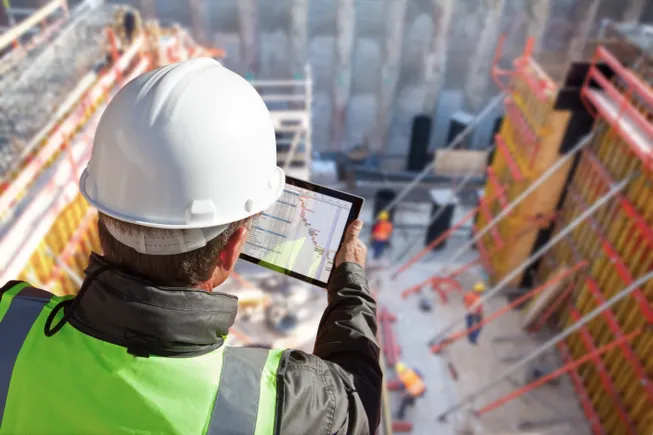
The discussion about whether AI will replace jobs in the construction industry, in Henning Roedel's view, may have missed the core issue from the start.
"We're not thinking about how to reduce our team size, because our backlog and future workload already require more people," said Roedel. He is the robotics lead for the innovation team at DPR Construction in Redwood City, California. "We need to re-examine the question of 'replacement'—because currently, there simply aren't enough people in the industry to meet society's demand for construction."
The data supports Roedel's view. In March of this year, even as construction layoffs reached their highest level since the pandemic began, the industry still had more than 341,000 job openings.
For Roedel, given the labor crisis that has plagued the industry for years, the early deployment of AI and robotics solutions is proof that job losses and labor abandonment have already occurred and are threatening the industry's ability to keep pace with demand.

"AI and robotics are precisely the solution to this growing crisis—we cannot build enough housing, office buildings, and roads to support people's healthy lives," said Roedel. His company has used these technologies to help employees improve efficiency. "These new tools are enhancing the capabilities of our field and office staff. They can use tools like ChatGPT to save mental time and move on to the next task sooner."
Not drilling through rebar, but intelligently avoiding obstacles
For example, in addition to using ChatGPT to draft emails and generate project executive summaries based on bullet points and prompts, DPR is also deploying AI technology in the field.
This includes tools that leverage computer vision—which can extract actionable information from images, allowing construction teams to focus more on the site. It also involves AI-driven reality capture and analysis, such as the Hilti JAIBOT semi-autonomous drilling robot.
When drilling holes in concrete slabs and ceilings for mechanical and electrical installations, JAIBOT can detect obstacles, identify their type, and decide whether to continue drilling. AI can also measure the drill bit's torque to determine whether it has hit rebar or another substrate other than concrete.
"Using Hilti equipment, our productivity has increased six to eight times," said Roedel. "That's a huge leap, and a large part of that performance gain is due to the machine's ability to plan the correct path on its own and learn to avoid what it shouldn't drill into."
Improving productivity, not reducing staff
As AI gains more attention globally, beyond robotics and computer vision, it is also establishing a foothold in areas such as estimating and quantity takeoff in construction (e.g., Togal.AI). But does the widespread adoption of AI tools threaten traditional construction trades? As new solutions are tested and brought to market, many seem naturally geared toward job functions that are data-intensive and variable.
According to a World Economic Forum report, AI is expected to replace 85 million jobs globally within the next two years, with the heaviest losses in warehousing and manufacturing, research and data entry, and customer service. In fact, construction laborers rank at the bottom of the list of occupations where demand is declining.
This aligns with what solution providers say—that their technology is designed to improve the productivity and well-being of human workers, not replace them, which directly echoes Roedel's point.
"AI is a very broad set of tools," said Roedel. "It can assist knowledge workers, it can be used in robotics, and it can play a role in many other areas."
Creating jobs, not reducing them?
Consider the example of Dan Maxwell. He is the vice president of development services at Realty Trust Group, a construction consulting firm in Knoxville, Tennessee. He recently used generative AI proactive intelligence platforms like Northspyre on projects, including the $46 million, 64,000-square-foot Peeples Cancer Institute in Dalton, Georgia.
As a primary advisor, Maxwell focuses on AI's impact on productivity, efficiency, and cost for clients, rather than on specific job replacements that might occur. He believes that generative AI and proactive intelligence tools can provide localized employment stimulus and, as the technology evolves, make construction a leader in technology adoption.
"We have to stay agile, stay at the forefront of technology, and adapt and respond thoughtfully," he said. "But AI-enhanced construction management and scheduling capabilities can drive more projects and joint ventures forward, thereby creating local jobs during and after construction."

For example, the life sciences sector—which involves complex mechanical and electrical systems, pneumatic tube systems, immunosuppressants, and life support systems—is deploying computer vision-assisted and AI-driven autonomous robots for reality capture. Meanwhile, solutions that use AI to analyze the frequency and number of people accessing specific areas to optimize space utilization are also rapidly gaining adoption.
"We in construction have the opportunity not only to be users of AI, but also to be enablers of AI applications in other industries," said Maxwell.
Will humans become a 'protected class'?
Nevertheless, construction companies deploying AI tools still need to pay more attention to labor law liabilities, especially when AI solutions have a disproportionate impact on protected groups based on characteristics such as age, religion, race, and gender.
"If AI or robotics causes someone to lose their job, and it can be proven that this constitutes age discrimination rather than mere human discrimination, the company could face legal liability," said Andrew Richards. He is co-chair of the construction practice group at Kaufman Dolowich & Voluck, based in Woodbury, New York. "Human beings themselves are not a protected class, but we are witnessing science fiction become reality, and it's conceivable this could become an issue in the future."
Richards said construction companies need to be more pragmatic in recognizing AI's fallibility, especially given the non-standardized, regionally varied ways the industry communicates and shares information. From payment processing to change orders, scheduling, and building codes, natural variations in terminology can confuse AI analysis, leading to disputes rather than resolving them.

"The terminology contractors use is extremely complex and varies by jurisdiction," said Richards. "I'm not sure we have a programming language that can match the real language of the construction industry."
Making technology accessible to more projects
Despite these challenges, for Roedel and DPR, advances in AI and additional robotics solutions will lower the cost of reality capture, making the technology applicable to some of the company's smaller projects as well.
In fact, the AI market in construction is expected to grow at an annual rate of 34.1%, surpassing the $8.5 billion mark by 2031, with most systems and solutions deployed aimed at improving operational costs and worker safety.
The latter is an area where DPR is happy to see AI and robotics take over human work roles.
"We want to see more of these tools applied in high-pressure scenarios and hazardous environments," said Roedel. "Any hazardous materials application where we can replace personnel with intelligent machines—that would be ideal."