
Florida's New Immigration Law Creates Uncertainty for Construction Contractors
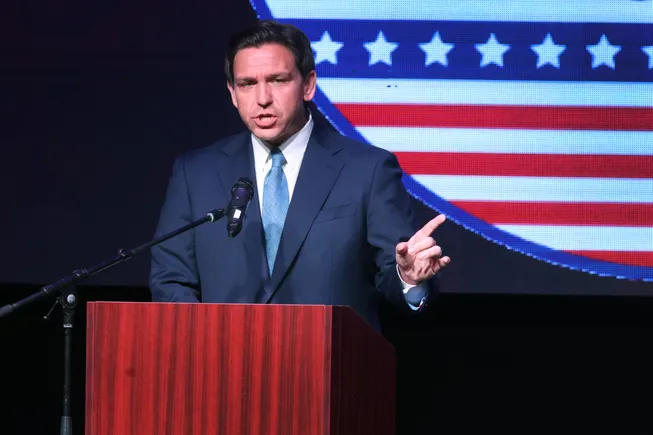
Florida Governor Ron DeSantis signed SB 1718, requiring private businesses with more than 25 employees to use the E-Verify system, shaking the construction industry. According to local experts, immigrants without legal work authorization have begun fleeing the state due to fear of deportation, with some construction sites experiencing work stoppages. The bill takes effect on July 1, with violators facing a $1,000 fine per day.
A widely circulated video shows a construction site in Florida that appears to have been abandoned due to a new immigration bill. Local experts say some immigrants without legal work authorization in the U.S. have begun leaving the state for fear of deportation.
According to Construction Dive, this movement of immigrants is directly linked to a new law signed by Governor Ron DeSantis last week. The bill, State Bill 1718, requires private businesses with more than 25 employees to use the federal E-Verify system to check employees' immigration status, aiming to prevent foreign-born individuals without U.S. work authorization from filling jobs or using state public resources.
"Based on anecdotal reports, the situation in Florida has become more severe over the past week," Madeline Zavodny, a labor economist and professor at the University of North Florida, told Construction Dive. "The unauthorized immigrant community is terrified of what this law means for them, and I believe their employers are equally nervous."
While supporters argue the law helps maintain national security, others point out that employers and workers, especially in the construction industry, will face difficult circumstances. According to data from the Center for Construction Research and Training (CPWR), in 2020 there were approximately 1.4 million foreign-born, non-citizen Hispanic laborers in the U.S.
For employers in Florida, this law introduces unpredictability during a period of high labor demand and worker shortages.
"We sit here today facing tremendous uncertainty," said Mark Neuberger, a labor and employment attorney at the Florida-based law firm Foley & Lardner LLP. "The situation could calm down, or it could turn into a disaster."
Adding to the complexity, the federal policy 'Title 42' expired on May 11. This pandemic-era policy strictly limited immigrants' ability to seek asylum for three years. With its expiration, immigration hardliners feared a significant increase in illegal border crossings, although the anticipated surge has not yet materialized. Employer groups have long advocated for immigration reform aimed at protecting immigrant workers and the builders who wish to hire them legally.
Moving to the E-Verify system
E-Verify is a federal online system that allows employers to confirm employees' eligibility to work in the U.S. Starting July 1, Florida will become the tenth state to mandate E-Verify for private employers. Nine other states already have similar laws in place:
- North Carolina
- South Carolina
- Tennessee
- Georgia
- Alabama
- Mississippi
- Louisiana
- Arizona
- Utah
Florida employers who do not comply with the new law will face fines of $1,000 per day.
Peter Comstock, senior director of legislative affairs at the Associated Builders and Contractors (ABC), said the advice to ABC members is simple: comply with the law.
But compliance can be a corrective measure or a tightrope walk. Hector Sandoval, an assistant professor of economics at the University of Florida, suggested that some companies might downsize their workforce to 24 employees to circumvent the new law's requirements, which is akin to 'walking on a knife's edge.'
Attorney Neuberger noted that Florida's E-Verify law is prospective, meaning immigrants currently employed under the existing I-9 form system will be 'grandfathered' in, and their employers will technically remain compliant. Starting in July, Florida will mandate that employers use the E-Verify system alongside the existing I-9 forms, which will still be part of the process to confirm employee eligibility. Neuberger stated that, for now, the I-9-only system is easier for unauthorized workers to circumvent, as they can obtain documents like driver's licenses in some states.
Neuberger also pointed out that using only the I-9 form does not require employers to keep copies of workers' documents, whereas E-Verify does. "All you have is the employer's attestation that they looked at [the documents]," he said of the I-9 system.
In the long run, experts like Neuberger believe the law creates uncertainty and could even become 'catastrophic.'
Legacy issues
Sandoval emphasized how heavily South Florida relies on immigrant labor. Pointing out the window at Spanish-speaking construction workers building a project on the University of Florida's Gainesville campus, he noted these workers are constructing campus projects.
Sandoval, along with several other sources, told Construction Dive that they have heard of workers fleeing Florida, leaving job sites vacant. Neuberger said workers have reportedly moved to other construction hotspots like New York City.
Broader implications
The new law will also increase penalties for human trafficking and smuggling of immigrants, including U.S. citizens. Under the new rules, transporting five or more undocumented individuals or undocumented minors into Florida can result in fines up to $10,000 and 15 years in prison.
According to Vox, this has raised concerns because some workers frequently move across state lines for work. Additionally, the law applies to U.S. citizens who drive undocumented family members (without U.S. residency authorization).
DeSantis stated that the law is a response to the 'Biden border crisis' and accused the federal government of abandoning its national security duties.
"The legislation I am signing today makes Florida have the toughest anti-illegal immigration laws in the nation, pushes back against reckless federal government policies, and ensures Florida taxpayers are not footing the bill for illegal immigration," DeSantis said at the bill signing ceremony.
Despite the political maneuvering, Zavodny said immigrants fill critical jobs that benefit most Americans. From construction to agriculture to janitorial services, immigrants come to the U.S. to do jobs the country needs.
Zavodny believes most immigrants do not directly compete with U.S. citizens for jobs. Forcing them out of the labor market could further exacerbate what she foresees as a potential disaster.
"If we get some hurricanes this year, think about who will do the massive rebuilding work," Zavodny said. "Overall, we rely heavily on immigrant labor."
But Neuberger said the biggest uncertainty hinges on enforcement, which is already a challenge for current laws. However, a state government led by DeSantis—whose name has been linked to a White House run—might enforce the law to the maximum extent.
More states to implement E-Verify?
Comstock said the expiration of Title 42 marks a failure of the federal government. According to NPR, the end of the policy caused significant uncertainty and confusion about how the thousands crossing in places like Texas and Arizona could obtain asylum in the U.S., but it did not lead to the massive increase in border crossings some predicted.
Comstock said if the federal government cannot establish a more robust immigration system, more states may pass their own laws, potentially even mandating E-Verify.
"Governors and state legislatures are taking matters into their own hands because they have to find solutions in the face of this influx," Comstock said. "The federal government has failed them by not addressing this issue."
Brian Turmail, vice president of public affairs and strategic initiatives at the Associated General Contractors of America, said the U.S. allows too few legal entrants, while some employers exploit cheaper unauthorized immigrant labor.
"We need stricter border security to reduce the number of undocumented workers in the country who could be exploited by unethical contractors," Turmail said. "At the same time, we need a path to legal status—not necessarily citizenship—for those undocumented workers already contributing to the U.S. economy."
Contractors and industry leaders may have to wait even longer for federal immigration guidance. According to Roll Call, the House passed an immigration reform bill on May 11 that would restart border wall construction and limit asylum claims. However, the bill received no Democratic support and is unlikely to pass the Senate or receive President Joe Biden's approval.
Zavodny said she hopes to expedite the process for allowing asylum seekers to work.
"Many of them are young and would be very willing to take construction jobs," she said.
Overall, she said improving the legal immigration process to allow more workers into the U.S. workforce could have positive effects that benefit generations.
"For most of us, this is good. Over time and across generations, having more workers is always a good thing," she said.
Correction: This article has been updated to more accurately explain the differences and overlaps between the I-9 and E-Verify systems.


