
Supreme Court's Overturning of Chevron Doctrine May Trigger Environmental Lawsuits and Permit Delays in Construction Industry
After the U.S. Supreme Court overturned the Chevron doctrine in June, construction-related regulations face challenges, potentially leading to increased environmental lawsuits and permit approval delays. Experts anticipate that the National Environmental Policy Act, the Endangered Species Act, and OSHA's heat standards will become focal points of litigation.
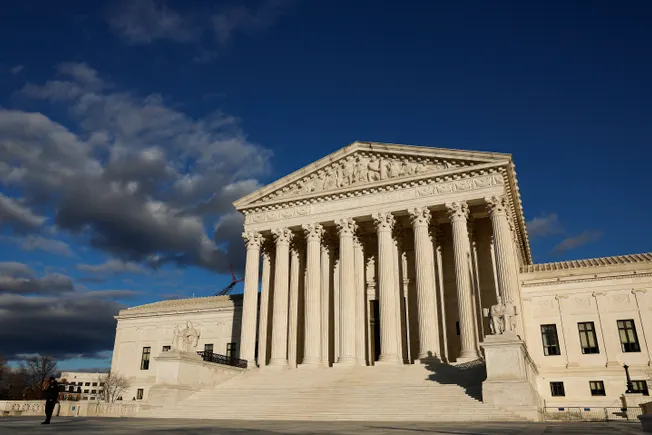
The U.S. Supreme Court's ruling in the Chevron case in June is expected to have a profound impact on laws affecting the construction industry, according to multiple legal experts.
In this summer'sLoper Bright Enterprises v. Raimondodecision, the justices overturned the precedent set by Chevron v. Natural Resources Defense Council in 1984—which had been one of the most influential rulings in federal administrative law. The decision stripped federal agencies of the power to interpret the laws they enforce, ruling instead that courts should be responsible for interpreting ambiguities in the law.
With the end of the so-called "Chevron deference," a range of regulations now face challenges on the grounds that the federal agencies enforcing them have overstepped their authority. Legal experts told Construction Dive that the National Environmental Policy Act, the Endangered Species Act, and the Occupational Safety and Health Administration's (OSHA) heat standard are among those that could be targeted.
"In the short term, we will see an increase in litigation based on this rationale, and we are already seeing many briefs in pending cases amended to include Loper Bright arguments," said Prianka Sharma, vice president of regulatory affairs and counsel for the American Road & Transportation Builders Association.

In theory, this ruling should make regulations less susceptible to swings with changes in presidential administration. However, changes will take time to materialize, which could delay permitting approvals as agencies figure out how to adapt to the new rules. Sharma noted that until new legal precedents are established at the federal district and circuit court levels, uncertainty will persist.
"What we really hope is that [Loper Bright] reduces the pendulum swing in policy based on who is in office," Sharma said.
Second ruling
Just days after the Loper Bright decision, the Supreme Court ruled inCorner Post v. Board of Governors of the Federal Reserve Systemthat the six-year statute of limitations for challenging agency regulations begins when the plaintiff is harmed by the rule, not when the regulation is finalized. In other words, builders newly affected by long-standing regulations may now have an opportunity to challenge them.
Together, these two rulings subject existing rules to new scrutiny, and this time, agencies will no longer receive the deference they once did under the Chevron doctrine. Curtis Moore, a partner at the Atlanta law firm Fisher Phillips, said this could mean the construction industry will contest laws they previously thought weren't worth the effort to challenge.

"If an employer and an agency had a disagreement over interpretation, in the past we might have said, 'Well, given that the agency gets deference on its interpretation, this is a pretty tough fight.' Now, that tilted scale is gone," Moore said.
Legal changes after Chevron
Rafe Petersen, a partner at Holland & Knight in Miami and a member of the firm's Chevron deference working group, believes that because of the Loper Bright ruling, Congress may pass more detailed laws in the future. When a new administration takes office, they often want to undo the work of the previous one, but now, new agency appointees can no longer interpret laws differently; Congress must amend the law to advance a new agenda.
"In the past, Congress might have felt that drafting a relatively vague law was doing agencies a favor, giving them room to maneuver," Petersen said. "But under current jurisprudence... unless there is a very clear statement and Congress really intends for the agency to do it, the courts will say, 'No, you don't have that authority; if you want to address this, go back to Congress.'"
Nevertheless, Sharma said agencies are also preparing for the post-Chevron era, "so they will also try to strengthen their arguments."
Petersen noted that an unintended consequence of Loper Bright is that agencies may rely more on guidance rather than regulations, which are harder to challenge.
"An ironic effect could be that agencies again regulate through guidance documents," Petersen said. "If they're worried that regulations will be overturned, they'll use guidance because it's harder to challenge, and they'll say, 'That's not legally binding.'"
Laws vulnerable to challenge
Petersen believes the Loper Bright ruling is most likely to apply to cases where the government tries to advance an agenda but the underlying law is not clear enough. He particularly expects regulations based on more modern environmental law and environmental justice concepts to be challenged, such as rules involving stormwater management, the National Environmental Policy Act, and the Endangered Species Act.
"Laws like the Clean Air Act and the Clean Water Act were largely written in the 1970s. At that time, no one considered, let alone wrote into the law, issues like 'how to address climate change' or 'how to address environmental justice,'" Petersen said.
Moore believes that some OSHA regulations, such as thepending heat standard, could also become vulnerable due to the agency's tendency to interpret its authority broadly. Additionally, the agency's claim that it has the right to record interviews without the permission of employees or management officials, a stance that contradicts interpretations from the early 1990s, could also face legal challenges.
For builders in warmer regions of the U.S., "[the heat standard] would almost always be triggered, and it would have a significant impact on how you schedule your work," Moore said. "I think it's that type of regulation that industry groups and employers would think is worth the legal expense to challenge, given that Chevron has been overturned."
Additionally, Petersen said multifamily builders might challenge how design and construction rules under the Fair Housing Act are interpreted, as well asHUD's new floodplain rules。
"For multifamily companies that are building multifamily housing, etc., I think it's at least worth looking into," Petersen said.

Sharma said two challenges already filed that could include Loper Bright arguments target the Federal Highway Administration's greenhouse gas rule and OSHA's "walkaround" rule. Petersen expects more Loper Bright-related cases to emerge in the coming month or two.
Other laws are less likely to be successfully overturned.
"I think in most cases where regulations were previously challenged under the Chevron doctrine, the original rulings will stand unless there are new reasons," Moore said. "I think this ruling is more forward-looking, meaning new regulations or new regulatory challenges will be decided in the post-Chevron era."
What builders should know
As cases move through the court system, different circuit courts may issue different rulings, which could make it difficult for builders to understand how to comply. The Supreme Court may be called upon more frequently to resolve circuit splits.
Until the Supreme Court establishes precedent, "I think you'll see inconsistent rulings from different circuits, which will at least initially create some headaches for employers as they try to figure out: 'If I operate in multiple states, one ruling says this, another says that, what do I do?'" Moore said.
For now, industry professionals must prepare for compliance, Moore said.
"If your industry is going to be affected by the heat stress rule or any other upcoming rule, be prepared," Moore said. "So, start thinking about implementing the policies and procedures you might need if the rule takes effect and challenges are unsuccessful."
In the short term, the ruling could slow down permitting approvals, Petersen said.
"What often causes agency delays is that they have to deal with the latest cases, the latest guidance, and figure out what to do when regulations are overturned. So, for agencies like the Army Corps of Engineers and the EPA, this is likely to have a slowing effect on permitting," Petersen said.
To cope with this, Petersen urges builders to apply for permits early and use them as soon as they are obtained.
"When there's this kind of rapid change and regulations being overturned, I always advise people to use permits even if construction is phased," Petersen said. "In uncertain times, if you can, move quickly to ensure all your efforts pay off."