
About one-fifth of construction workers lack permanent legal status. Can the next president change this?
Approximately 23% of laborers in the U.S. construction industry are undocumented immigrants, and the sector faces labor shortages and challenges in legalizing status. As the 2024 election approaches, candidates from both parties hold divergent positions on immigration policy, with H-2B visa reform, DACA, and training programs becoming focal points.
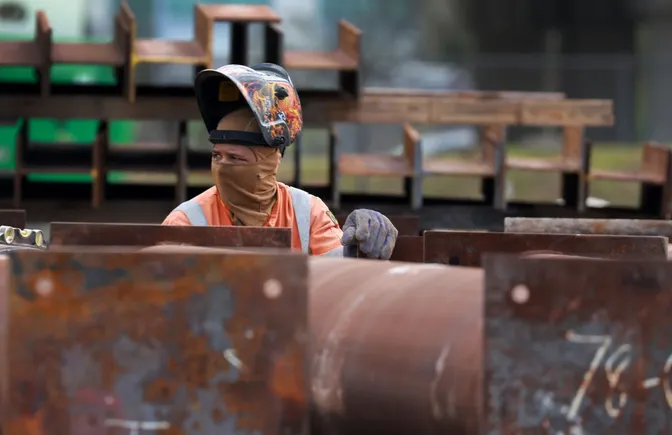
There is an open secret in the construction industry: the number of workers on job sites lacking permanent legal status is enormous. According to a 2021 report by the Center for American Progress, undocumented immigrants account for about 23% of the construction labor workforce in the United States; research by the Pew Research Center shows this proportion is 15% among all workers in the construction industry. These figures highlight the contradiction in construction: on one hand, the industry urgently needs workers, and on the other, it often opens its doors to those without legal work status. While this practice allows contractors willing to look the other way to gain a competitive edge, it also opens the door for employer abuse of labor.
"Having a large number of undocumented workers in construction benefits no one," said Brian Turmail, Vice President of Public Affairs and Workforce at the Associated General Contractors of America. "It makes it easier for unscrupulous contractors to exploit these workers and then underbid responsible contractors."

With the 2024 presidential election approaching, this issue is becoming increasingly important for construction company executives seeking to legally expand their workforce. According to projections by the Associated Builders and Contractors, the construction industry will need to add nearly 454,000 workers in 2025 on top of normal hiring to meet industry demand. The forecast also assumes that growth in construction spending will slow significantly next year, although other data suggests nonresidential construction planning should accelerate by mid-2025.
To this end, construction industry organizations continue to advocate for meaningful reform of the current immigration system. Anirban Basu, chief economist at ABC, said this means promoting more programs that allow workers to enter the country legally and work in construction.

"If we can somehow resolve the issue of these 11 million or 12 million undocumented immigrants—is there a path, even if not citizenship, at least a work visa? Can they be brought out of the shadows?" Basu said. "Can they be hired by contractors without employees or employers having to fear penalties?"
H-2B Visa Reform
One reform measure is raising the annual cap of 66,000 visas in the H-2B visa program, said Kristen Swearingen, Vice President of Legislative and Political Affairs at ABC. The H-2B visa program provides foreign temporary workers to industries such as construction to alleviate labor shortages.
"Common-sense solutions to address America's 12 million undocumented immigrants include expanding the H-2B visa and reforming the entire program," Swearingen said. "The current H-2B cap is too low to effectively address severe worker shortages in construction and other industries; the cap should be set based on economic needs."

Regarding the presidential election, both candidates have pledged to reduce illegal border crossings. However, their positions differ on facilitating legal immigration for foreign-born workers. L.J. D'Arrigo, partner and head of the immigration practice at Harris Beach, a law firm in Rochester, New York, said that if Kamala Harris is elected, she would likely continue the Biden administration's approach of expanding legal immigration pathways, such as the H-2B visa program. During Harris's tenure as vice president, the Department of Homeland Security announced a record 20,000 H-2B temporary non-agricultural worker visas for citizens of El Salvador, Guatemala, Honduras, and Haiti, as part of nearly 65,000 supplemental H-2B visas for fiscal year 2023.
"I think predicting what happens under a Harris administration is clearer. I expect the allocation and availability of H-2B visas to at least remain at current levels," D'Arrigo said. "Although Trump personally used the H-2B visa program in his businesses, based on his history of restricting legal immigration, how he would handle the H-2B visa program is unclear."
During Trump's tenure, he nearly doubled H-2B visa numbers in 2019. However, in June 2020, his administration suspended the program, saying it was to protect American workers from job competition caused by the economic downturn from the COVID-19 pandemic.
"There has been little reporting on what policies Trump might pursue regarding 'legal immigration' in a second term," D'Arrigo said. "We can predict what Trump's 2025 immigration policy might look like through the lens of his previous term. Under his leadership, we witnessed record numbers of visa denials, leaving American businesses without the talent they need to succeed in a globally competitive economy."
DACA and TPS
In addition to significantly expanding the H-2B visa program, AGC is also asking Congress to legislate authorization for the Deferred Action for Childhood Arrivals program and the Temporary Protected Status program. DACA provides deportation relief and work permits to young immigrants who entered the U.S. illegally as children with their parents, often called "Dreamers." Trump attempted to end the DACA program in 2020 but was blocked by Congress. D'Arrigo said that if re-elected, Trump would likely seek to end DACA again.

TPS provides temporary legal status to immigrants from crisis-stricken countries. Trump may also seek to revoke TPS designations. On the other hand, D'Arrigo expects a Harris administration to make DACA a high priority, as reflected in Biden's immigration policies.
But Basu pointed out that simply increasing the number of American workers is not enough to solve the construction industry's problems. Opponents of immigration reform argue that bringing in more workers would lower wages, according to the Center for Immigration Studies. However, for Basu, the key challenge remains finding workers with specialized skills.
"I don't talk much about worker shortages, because I don't think this is truly a worker shortage," Basu said. "It's a skills shortage, a shortage of skilled workers." Basu said many border crossers lack the refined skills needed for the equipment, technology, and processes used in the U.S. construction industry. Therefore, while an influx of workers can fill gaps in the short term, it does not address the core issue of specialized training.
Training Solutions
AGC is working with Republican Rep. Morgan Luttrell of Texas and Democratic Rep. Tom Suozzi of New York to develop bipartisan legislation addressing a range of immigration and work authorization program issues. AGC recommends doubling funding for the Perkins Act, which supports career and technical education, and increasing federal postsecondary funding for construction education and training programs. Turmail said federal officials currently direct about 80% of postsecondary funding toward four-year degree programs, while only 38% of Americans earn such degrees.
Basu also emphasized the need to retain foreign talent. He questioned the logic of sending talented individuals educated at U.S. universities back to their home countries, arguing that if they "have talent in science, technology, engineering, or mathematics, we need them to stay here." "There are large numbers of kids from India, China, and elsewhere who come to our world-class colleges and universities (in the U.S.). After they earn STEM degrees, what do we do? We send them back to Seoul, Beijing, Delhi, Baku, or elsewhere," Basu said. "That's foolish. I've said it many times: let's build a wall to keep these people in."
According to AGC, improving training and comprehensive immigration reform are equally critical to solving the labor problem. Turmail emphasized the need for both stronger border security and a legal pathway for immigrants already in the industry. "There's no question we need better border security, and we also need a path to legal status for undocumented workers already in the country," Turmail said. "We remain focused on revitalizing the domestic pipeline of new workers and ensuring there are ample, legal ways for people to enter the U.S. and work in construction, so our industry can keep pace with the demands of new infrastructure and economic development projects."