
Tech
How construction professionals use technology to save costs, review drawings, and improve site safety
When introducing technology to construction sites, the key question is no longer "what new technology is available," but "how can existing technology help my site." This article brings together insights from engineers, consultants, and academics, analyzing technology applications and sharing best practices.
AI can point out the problem, but cannot solve it for you
The application of artificial intelligence in the construction industry is increasingly widespread, capable of quickly analyzing data and identifying risks, but it cannot replace human decision-making. This article points out that insight does not equal results, and technology should support rather than replace professional judgment.
Six construction tech startups recently raised a total of $234 million
The construction technology sector has recently seen a new wave of capital influx, with six startups raising a combined $234 million. Among them, TerraFirma led with $115 million, followed closely by Arrakis and Gritt, with funds earmarked for technology development, team expansion, and market growth.
"Trust but Verify": How Novo Construction Uses AI to Compare Drawing Sets
Novo Construction leverages the Diffs feature of the AI tool BuildCheck to automatically compare drawing versions on two California projects, replacing the time-consuming manual overlay process and helping project managers quickly identify changes to walls, doors, windows, and more, while assessing cost impacts early. CIO Colin Stoner notes that the tool greatly lowers the learning barrier and emphasizes that the team maintains a "trust but verify" attitude toward AI.

Procore Acquires DroneDeploy for $845 Million to Strengthen Construction Site Visual Intelligence and AI Strategy
Procore announced on Wednesday that it has reached an agreement to acquire DroneDeploy for $845 million in cash. DroneDeploy is a robotics and visual intelligence platform used in over 180 countries. Upon completion of the transaction, the two companies will sell each other's products and integrate vast amounts of construction site data to drive AI-powered automated responses.

McKinsey Report: How AI Automation Is Embedded into Construction Industry Workflows
On July 15, McKinsey released the report 'How AI Is Reshaping the Future of the AEC Industry,' stating that AI automation is not an 'extinction event' for the construction industry, but it will fundamentally change how tasks are executed. The report notes that companies with proprietary data, decision-making workflows, and outcome-based billing capabilities will benefit. AI is expected to automate 39% of non-manual work in the construction industry and 50% of related tasks in the architecture and engineering fields. The report divides automation goals into three phases: short-term (within 18 months), medium-term (18 months to 4 years), and long-term (over 4 years), and recommends that companies prioritize 3 to 5 high-value workflows and clarify a 'buy, build, or partner' strategy.
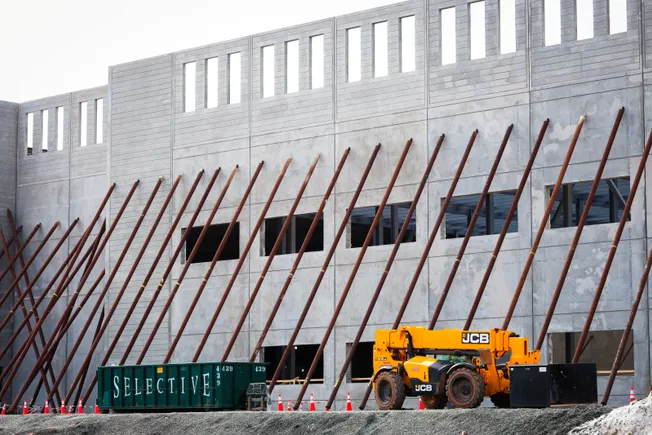
AI data center expansion may force US power companies to reassess generation planning
A latest research report from Bank of America indicates that the rapid expansion of AI data centers is reshaping the US electricity demand landscape. Over the next five years, the US needs to add more than 230GW of generation capacity, but regulated utilities are expected to add only about 93GW of certified supply, leaving a gap of over 100GW. Data center loads could reach 125GW, driving a 4.1% compound annual growth rate in electricity demand from 2026 to 2030. Tight supply of large gas turbines is prompting developers to turn to on-site gas engines, while utilities are extending coal plant operations, deploying batteries, and advancing transmission upgrades.
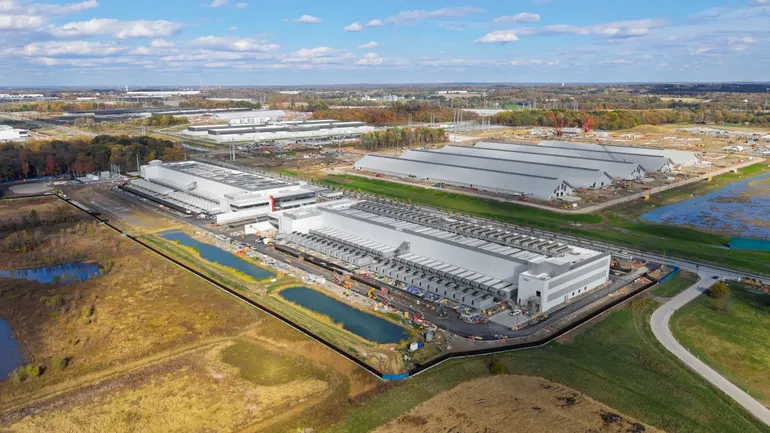
New Construction Challenges and Response Strategies Arising from Accelerated Data Center Development
The pace of data center construction is accelerating, but the difficulty of planning, permitting, and delivery is rising in tandem. Power and water issues are drawing regulatory and community attention, with approval times extending from under a year to several years. The construction phase faces material delivery delays, price fluctuations, and labor shortages. While modularization and prefabrication can compress schedules, they reduce tolerance for errors. Through construction technologies such as reality capture, digital documentation, and deviation analysis, project teams can improve on-site visibility, identify deviations and coordination issues early, and maintain decision-making certainty amid accelerated progress.
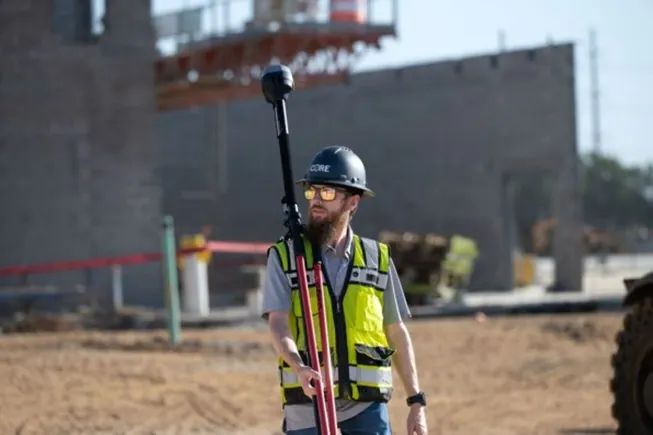
CORE Construction puts GNSS in the hands of field superintendents, and here's what changed
CORE Construction puts Emlid centimeter-level GNSS receivers directly into the hands of field superintendents and project engineers for immediate self-checks on critical steps. Before one concrete pour, a superintendent found all anchor bolts offset by about 6 inches, and timely correction saved significant costs. This tool serves as an internal verification method, compensating for the limitations of drone aerial surveys in detail validation and reducing temporary reliance on external surveyors. The company is currently beta-testing across three regions, with plans to establish a standardized deployment framework by summer 2026.
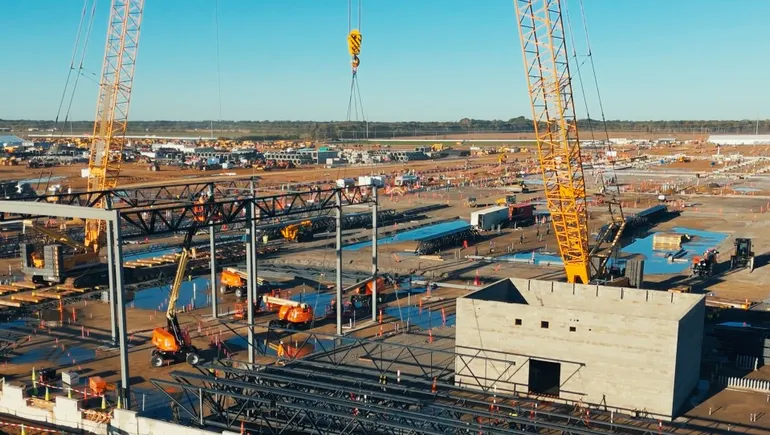
Meta announces $50 billion investment in Louisiana data center and surrounding areas
Meta announced on Monday that it will invest over $50 billion in its data center and surrounding areas in Richland Parish, Louisiana, a move seen as one of the largest investments in artificial intelligence infrastructure. After expansion, the facility will cover nearly 10 million square feet in total area with an IT capacity of 5 gigawatts, making it Meta's largest data center worldwide. Construction began in December 2024, undertaken by Turner Construction, DPR Construction, and Mortenson, and an energy agreement has been reached with Entergy Louisiana.