
New Construction Challenges and Response Strategies Arising from Accelerated Data Center Development
The pace of data center construction is accelerating, but the difficulty of planning, permitting, and delivery is rising in tandem. Power and water issues are drawing regulatory and community attention, with approval times extending from under a year to several years. The construction phase faces material delivery delays, price fluctuations, and labor shortages. While modularization and prefabrication can compress schedules, they reduce tolerance for errors. Through construction technologies such as reality capture, digital documentation, and deviation analysis, project teams can improve on-site visibility, identify deviations and coordination issues early, and maintain decision-making certainty amid accelerated progress.
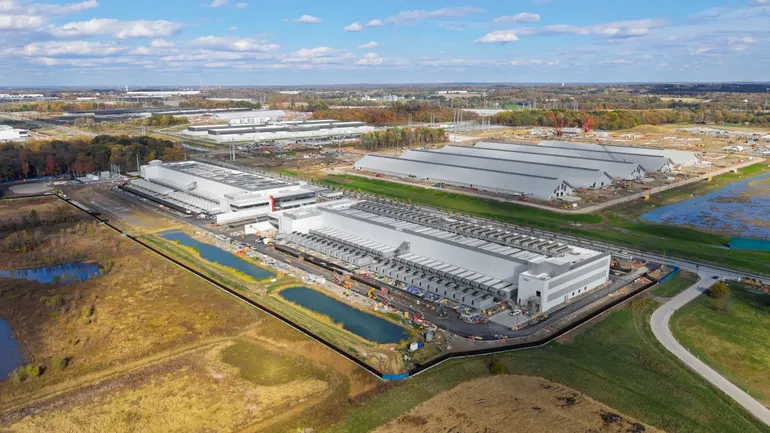
In the construction sector, data centers are one of the fastest-growing segments. Driven by the proliferation of AI applications, cloud expansion, and rising demand for digital infrastructure, developers are racing to bring new capacity online. However, speed is not the only challenge. As the industry scales, the difficulty of planning, approving, and delivering data center projects continues to increase.
Obstacles emerge long before construction begins. Power access has become a critical constraint in project planning, while water consumption and grid capacity issues are drawing increasing attention from regulators, utilities, and local communities. Municipalities that once rarely questioned development projects are now more carefully assessing the long-term impacts of large and medium-sized data center projects.
Changes in approval timelines reflect this trend. In many regions, approvals that once took less than a year can now take several years, as developers navigate additional regulatory requirements, community concerns, and infrastructure planning. Meanwhile, project owners still face pressure to bring facilities online as quickly as possible to meet demand.
Once construction begins, another set of challenges follows. Material and equipment lead times can disrupt schedules, price volatility introduces uncertainty, and labor shortages continue to impact large projects. These pressures are particularly acute in the data center sector, where projects are often built in areas where the local workforce is insufficient to support the required construction intensity and pace.
Solving one problem creates another
To overcome labor constraints and accelerate delivery, the industry is increasingly adopting modular construction, prefabrication, and advanced digital construction processes. Components that were once built entirely on-site are now manufactured off-site and assembled after arriving at the project site.
These methods help compress schedules and use existing labor resources more efficiently. However, they also introduce new challenges: as construction becomes more industrialized, tolerance for error narrows.
Prefabricated components that exceed dimensional tolerances, have incorrect assembly sequences, or have coordination issues that go undetected can have serious downstream impacts. The same strategies that help teams speed up construction also increase the importance of identifying issues early before they affect progress.
As a result, industry discussions have moved beyond the issue of speed alone. The key question is no longer how to build data centers faster, but how to maintain certainty and visibility while accelerating construction.
Visibility becomes a competitive advantage
For project teams, objective visibility into site conditions helps reduce the uncertainty brought by compressed schedules and complex delivery methods. When teams can detect deviations, coordination issues, or schedule risks earlier, they often have more options to address them before they escalate into costly disruptions.
This is where construction technology—especially deviation analysis—is playing an increasingly critical role. Reality capture, digital documentation, BIM and VDC processes, and construction analytics are helping teams compare actual progress against plans, verify installation quality, and enhance confidence in project decisions. Stakeholders no longer rely solely on manual updates or periodic site inspections; they can access more timely information about actual site conditions.
Solutions such asHexagon Multivista Capture, Create, Analyze servicessupport this approach by integrating documentation, digital construction processes, and analysis into a more unified experience. The value lies not just in collecting more project data, but inhelping teams use that informationto identify risks earlier, improve coordination, and make informed decisions in a rapidly changing environment.
As data center demand continues to grow, the industry will likely keep adopting new delivery methods to accelerate construction. But each increase in speed introduces new complexity. The organizations that ultimately gain an advantage may not be those that simply act fastest, but those that combine speed with visibility and can make confident decisions as conditions change.
Learn howHexagon Multivistahelps project teams gain objective visibility, reduce risk, and make smarter decisions during data center construction.