
Federal Agency New Rules Focus on Tip Credit, Child Labor Restrictions, and EEO-1 Reporting Issues
Several U.S. federal agencies submitted regulatory updates to the White House Office of Management and Budget on Friday, publishing timelines for multiple proposed and final rules covering independent contractor classification, tip credit, minor work hours, pregnancy worker protections, EEO-1 reporting repeal, and H-1B visa reform. These actions are part of the Trump administration's efforts to reshape the federal employment law compliance system, particularly in the areas of anti-discrimination and wage and hour regulations.
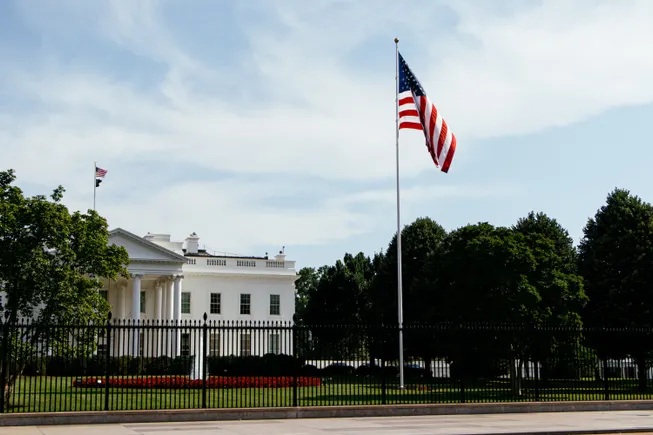
Federal agencies including the U.S. Department of Labor, the Equal Employment Opportunity Commission (EEOC), and the Department of Homeland Security (DHS) submitted updates on new regulations and existing regulatory work to the White House Office of Management and Budget (OMB) on Friday. The documents disclosed timelines for several proposed and final rules, covering topics such as worker classification, minor work hours, pregnancy worker protections, and disparate impact liability theory.
These announcements are part of the Trump administration's broader effort to reshape the federal employment law compliance system, particularly in the areas of anti-discrimination and wage and hour law.
DOL: Independent contractor rule expected in October
One of the significant items that gained a clearer timeline last week is the Trump administration's independent contractor rule, whose proposed version was issued by the Department of Labor in February. The proposal aims to return the Department of Labor's interpretation of the Fair Labor Standards Act (FLSA) to its version from Trump's first term. The rule will center on an "economic reality test," examining two core factors regarding a worker's primary source of income: the worker's degree of control over their work, and the opportunity for profit or loss based on initiative, investment, or both.
The Department of Labor set the deadline for the independent contractor final rule as October 2026. The agency estimates the rule will generate "initial, one-time regulatory familiarization costs" of $488 million, but that cost savings of nearly $683 million through "increased clarity" will offset these costs.
Additionally, the Department of Labor confirmed it is continuing to advance a proposed rule on the interpretation of joint employment standards under the FLSA. The agency announced a proposal in April but has not yet provided a timeline for a final rule.
The Department of Labor also announced new wage and hour regulatory efforts, including a proposal aimed at addressing the tip credit under FLSA minimum wage requirements. The Department of Labor gave a timeline of August for this proposal, which will continue an area addressed by previous administrations. The most recent similar effort was initiated by the Biden administration, which sought to clarify when employers can take a tip credit for employees performing both tipped and non-tipped work (i.e., "dual jobs"). That proposal was struck down by a federal judge and subsequently abandoned.
Another proposal targets a series of state and local government initiatives allowing younger workers to take on more work hours to alleviate labor shortages. The Department of Labor set September as its target to revise its regulatory standards under the FLSA regarding permissible work hours for 14- and 15-year-olds.
EEOC: Revisiting old guidance, shift in enforcement direction
The EEOC, the federal workplace civil rights enforcement agency, has made headlines in recent weeks for submitting plans to the White House to terminate its annual demographic data reporting programs, such as EEO-1. Last week, the agency clarified that it will issue a notice of proposed rulemaking this month, with the public comment period ending in September.
"This EEO data collection is not statutorily required but is an agency-created requirement that imposes significant financial and administrative burdens on U.S. employers, including thousands of small businesses," the agency said in its statement submitted to OMB.
Lawyers previously interviewed by HR Dive generally advised HR departments to maintain their EEO-1 reporting processes in case the program is reinstated and to comply with applicable state-level data collection requirements.
The EEOC also announced plans to rescind several interpretive rules dating back decades. One of these documents concerns disparate impact liability in the context of national origin discrimination, consistent with the Trump administration's broader effort to end regulatory agencies' reliance on disparate impact. Another similar action would rescind a 1979 interpretive rule on affirmative action plans.
The Commission also seeks to rescind a 1979 appendix to its sex discrimination guidelines, which the EEOC says was written shortly after the passage of the Pregnancy Discrimination Act. The agency stated that the appendix is "outdated" and predates the Pregnant Workers Fairness Act enacted in 2022.
In a LinkedIn post on Monday, Kalpana Kotagal, the EEOC's only Democratic commissioner, said she voted against the agency's regulatory changes. Specifically, Kotagal stated that the potential rescission of EEO-1 reporting could "undermine its ability to investigate discrimination," while other proposed updates would weaken workers' civil rights protections.
"I fear these rescissions will leave gaps, create uncertainty for employers, and ultimately undermine equal employment opportunity," Kotagal wrote. "This is an unforced error; we should be supporting workers, not weakening their civil rights."
Coming up: Another update to the H-1B visa program
Employers have already had to adapt to comprehensive reforms to the H-1B visa program for skilled foreign workers. Within the past year, the Trump administration issued changes to prevailing wage rates for visa holders, implemented wage-based selection criteria for visa applications, and announced a $100,000 fee for new H-1B visas—the latter of which has faced multiple legal challenges.
Last week's regulatory agenda showed that DHS is advancing further updates. The agency stated it will propose a new rule in August seeking further H-1B program reforms, including revising cap-exemption eligibility, stricter scrutiny of employers violating program requirements, and enhanced oversight of third-party placements.
"These changes aim to improve the integrity of the H-1B nonimmigrant program and better protect the wages and working conditions of U.S. workers," DHS said.