
BIM is becoming the most effective profit protection strategy in the construction industry
Profit margin erosion has long been viewed as inevitable 'weather,' but BIM is becoming a powerful tool for contractors to protect profits by addressing issues upfront, reducing rework, and improving collaboration efficiency. Data shows that BIM can reduce costs by 15-24% during the design phase, 5-15% during the construction phase, and significantly improve operational efficiency.
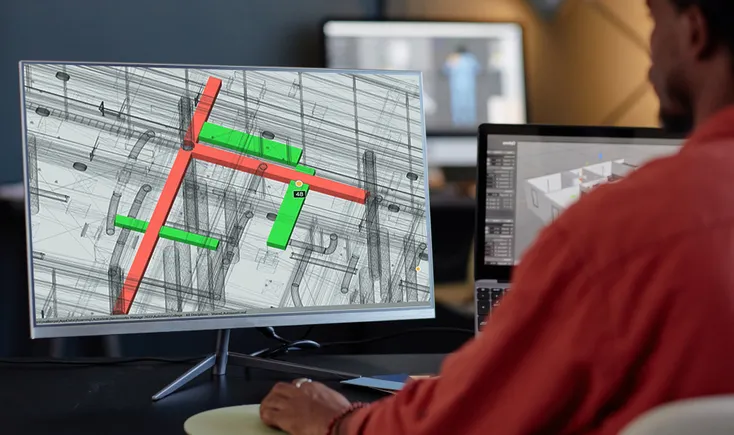
For years, margin erosion in construction has been viewed like the weather—unpredictable, frustrating, and mostly unavoidable.
On-site clashes, pipe and structure collisions discovered after prefabrication begins, workers idle waiting for coordination issues to be resolved—these problems should have been caught weeks earlier. They are often dismissed as routine site hassles, but they come at a steep cost:Construction reworkaverages about 5% of total project costs. And in an industry where contractor margins are often in the single digits, a single avoidable 5% cost hit can wipe out the entire profit of a project.
Because most margin loss does not occur at a single moment but erodes gradually through on-site patching, labor inefficiency, material waste, schedule compression, and countless hours spent by project teams resolving issues that should never have reached the field, it is often discovered too late.
This is why BIM is being repositioned within construction firms—no longer just a visualization tool, but one of the clearest margin protection strategies available to contractors today.
The reason is simple: BIM moves problem-solving earlier.
Coordinated models can expose clashes before demolition and reinstallation are needed; constructability issues can be identified before labor is mobilized; sequencing can be improved, material waste reduced, and teams can gain a clearer picture of risk before the site starts paying for it.
The return-on-investment data speaks to its importance.GEMresearch has found that BIM-led workflows can reduce project costs by 15-24% during the design phase and 5-15% during the construction phase. But the benefits go beyond cost: during design, BIM improves productivity by 38-43% by catching coordination issues and rework risks before they reach the site, where fixes are relatively inexpensive; during construction, productivity gains of 25-36% are linked to better clash detection, smoother sequencing, and fewer change orders.
The value does not stop at delivery: in the operations and maintenance phase, BIM-related workflows can reduce whole-lifecycle costs by 10-20% and deliver roughly 35% improvements in operational efficiency.
However, the key is not just having BIM, but making BIM close enough to execution to truly protect margins.
A model that exists only in the design review phase cannot prevent field rework; a clash report that identifies hundreds of issues but drives no resolution likewise protects no margin. BIM only begins to create financial value when it influences procurement timing, multi-trade coordination, prefabrication preparation, and installation sequencing, so teams do not have to improvise on the fly amid site conflicts.
This also explains why more contractors are seeking support beyond the preconstruction phase.Attentive.aihas previously helped contractors accelerate automated quantity takeoff, estimating, and bid management in the preconstruction phase throughBeam AIEntering the construction phase is a natural extension, enabling the company to support contractors across the full lifecycle. With the newly launchedBIM CoPilot, its support now extends into the construction phase through human-reviewed multi-trade BIM management covering architecture, structure, civil, HVAC, plumbing, electrical, and fire protection.
This is part of a larger shift currently underway. Over the next decade, the contractors best positioned to protect margins will be those that treat BIM not merely as a coordination tool, but as one of the most effective defenses before erosion begins on the construction site.