
COVID-19 resurgence across the U.S., construction contractors brace for a new wave of shutdowns
As COVID-19 cases surge across the country, construction contractors are preparing for a potential new round of work stoppage orders. Industry executives and economists warn that winter construction may face more uncertainty.
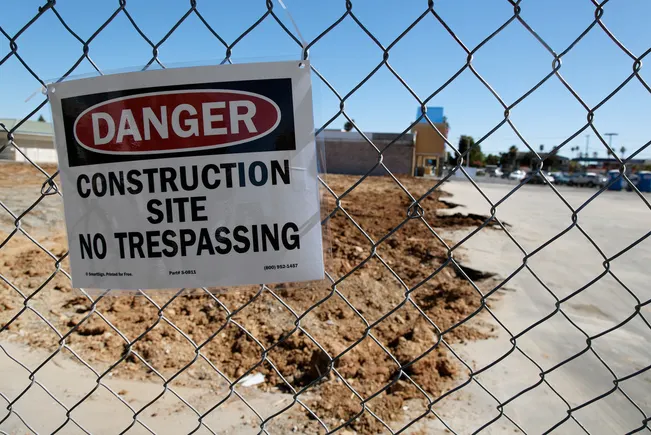
This article is the first of a two-part series exploring the potential impact of the sharp resurgence of COVID-19 cases across the United States on the construction industry.Click here to read Part 2。
Eran Polack is preparing for a long, cold winter. As CEO of HAP Construction in New York City, he knows the signs that precede a government-mandated shutdown. Lately, he has been seeing more and more of them.
"We've heard this song before," Polack said. "Schools are closed, that's a sign. Restaurants can't operate after 10 p.m., gyms can't open, gatherings can't exceed 10 people. So, a shutdown order is looming."
These signs have prompted Polack and his team to accelerate work on the Maverick project, a 20-story, 312,500-square-foot residential and ground-floor retail complex on West 28th Street, now in its final construction phase. They are racing against a potential shutdown, working three shifts and adding weekend overtime to complete critical milestones before what Polack believes is an inevitable halt.
"New York City will lock down again," Polack said. "I'm 100% sure of it."
He has taken other precautions as well. For example, ahead of the Thanksgiving holiday, he closed his company's midtown Manhattan headquarters and plans not to reopen it until at least January 15.
"Safety is paramount," Polack said. "I'm going to shut the doors and have everyone work from home."
Concerns about winter construction
Polack is not alone. With virus cases surging nationwide and daily deaths nearing 2,100—the highest level since May—contractors across the country are worried about the possibility of renewed shutdown orders to prevent the spread of COVID-19. This mirrors the shutdowns during the early weeks of the pandemic, when construction came to a halt in most areas before being deemed essential.
"I'm concerned about another shutdown or other factors that could impede our work," said Kyle Peacock, CEO of Peacock Construction in San Francisco, which provides medical and life science construction services as well as commercial interior work. "Our leaders are facing huge challenges right now."
In Miami, Florida, Don Neff, president of LJP Construction Services, a risk management and owner's representative firm, says shutdowns are once again a topic of discussion.
"They might lock down again," Neff said. He recently participated in a conference call with the South Florida chapter of the Associated General Contractors of America. "Everyone is nervous, not knowing what's going to happen next."
After news in November that several vaccines were on the horizon, there were a few weeks of optimism in the construction industry that shelved projects would soon restart. But now, as cases continue to surge nationwide, contractors are increasingly realizing that even active projects may face more shutdowns, and that restarts could take longer.
"I have clients right now considering making remobilization plans for March and April, and then bringing people back on site in May and June," said Joe Natarelli, who leads the construction practice at Marcum, a national accounting firm based in New York.
He notes that with the possibility of future shutdowns still looming, contractors and owners are cautious about restarting stalled projects too early. "I know May and June sound far off, but contractors are using that as a starting point," Natarelli said. "The last thing you want is to start up and then be forced to shut down again."
Possibility of a federal shutdown
Beyond the direct impact of rising case numbers, construction industry thought leaders are also anticipating the real possibility of major policy shifts after Joe Biden takes office in January.
"If you look at the parabolic shape of the infection curve and current trends, and imagine what the U.S. will look like in January, it could be very scary," said Anirban Basu, chief economist at Associated Builders and Contractors. "At that point, the newly inaugurated president might decide to shut down to save lives. Given that we're only two or three months away from a vaccine, we have to get through the next 60 to 90 days."
In fact, with the change in administration, the construction industry may no longer enjoy the special status it had in 2020 that allowed businesses to continue operating.
"The virus is spreading so fiercely that it's conceivable policymakers could determine that construction is not essential in a broader range of areas," Basu said.
Biden has not indicated he will push for amandatory federal shutdown order. Since being declared president-elect, he has appointed a coronavirus advisory board of medical and economic experts to help him decide how best to combat the virus.
More potential labor shortages
Even if mandatory shutdown orders do not materialize, there are concerns about the ability to maintain construction in the short term as more workers are affected by the virus—either contracting it themselves or being absent to care for others.
"Even if it's not a government shutdown, it could be labor absenteeism," said Bob Barone, director at Partner Engineering and Science, a consulting firm based in Torrance, California. "More people are testing positive now, the virus is more widespread. And schools are closing. If you have to leave home to go to work, like a construction worker, and you have a 6-year-old, you can't go to work. It creates a ripple effect."
Basu says contractors should take proactive steps to prepare for any potential shutdown.
"If I look at this from a contractor's perspective and ask myself, 'Okay, what do I do?' I basically have to put my business into hibernation and preserve cash," Basu said. "It's winter now, and we're shut down. Once the vaccine frees up the economy and allows for faster growth, the question comes down to how many contractors survive and seize the opportunity."
For tips on how to prepare for a potential shutdown,please click here to read Part 2.