
Pandemic Accelerates Drive-Thru Design Innovation in Fast Food Industry
The pandemic has prompted fast food brands such as Arby's, McDonald's, and KFC to redesign their drive-thru lanes, enhancing efficiency and accuracy by adding more lanes, introducing digital menus, and adopting AI technology. Industry surveys show that 38% of franchisees have already added drive-thru capabilities, while multiple brands plan to launch new store models that reduce dine-in options.
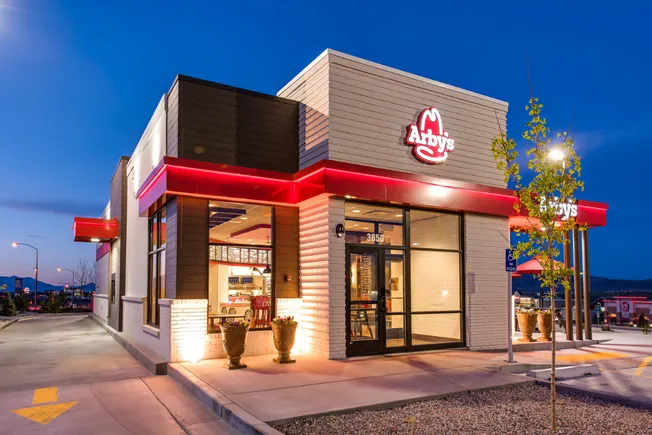
In 2017, Arby's found that its production line could no longer adapt to an increasingly complex menu—the addition of new protein ingredients meant that the single-station sandwich-making model created too many cross-tasks and opportunities for error, said John Kelly, Arby's Chief Operating Officer. The company then tested a new production line: all steps flowed sequentially to a pickup area where team members served customers. The test worked, improving sandwich quality and the overall team experience.
The pandemic further highlighted the need for faster, more accurate order processing, and Arby's is continuously rolling out this production line, which can adapt to stores of any size, across its system.
Kelly noted that during the closure of dine-in services, Arby's served 50% more vehicles during the lunch period, overall traffic increased 50%, and a large number of customers placed large orders.
"We not only need to make the drive-thru faster and more accurate, but also extremely busy," Kelly said.
The fast-food chain reallocated staff originally designated for dine-in to the drive-thru lane, adding verification steps to ensure order accuracy, Kelly said. He also mentioned that the company plans to have employees take orders outdoors when the weather is good to optimize production speed.
But increasing throughput and labor efficiency is not the whole story of drive-thru innovation at Arby's and other fast-food brands. The pandemic accelerated demand for digital menu boards, artificial intelligence, double-lane drive-thrus, and drive-thru-only stores. Many fast-food brands including Wendy's, Taco Bell, Del Taco, Burger King, KFC, and McDonald's have also shown interest in developing these concepts.

Expanding drive-thru capacity
Franchisees have also taken measures to adjust operations. Of the franchisees surveyed by TD Bank in its 2020 Restaurant Franchise Pulse, 38% said they had added drive-thru capabilities to cope with pandemic restrictions, 72% implemented enhanced delivery services/online and mobile ordering, and 38% launched streamlined menus.
"As far as drive-thru is concerned, I think the impact will be more ancillary," said Mark Wasilefsky, head of TD Bank's Restaurant Franchise Finance group. "It will be continuously adjusting menus to improve drive-thru times, enhance service, and track these metrics."
Wasilefsky noted that one way brands increase long-term capacity is by transitioning from single-lane to double drive-thru lanes, and sometimes more where space allows.
McDonald's USA Chief Restaurant Officer Mason Smoot said at an investor day on November 9 that McDonald's is seeking to build more double-lane drive-thrus, allowing two customers to order simultaneously. Joe Erlinger, president of McDonald's USA, said at the same event that a third drive-thru lane would enable operators to handle complex and large orders without slowing down the line.

KFC's "next generation" prototype store, released on Wednesday, focuses on pickup and delivery, with one drive-thru lane for in-person ordering and another dedicated to mobile order pickup, which helps create a more seamless experience, said Brian Cahoe, KFC's Chief Development Officer.
"In addition to delivery, customers can also drive through and pick up paid orders, and we are studying different arrangements." Cahoe said.
This could include two lanes converging at one pickup point (which is fairly common among fast-food brands), two different pickup points, or even conveyor belt systems that deliver products to customers, Cahoe added.
Arby's has double drive-thru lanes at a few stores in its system, and its latest Inspire design standard prototype includes a 40-foot dine-in area and a double-lane drive-thru.
"I don't think it will get to the point of having four or five different lanes for a restaurant, because space constraints are there," Kelly said.
Adding or expanding drive-thru lanes at existing stores is equally difficult and time-consuming.
"I'm sure there will be many franchise owners appearing before local zoning boards, negotiating with neighboring landlords, trying to expand their properties... if they want to increase the scale of drive-thru, but that takes longer," Wasilefsky said.
Many brands have launched new prototypes with expanded drive-thrus, but most won't be built until next year or later. Taco Bell will open its first "Go Mobile" stores in the first quarter of 2021, which include a priority drive-thru lane for mobile orders, curbside pickup parking spots, in-store pickup shelves, and smart kitchen technology.
Burger King will build a batch of newly designed restaurants in Miami, Latin America, and the Caribbean next year. These designs feature double or triple drive-thru lanes, and one model places the kitchen above the drive-thru lane and delivers food via conveyor belts.

Digital experience transformation
Although many analysts expect consumers to return to dine-in when it is safe, the pandemic has significantly changed consumer behavior in ways that may be irreversible.
"The pandemic really forced people to truly utilize mobile ordering and delivery sales, and it worked well. People enjoy it," Wasilefsky said.
This means more pressure on the drive-thru, and many chains have turned to technology to improve the customer experience.
Many chains are researching digital menu boards that can also provide predictive sales and better measure consumer behavior. Digital menus make restaurants more flexible and can collect data on customer ordering behavior, Wasilefsky said.
"Data, as in many other industries, is the driver; companies that can best manage, predict, and utilize this data will gain a significant first-mover advantage over brands that cannot or do not," Wasilefsky said.
Arby's is beginning to see opportunities to use digital menu boards, especially order confirmation boards, to improve accuracy. The company also anticipates possibly incorporating AI or one-on-one personalization in the drive-thru in the future, but only if it is effective for customers.
Restaurant Brands International plans to modernize 10,000 drive-thrus at Burger King and Tim Hortons stores by mid-2022. The company plans to install 40,000 digital screens with predictive sales technology. As of September, new drive-thru menus had been installed at 800 Tim Hortons and 1,500 Burger King locations.
McDonald's has deployed Dynamic Yield digital menu boards across its U.S. and Australian systems and is currently testing ways for customers to identify themselves at the point of ordering and directly link to payment, Smoot said. This identification will take place at the drive-thru, self-order kiosk, or front counter, he added. The company is also testing an automated ordering system developed by the McD Tech Labs team in the drive-thru, Smoot said.

Fast-casual restaurants target the drive-thru lane
As fast-food brands seek to add lanes, redesign, or introduce new technologies, many fast-casual brands are scouting real estate where they can build a drive-thru without having to remodel existing stores.
Jodi Boyce, executive vice president of Teriyaki Madness, said the chain has a few stores that originally had drive-thrus or unused pickup windows. The chain converted some of these to drive-thru models, and although building sales and teaching customers to use this channel takes time, the drive-thru has begun to account for about 20% to 25% of business at these stores.
"Previously, we didn't consider real estate with drive-thrus at all. We thought it was impossible for a brand that makes food fresh to order and takes a few minutes," Boyce said.
But the chain found that streamlining the menu and retraining the team—and sometimes customers—can make the drive-thru operate efficiently.
"So this has slightly changed our real estate strategy, and we now consider locations with drive-thrus or pickup windows," Boyce said. "If a great location with a drive-thru appears tomorrow, we would grab it immediately."
Teriyaki Madness is also reaching out to restaurant concepts that are closing to see if it can take over their leases, Boyce said.
Noodles & Company is also expanding its drive-thru business to accommodate mobile orders, and for good reason. Its newest drive-thru restaurant in Wisconsin set sales records on days 7, 14, and 21 after opening, said Dave Boennighausen, CEO of Noodles & Company, in an October investor call. 78% of digital orders at that store were completed through the drive-thru, and despite high traffic, the average handling time was only 62 seconds.
"We continue to target at least 70% of new restaurants to include a 'pre-order drive-thru window,'" he said. "These numbers give us more confidence not only in reducing building footprint, but also in testing cost-effective construction costs that include only takeout and/or digital sales."

The decline of the dining area
McDonald's is exploring an "express mode" that would have small or no dining areas, focusing on drive-thru, delivery, and takeout. Del Taco, Wendy's, and Arby's are also considering drive-thru-only models.
Arby's plans to deploy some prototypes to its system in the first quarter of next year, which may shrink dining areas or seating, or create drive-thru-only restaurants, Kelly said. A franchisee is building its first drive-thru-only store in Texas, expected to be completed in the first quarter, Kelly said.
"I don't think we will see widespread adoption of drive-thru-only stores, but I do think we will see opportunistic real estate shifts across the U.S. as we get through the pandemic," Kelly said.
"More focus on drive-thru, takeout, and delivery... these businesses have grown exponentially compared to previous levels and will become a norm," Wasilefsky added.
For example, McDonald's is still advancing its "Experience of the Future" renovation program, including self-order kiosks, delivery systems, additional drive-thru lanes, and renovated dining areas, and expects to complete 90% of modernizations in the U.S. by the end of 2021, executives said at the November 9 investor day.
Arby's, which has 3,500 restaurants with dine-in, is also unlikely to make drastic changes to its existing stores.
"I don't foresee us moving to a 100% drive-thru-only model," Kelly said. "I think as these opportunities arise, when we see advantages in drive-thru-only, we will seize them... but I don't think it will surpass our traditional prototype or even corner stores."
Emma Liem Beckett contributed to this article.