
How the PRO Act Could Reshape Employment Patterns in the Construction Industry
Democratic lawmakers reintroduced the Protecting the Right to Organize Act (PRO Act) on Thursday, a bill aimed at amending the National Labor Relations Act to redefine employers and employees, grant more rights to independent contractors, and potentially alter how unions negotiate with employers. Given the construction industry's unique multi-contractor and multi-subcontractor employment model, if the bill passes, general contractors may bear greater responsibility for all workers on site. Union organizations generally support the bill, while employer groups such as the Associated General Contractors of America (AGC) and the Associated Builders and Contractors (ABC) strongly oppose it. The bill faces Republican obstruction in the Senate, leaving its prospects uncertain, but some provisions could be enacted through other legislation or executive orders.
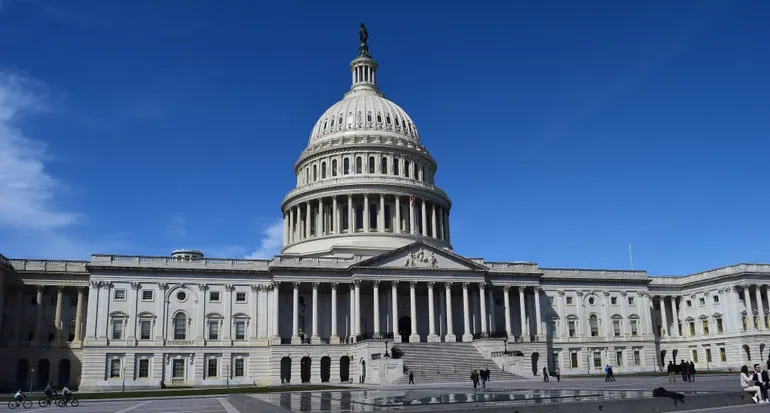
On Thursday, Democratic lawmakers in the U.S. reintroduced the Protecting the Right to Organize Act (PRO Act), a comprehensive labor rights bill that passed the House last year. Construction industry groups representing workers, unions, and employers said they are closely monitoring the bill's potential impact on the industry if it or parts of it become law.
Through amendments to the National Labor Relations Act, the bill redefines "employee" and "employer," granting rights to workers previously classified as independent contractors. Additionally, in states where unions have little say in labor-management relations, the way unions and employers conduct collective bargaining and agreements could also change.
The construction industry's unique employment model—where job sites typically have numerous workers from different contractors and subcontractors—means that if the bill passes, construction companies could face greater responsibility for every worker on site.
Union groups have long supported the legislation, while associations representing construction companies, such as the Associated General Contractors of America (AGC) and the Associated Builders and Contractors (ABC), oppose it.

"The PRO Act would completely change the employment and contracting landscape for the 7.4 million construction workers trying to rebuild our economy, and it would come at a great cost to small businesses—and ultimately, taxpayers," ABC CEO Michael Bellaman said in a statement released Thursday.
Also on Thursday, AGC CEO Stephen Sandherr said his organization would take "every possible measure" to ensure the bill does not become law. "We believe this measure poses a significant threat to the viability of the commercial construction industry, its long history of providing advancement and opportunity to all workers, and its ability to rebuild the economy and revitalize the nation," he said in a statement.

Construction trade unions, meanwhile, said they believe the bill strengthens American workers by granting benefits to those who previously lacked them and ensuring that all who benefit from unions pay dues.
"It's fine that employer groups oppose the PRO Act—this is a worker bill. It's designed to change some of the labor laws in this country to benefit the average worker, close the gaps, and give workers a voice," said James Williams Jr., general vice president of the International Union of Painters and Allied Trades (IUPAT).
Will it become law?
Despite Democrats holding a majority in the Senate, the fate of the PRO Act remains uncertain. Republicans could use a filibuster to block the bill, meaning at least 60 senators—nine more than a simple majority—would be needed to advance the legislation to a vote. In that scenario, Democrats might not have enough votes to bring the bill to a vote, so the PRO Act could stall in the Senate—said Kristen Swearingen, ABC's vice president of legislative and political affairs.
"We have to be on offense on all issues right now because the reality is that dozens of provisions in this bill could easily find their way into other legislation."

Jimmy Christianson
AGC Vice President of Government Relations
Even so, even if the PRO Act is blocked in the Senate, parts of it could still be implemented through other legislation or agency guidance, such as revising the definition of "employee" or repealing state "right-to-work" laws.
For example, raising the federal minimum wage to $15 per hour is a key issue for many Democratic elected officials. Even if the bill fails, President Joe Biden could easily implement a $15 hourly wage for federal contractors in federal projects through executive order—which Jimmy Christianson, AGC's vice president of government relations, said he expects to happen.
"We have to be on offense on all issues right now because the reality is that dozens of provisions in this bill could easily find their way into other legislation," Christianson told Construction Dive before the bill was reintroduced.
Impact on the construction industry
With the PRO Act back in the national spotlight, here's an overview of the bill's main provisions and their potential impact on contractors, industry workers, and construction employers if passed:
Redefining employees. The PRO Act would change the definition of "employee," and many workers currently labeled as "independent contractors" would become "employees," making them eligible for union representation, benefits, and higher wages.
"If the PRO Act passes, this could be the biggest issue impacting contractors," said Elliot Haney, an attorney at Cotney Construction Law.
Under the PRO Act, workers are considered employees unless they are free from the employer's control and direction. If a worker is on a job site, it can reasonably be expected that the employer should be responsible for them.

Haney said that although the bill aims to amend the National Labor Relations Act, legal scholars expect it would also apply to the Fair Labor Standards Act, which governs federal wage and hour requirements—meaning that if the PRO Act becomes law, employees who previously didn't qualify for these requirements might now qualify.
Joint employer definition. The definition of "joint employer" would also change. Haney said that currently, a contractor only needs to worry about potential liability if they have control over "the essential terms and conditions of employment" of another company's employees. Under the PRO Act, however, merely having "indirect control or potential control" could be enough to be found liable.
"If there are multiple union employers on a job site, all of them would need to be prepared to deal with the National Labor Relations Act, even in interactions with another employer or another employer's employees," Haney said.
"What we know is that at least having a public debate about reforming labor laws could be a good thing for this country."
James Williams Jr.
IUPAT General Vice President
Christianson said the resulting changes could expose company owners to liability from non-employee workers. They could also face secondary boycotts—where union workers refuse to cross picket lines set up by other unions at job sites. With multiple subcontractors on site, a labor dispute between just one union and its employer could bring work to a halt, the AGC official said.
However, IUPAT's Williams said the redefinition would benefit many workers whom he called "severely misclassified" as independent contractors rather than employees. "Some of the worst employers have adopted this model, and it's bad for workers," he said.
Right to work. The PRO Act would eliminate the distinction of "right-to-work" states, a model that prohibits union security agreements. There are currently 27 right-to-work states in the U.S.
In non-right-to-work states, employers and unions agree through collective bargaining agreements on the extent to which unions can require workers to join.
Opponents of the PRO Act say this provision would force workers to join unions and pay dues, but Haney said that's not necessarily the case.
"The PRO Act does not require all employees in unionized industries to pay union dues. It simply allows employers and unions in all states, if they so choose, to enforce such provisions in collective bargaining agreements. The policy rationale for this shift is often called a 'fair share' approach to collective bargaining—if workers benefit from union representation, they should contribute to the cost of that representation," Haney said in an email to Construction Dive.
Christianson said repealing right-to-work laws could mean open shop contractors would face a sudden shift in the balance of power with unions.
Secret ballot elections. Union certification as a worker representative group typically occurs through secret ballot elections, where workers vote on whether they want to be represented by a union. Opponents of the PRO Act claim the bill would eliminate secret ballot elections, which they argue is an invasion of privacy and would allow unions to essentially force control.

According to Haney, that's not the case. "Under the PRO Act, the initial vote on whether to certify a union would still be conducted by secret ballot. What the PRO Act changes is the process by which unions can appeal the results of such elections," he said.
Haney said that if the PRO Act becomes law, a union that loses an initial vote could petition the National Labor Relations Board (NLRB), claiming employer interference or violations. If the NLRB finds reasonable grounds for interference, the union could overturn the failed election result by obtaining authorization cards signed by a majority of employees to support union certification. Haney said opponents of the bill worry that unions would be able to exert undue influence on employees who might vote against them in a secret ballot—because when unions ask them to sign authorization cards, they might feel intimidated.
Looking ahead
Whether or not the PRO Act becomes law, with a union-supporting Biden in the White House, discussions around labor relations are likely to take center stage. Williams said union leaders look forward to continued dialogue on these issues.
"We're excited and we know that at least having a public debate about reforming labor laws could be a good thing for this country. We're optimistic," he said.