
Soaring Building Material Prices and Supply Chain Delays Make Owners and Developers Hesitant Again
Despite contractors' high expectations for a recovery in 2021, record increases in material costs, longer delivery times, and tighter financing conditions are prompting some owners and developers to postpone or reassess projects. Industry data shows that construction input prices have risen at their fastest year-over-year pace in 35 years, while bid prices have only increased slightly by 0.5%, severely squeezing profit margins.
This article is part of the series "Obstacles on the Road to Recovery," exploring the impact of the COVID-19 pandemic on the construction industry and why the anticipated rebound in projects later this year could be slowed by multiple factors.Click hereto read other articles in this series, which will be updated throughout the year.
The road to recovery may be longer than expected.
As the second quarter of 2021 begins, contractor confidence is high, with widespread optimism that the rebound in restarted projects will lift construction firms out of the COVID-19 abyss and even surpass pre-pandemic levels. Take the confidence index of the Associated Builders and Contractors, for example:The index currently shows positive expectations for sales, profits, and staffing over the next six months.。
The problem is that to start construction, contractors need funding from willing owners. And in the coming months, such owners may become increasingly scarce—as ongoing global supply chain disruptions push up material prices and extend lead times, making already anxious developers even more hesitant.

"People are starting to get optimistic and confident," said Chris Bailey, senior vice president of integrated solutions at XL Construction, a general contractor in the San Francisco Bay Area. He recently wrote a report for clients on supply chain obstacles. "But there needs to be a degree of caution when re-engaging in all of this, because we can't just do what we did in 2019. The availability of products is not keeping up with the pace of project starts."
Hesitation Again
This contrast is prompting owners who want to resume work to reconsider whether now is the best time. Diane Mills, secretary and treasurer of Century Mechanical Contractors in Fort Worth, Texas, said recently thatsoaring material costshave caused severe price shocks for her clients, especially those who had priced projects before the pandemic but pressed pause in the early days of the crisis.
She noted that when these owners re-enter the market, they have to adjust expectations or even reconsider project feasibility altogether.
"Owners come back and say they want to build, but their budgets were set two years ago," Mills said. "A project that might have cost $100,000 to start last June is now closer to $160,000. So they have to pull back again and rethink because they're over budget."
Financing professionals are also witnessing a second wave of hesitation among developers trying to restart deals in the current environment.

"A developer came back with a project shelved last year, but now costs are 20% higher," said Jake Clopton, founder of Clopton Capital, a commercial mortgage brokerage in Chicago. "He said he couldn't do it—it doesn't make sense to build now. At the end of the day, it's really just a math problem."
Clopton said several developers with land-carrying costs have approached him to start projects, but still using old general contractor quotes. When they reprice and assess the current lending market—where bank loans are almost nonexistent in some project sectors and private capital rates can reach 10%—these deals no longer pencil out.
"At these cost levels, they're just not economical," Clopton said.
There are even signs that the recent rebound in construction spending above pre-pandemic levels is not due to more new projects, but rather the need to absorb higher costs. The Census Bureau reported on April 1 that construction spending has climbed 5.3% since February 2020, reaching a seasonally adjusted annual rate of $1.52 trillion.
But according to the Associated General Contractors of America, building material prices rose 3.5% from February to March and are up 12.9% since March 2020, marking the highest monthly and annual increases in the 35 years the data has been tracked.
"These material cost increases—though steep—only tell part of the story," AGC chief economist Ken Simonson said in an April 9statement. "They are based on prices the government collected a month ago and do not reflect the notices contractors are receiving daily about extended lead times, shipments being cut to a fraction of previous orders, and other challenges."
No Shortage of Projects
Even so, projects are still waiting to start.
"A wave of U.S. economic and job growth is coming," Associated Builders and Contractors chief economist Anirban Basu said in astatementstatement
last week about the March jobs report, which showed 110,000 construction jobs added, with 73,100 in the hard-hit nonresidential sector. "With more stimulus on the way, the U.S. could grow faster than China this year for the first time in decades."
Contractors are adding workers while replenishing backlogs of new work—much of which they had "cannibalized" in 2020 to survive. In fact, overall backlogs rebounded to 8.1 months in February, just 0.7 months below the pre-pandemic peak.
"A wave of U.S. economic and job growth is coming."
—Anirban Basu, chief economist, Associated Builders and Contractors
But the new question is how many of these projects will derail again before restarting amid soaring material prices. Global supply chains, stretched extremely thin after nearly a year of dormancy, are far from returning to the just-in-time efficiency of pre-pandemic days.
"During the shutdown, a lot of shipping went out of operation because there was nothing to carry," Bailey said. "When there's no revenue on the other end, people don't want to invest in maintaining transport equipment, so many facilities have fallen into disrepair. What we're seeing now is that even when products are ready to ship, the transportation market is struggling to catch up."
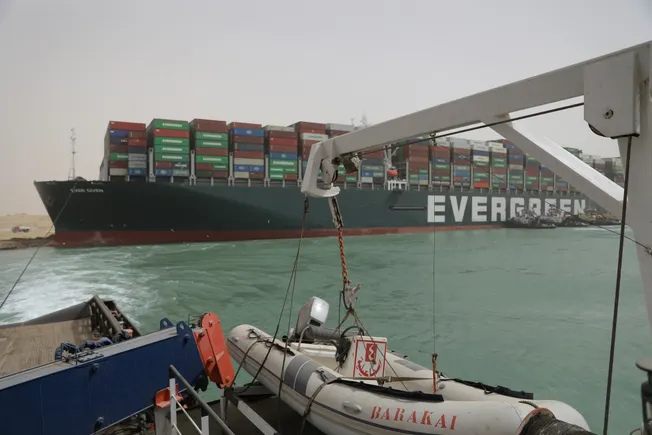
In March, the Ever Given container ship blocked the Suez Canal—one of the world's most critical shipping lanes—for six days, adding insult to injury. "That just adds more delays on top of existing ones," Bailey said.
Extended Lead Times

Courtesy of Pepper Construction
"If you have a project ready to procure structural steel and prefabricated wall panels for a new distribution facility, and you get in line now, you might wait nine to ten months to get materials," said Scott Higgins, senior vice president at Pepper Construction Company in Chicago. "The impact is simple: higher prices and longer schedules."
Back in Fort Worth, Mills said job opportunities do exist, but material suppliers can't keep up with order demand.
"We have the capacity to do the work," Mills said. "But in many cases, we simply can't get the equipment."
She mentioned a recent quote for air handling units for a school—equipment that typically has a six-to-twelve-week lead time. Her supplier recently told her it would now take four to six months.
"The impact is simple: higher prices and longer schedules."
—Scott Higgins, senior vice president, Pepper Construction
"If you have a summer project that needs to start June 1 and you're bidding now, you likely won't get the equipment in time to complete the work," she said.
Meanwhile, she said the competitive pressure in the local bidding environment has heated up.
"There's a lot of work being bid out here," Mills said. "But there are also a lot of people who need work to fill their backlogs, so competition is fierce. Even though prices are higher, margins are lower."
High Prices to Go HigherThe severity of building material price increases in 2021 prompted the Associated General Contractors of America to issue a rareconstruction inflation alert
last week—the first such action by the organization since 2008—citing a 12.8% rise in project input costs since the pandemic began.

Courtesy of Associated General Contractors of America
However, even as these costs climb, contractors trying to rebuild depleted backlogs have been unable to raise bid prices to a similar degree—according to AGC data, bid prices rose only 0.5% over the same period."Contractors should be more vigilant about changes in material costs and expected delivery dates and communicate that information to existing and potential clients," the AGC alert read. The organization is hosting a webinar this week on cost increases and response strategies,。
details here
Will the Recovery Derail?
Facing higher prices, longer lead times, and hesitant developers, the real question is whether these challenges—emerging as contractors desperately try to shake off the pandemic's impact—will actually derail the coming recovery.
"I think to some extent, yes," Mills said.
Clopton, however, believes supply chain issues will eventually resolve themselves, especially given the massive pent-up demand from previously shelved projects coming back online, plus the $1.9 trillion from the American Rescue Plan and the proposed $2 trillion infrastructure investment package.
"There's a lot of liquidity in the system looking for projects and driving the economy," Clopton said. "Even though material demand far exceeds supply growth, I think everyone expects this to be temporary."
In fact, ABC chief economist Basu expressed a similar view on Friday after the latest price increases emerged.statement"While material prices may continue to rise in the future, the increases may not be as rapid," Basu said in a
statement. "As the pandemic recedes, suppliers will be better able to respond to demand. That will help moderate price increases at some point, though in the near term, contractors should expect additional cost escalations."
One final factor that has construction market watchers on alert: how long it took for the pandemic's current effects to show up on job sites.
"These disruptions in global trade are driving up the cost of moving goods, adding a new dimension to the economic recovery," Bailey wrote in a report to clients. "The chaos is forcing buyers to pay record prices to secure space in available containers. This problem is expected to continue into early 2022."
At least, that's the view of XL Construction's Bailey.