
Can the PRO Act Become Law?
After passing the House of Representatives, the Protecting the Right to Organize Act (PRO Act) faces severe challenges in the Senate. Despite Senate Democratic Leader Schumer's efforts to seek support, the bill may be stalled due to Republican filibusters. This article outlines the bill's core content, key lawmakers' positions, lobbying actions by unions and employer groups, and possible legislative paths.
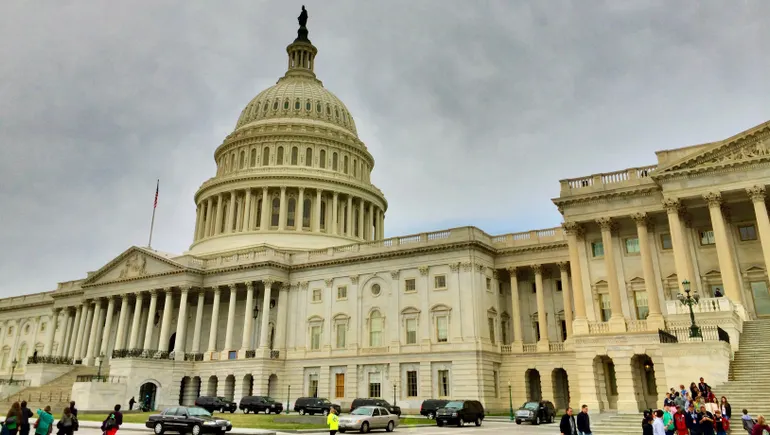
When the U.S. House of Representatives passed the Protecting the Right to Organize Act (PRO Act) in March this year, it received support from five Republicans. Now, the bill's prospects in the Senate are not optimistic. Legal and political experts point out that even if supporters of the bill—including construction unions and worker rights organizations—can secure the support of one Republican senator, it will be difficult to change the reality that the bill is unlikely to reach Senate debate.
The PRO Act aims to:
- Significantly change the way employers interact with unions and conduct collective bargaining.
- Redefine "employers" and "employees" as determined by the National Labor Relations Board (NLRB), significantly affecting businesses' responsibilities and obligations to workers.
- Repeal state "right-to-work" laws.
Despite significant resistance, Senate Majority Leader Chuck Schumer, a Democrat from New York, is still seeking support. According to reports, he has said that when the bill has 50 co-sponsors, he will bring it to a Senate vote. Currently, the bill has 45 co-sponsors.Democrats and independents who have not yet taken a position include:
- Senator Kyrsten Sinema of Arizona.
- Senator Mark Kelly of Arizona.
- Senator Joe Manchin of West Virginia.
- Senator Mark Warner of Virginia.
- Senator Angus King of Maine (independent, caucuses with Democrats).
Unions are actively lobbying these five senators. According to James Williams II, General Vice President of the International Union of Painters and Allied Trades (IUPAT), in late March, the union, headquartered in Hanover, Maryland, placed 500,000 calls to the offices of these five senators. Other unions, such as the AFL-CIO and the North America's Building Trades Unions (NABTU), also welcomed the House passage of the PRO Act and urged the Senate to focus on worker-first legislation.
Williams said that despite long odds, the 2021 version of the PRO Act is in a better position than the previous version (passed by the House in February 2020 but not considered by the Senate), which gives IUPAT confidence and renewed momentum.

"We launched this campaign under less favorable conditions and have since made significant progress, including passing the House by a larger margin than the 2020 bill and gaining bipartisan support," Williams said, referring to the five Republican House members who voted for the bill in March and the union-friendly White House. "We intend to build on this progress and will continue to organize and mobilize until the Senate votes on the bill."
Construction Industry Outlook
Groups representing construction employers, such as the Associated General Contractors of America (AGC), have opposed the bill in every iteration and are even more vigilant after Democrats took control of the Senate in January.
Brian Turmail, Vice President of Public Affairs and Strategic Initiatives at AGC, said AGC has built coalitions in five states—Arizona, Alaska, Maine, Virginia, and West Virginia—to oppose the bill by educating the local business community about the potential impact of the PRO Act.

Political experts say Republicans, led by Senate Minority Leader Mitch McConnell, are likely to filibuster the bill rather than bring it to a vote—effectively stalling it until it dies. According to Trent Cotney, CEO of Cotney Law, based in Tampa, Florida, Schumer must bring the bill to a vote by December 31, 2022.
Nevertheless, Cotney said Democrats remain hopeful that if they can secure 50 co-sponsors, it would provide Schumer with political leverage to bring the bill to the floor for a message vote, even though they know it cannot overcome a filibuster.
Dealing with the Filibuster
If Republicans filibuster, supporters of the bill would need to reach a 60-vote threshold to bring it to a vote.
Eliminating the filibuster in a closely divided Senate would only deepen partisan divisions and make compromise harder to achieve.

Brian Turmail
Vice President of Government Relations at AGC
Cotney said eliminating or circumventing the filibuster would be a major challenge, although there are some unlikely ways to do so. These include:
- If 67 senators vote to completely eliminate the filibuster. Cotney said this is unlikely given the 50-50 split between Republicans and Democrats in the Senate, creating a stalemate. Ties in the Senate are broken by the Senate President, Vice President Kamala Harris.
- The "nuclear option," where Schumer bypasses the 67-vote rule with just 51 votes—Cotney said Schumer does not have the support for this option.
- The Congressional Review Act—this is unlikely to be a means to repeal major congressional legislation.
- Budget reconciliation, a one-time budget option per fiscal year. Cotney said last week the Senate parliamentarian ruled to allow Democrats to use a revised budget resolution for reconciliation, meaning they could amend the original FY2021 budget used to support the $1.9 trillion American Rescue Plan to instead support the $2.25 trillion American Jobs Plan.
In theory, Schumer could try to include the PRO Act in a budget resolution package, but it would likely face resistance from the five non-co-sponsors. Additionally, the Senate parliamentarian might rule against including the PRO Act, so it would need to be removed from the resolution, Cotney said. Previous efforts to raise the federal minimum wage to $15 faced a similar situation and were ultimately removed from the American Rescue Plan Act of 2021.
The idea of eliminating the filibuster has recently gained support becausePresident Joe Biden calledthe practice a "relic of the Jim Crow era," a sentiment echoed by Williams.
"It has evolved into a shield that politicians use to avoid fulfilling campaign promises," Williams said.
Meanwhile, AGC supports this legislative strategy.
"The filibuster protects minority rights and encourages cooperation," Turmail said. "Eliminating this rule in a closely divided Senate would only deepen partisan divisions and make compromise harder to achieve."
Looking Ahead
Despite pushes to end the filibuster, the reality is that without a historic change to Senate rules, the PRO Act is likely to die in the Senate due to stalling, Cotney said. Nevertheless, the Biden administration has other strategies to advance its pro-union agenda.
Parts of the PRO Act could be incorporated into other legislation or agency guidance, such as revising the definition of "employee" or repealing state "right-to-work" laws,experts told Construction Dive. Cotney said Biden could urge agencies such as the Department of Labor or the NLRB to implement parts of the PRO Act through executive action—such as changing the definitions of "joint employer" and "independent contractor."
We support what's in the bill, and certainly support these provisions becoming law, which is why we are working to ensure the bill becomes law as written.
James Williams
General Vice President of IUPAT
Unions have not only gained more support from the White House and Congress—public opinion also leans in favor of organized labor, according toa recent Gallup poll. However, Turmail said supporting unions and opposing the PRO Act are not contradictory, and polls have no impact on the debate over the PRO Act.
For now, IUPAT and other unions are not looking for alternatives, Williams said.
"Right now we are focused on getting the PRO Act passed," he said. "We support what's in the bill, and certainly support these provisions becoming law, which is why we are working to ensure the bill becomes law as written."