
Four Major Impacts of Recent Bank Failures on the Multifamily Housing Industry
The failures of institutions such as Silicon Valley Bank and Signature Bank have not only impacted the commercial and real estate lending sectors but also triggered ripple effects on the multifamily housing industry. Based on insights from multiple industry executives, this article analyzes four major impacts: tightening regional bank credit, hindered financing for development projects, increased CMBS market volatility, and unclear interest rate direction, and points out that the industry is shifting from aggressive financing back to traditional prudence.
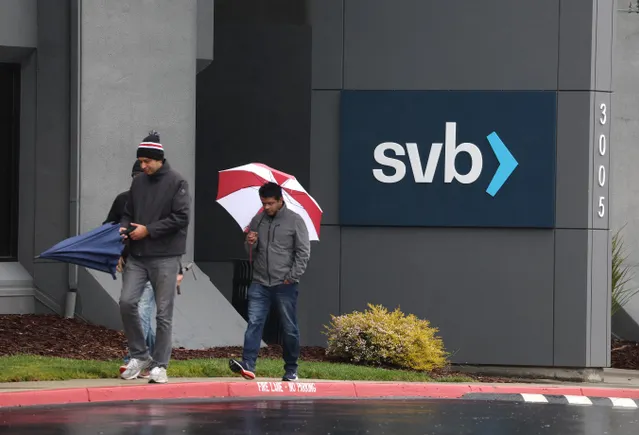
Recently, the collapse of financial institutions such as Silicon Valley Bank and Signature Bank shook the commercial and real estate lending sectors. The multifamily housing industry was not immune to this shock. Signature Bank was the third-largest lender for apartment loans in New York City; and according to Bloomberg, Silicon Valley Bank, in addition to funding real estate technology startups, also injected over $2 billion into affordable housing investments.
Even apartment executives with no business ties to these banks are closely monitoring developments. "We've witnessed two new bank failures," said Tim Peterson, Chief Investment Officer of The Altman Cos., a developer, builder, and management company headquartered in Fort Lauderdale, Florida. "They had isolated issues with balance sheet management and business focus, and you could say 'this isn't a situation everyone will face.' But you must remain highly vigilant."
As the dust settles, the full impact of the banking crisis on the apartment market is not yet entirely clear and may only become fully apparent in the future. However, lenders and borrowers in the sector have identified four key points worth watching.
Regional Banks Under Pressure
In seeking to build 10,000 units of affordable housing, Eddie Lorin planned to start a project in Las Vegas. But the founder and CEO of Alliant Strategic Development suddenly faced financing difficulties. "One of our lenders told me that after what just happened, there is absolutely no way they can provide a $100 million construction loan this year," Lorin said. "They were planning to be the land lender and naturally become our construction lender."
Now, Lorin has to wait for market volatility to subside and seek alternative funding sources. But many observers believe finding smaller banks willing to lend could be difficult. "I think the smaller banks that financed a lot of real estate transactions will have less capital available," said Ross Pemmerl, Chief Credit Officer at UC Funds, a debt provider focused on bridge loans.
"The golden era where every deal could get financed on the most aggressive terms is over."
— Tim Peterson, Chief Investment Officer, The Altman Cos.
Following the collapse of Silicon Valley Bank and Signature Bank, rating agencies like Moody's have warned of potential problems at smaller banks. With increased regulatory and political scrutiny on small and mid-sized banks, Lorin believes more banks will retreat from the apartment market. Others share this view. "Regional banks provided important liquidity support to the apartment industry, especially in New York, where Signature Bank provided $4.4 billion in multifamily loans last year," said Michael J. Hurley Jr., Managing Partner at New York law firm Cassin & Cassin LLP. "Therefore, I think there will be some contraction in the business of regional banks lending to the multifamily sector."
Development Financing Concerns
Any slowdown in credit from smaller banks could affect all apartment executives, but developers may bear the brunt, as seen in Lorin's case. "I think the slowdown is more evident in construction loans and value-add renovation capital," Pemmerl said.
Even if smaller banks are still issuing construction loans, they won't be overly aggressive in the current environment, Peterson said. He mentioned that a lender recently told him the bank had already made enough loans in 2021 and 2022 to achieve its required returns, so there was no need to be overly aggressive in 2023. "The golden era where every deal could get financed on the most aggressive terms is over," Peterson said. "We are returning to an era of traditional underwriting and banker prudence."
In the affordable housing sector, developers need to secure financing to obtain tax credits, and banking problems could have a particularly severe impact. "If you rely on tax credits, unless all components are properly arranged and locked in, you will face stricter scrutiny," Lorin said.
CMBS Market Volatility
Although the large multifamily market did not experience drastic fluctuations in the days following the bank failures, the commercial mortgage-backed securities (CMBS) and collateralized loan obligation (CLO) markets experienced some turbulence. "The level of activity in the CMBS/CLO market in the first quarter was the lowest I can remember, and we attribute this to rising interest rates and volatility in commercial real estate valuations," Pemmerl said. "The combination of interest rates and market uncertainty has led investors to demand wider spreads, which in turn pushes up underlying spreads and squeezes returns."
Volatility in the securitization market is crucial for the new wave of lenders that have emerged over the past five years. "Beyond regional banks, there are many lenders that rely on capital markets, such as CMBS lenders," Hurley said. "Over the past five years, there has been a proliferation of non-traditional lenders, many of which have developed capital market strategies that involve exiting through CLOs."
"Approximately $25 billion in multifamily securitized loans will mature in 2023."
— Michael Hurley, Managing Partner, Cassin & Cassin LLP
If the securitization market stabilizes, Hurley believes some CMBS and bridge lenders will return to the market. "I think CMBS, bridge lenders, and Fannie Mae and Freddie Mac will be able to fill some of the liquidity gap that regional banks might leave," Hurley said. This could be crucial if smaller lenders fade away. "Approximately $25 billion in multifamily securitized loans will mature in 2023," Hurley said. "The market will need financing. You can't postpone problems indefinitely. You need fresh capital from borrowers, mezzanine lenders, and senior mortgage lenders."
Interest Rate Uncertainty
It is too early to determine the impact of the recent bank failures on apartment transaction volume. But according to data firm MSCI Real Assets, apartment sales fell 71% and 76% year-over-year in January and February, respectively, and the market is already extremely sluggish, making it difficult to slow down further.
If anything, the problems at Silicon Valley Bank and Signature Bank may delay any rebound, said Anne Olson, CEO of REIT Centerspace in Minot, South Dakota. She initially expected the transaction market to recover in the third quarter, driven by developers forced to sell projects. "I do think these recent failures and what has happened over the past 30 days will delay it slightly," Olson said.
Olson believes that before the sales market recovers, "people need to know where the ceiling on interest rates is, or at least have a rough idea of where it is." Many observers believe the bank failures may eventually force the Federal Reserve to pause its interest rate hikes. In March, the Fed raised rates by 25 basis points but hinted that hikes may be nearing an end.
If this happens, many apartment executives expect transactions to pick up. "If (the bank failures) transmit to the market and potentially curb the magnitude of rate increases, making them lower than previously expected, then in the long run, and in 2023, this could be beneficial for the commercial real estate market," Pemmerl said.
Clickhereto subscribe and receive such multifamily and apartment news every business day.


