
Under Tariffs, Employment, and Supply Pressures, Multifamily Operators Prioritize Occupancy
The multifamily housing industry had anticipated that reduced new supply in late 2025 and 2026 would drive rent increases, but economic uncertainties such as tariffs, slowing job growth, and declining consumer confidence have shifted operators' strategies toward prioritizing occupancy in 2025. This article synthesizes insights from multiple economists and REIT executives to analyze current market conditions and future outlooks.
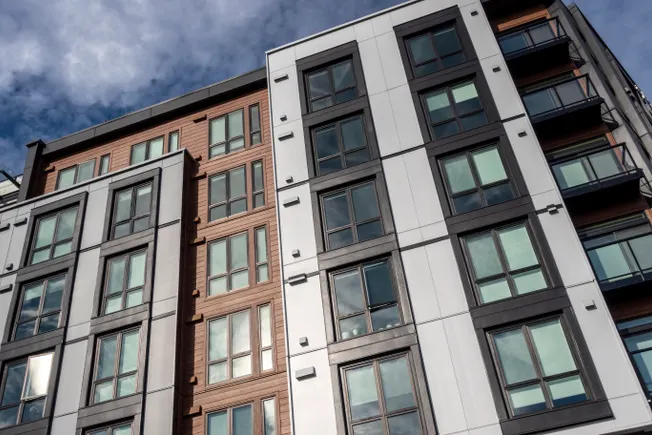
For years, apartment operators have looked to late 2025 and 2026 as the window when new deliveries would begin to slow, hoping to reduce concessions and even raise rents in oversupplied markets. Now, deliveries are indeed declining as expected: as of the end of August, units under construction totaled 686,000, down 20.2% year over year; during the month, the annualized completion rate for buildings with five or more units was 503,000, down 28.7% year over year.
"By spring 2026, most of the (supply) pressure will truly be in the rearview mirror," rental housing economist Jay Parsons told Multifamily Dive. "That's what everyone has been waiting for—it's the light at the end of the tunnel."
However, even as delivery pressure eases, with the end of the year approaching, the mantra of "survive 2025" seems to be a thing of the past—tariffs, employment, and other economic uncertainties are seeping into a market still plagued by oversupply.
For example, the Conference Board said earlier this month that tariffs are expected to be a heavy drag on the economy, pulling GDP growth down to 1.6% this year; it also noted that its Leading Economic Index fell in August by the most since April. Meanwhile, U.S. Bureau of Labor Statistics data show the unemployment rate rose from 4.2% in July to 4.3% in August, with 7.4 million people unemployed. Although the numbers have not climbed significantly, job growth has also shown no improvement.
"We are already seeing some disruption, and it could slow further, ultimately producing almost no new jobs," said Greg Willett, chief economist at Dallas-based rental insurance provider LeaseLock. "So (people) are cautious about pushing rents higher."
Widespread uncertainty
Apartment rents typically rise in the summer, but not this year—concessions have suppressed price growth. According to Parsons, rents in 2025 have fallen for the first time since the global financial crisis in 2010. Although rents have only declined 0.23%, according to research from RealPage Analytics and Waymaker, this negative trend has sparked uncertainty.
Other data sources also show similar weakness. Apartment List reported that the national median rent fell 0.2% in August to $1,400, as the leasing off-season begins. Additionally, rents over the first eight months were down 0.9% from the same period last year.
Willett believes the economy is driving these declines. "What's driving demand numbers now is the economic situation and consumer sentiment," Willett said. "Will they readjust their spending patterns?"
For some apartment owners, the problem was evident early in the year. On AvalonBay Communities' second-quarter earnings call, Chief Operating Officer Sean Breslin noted that asking rents in 2025 were weaker than expected. "The main reason is that job growth in the first half was slightly weaker than initially anticipated," he said. "So, looking at the first half overall, we ended up with about 100,000 fewer jobs than we originally forecast."

Employment conditions in certain markets may be particularly challenging for the "renters by choice" demographic occupying upscale multifamily housing, though Breslin noted he expects conditions for that group to improve later in 2025. "The current employment mix is not favorable for upscale multifamily, because finance, professional services, and tech (employment) are weak," Breslin said on the call.
Other management teams are also seeing cracks. In Southern California, pandemic-era eviction moratoriums and overall weakness tied to the national economy have suppressed growth for San Mateo-based REIT Essex Property Trust. "We've all experienced a lot of noise and lack of clarity in public policy. So, I think businesses are more reticent in hiring and investing, which certainly impacts our overall growth," CEO Angela Kleiman said on the REIT's second-quarter earnings call in late July.
Retaining existing renters
The Conference Board's August Consumer Confidence Index shows perceptions of current job availability have declined for the eighth consecutive month. The Expectations Index, which measures consumers' short-term outlook, fell 1.2 points to 74.8%. Readings below 80 typically signal an impending recession.
On Tennessee-based REIT MAA's second-quarter earnings call, CEO Brad Hill noted that consumer confidence readings fell after President Donald Trump announced tariffs on April 2. Apartment managers are responding to these conditions by focusing on retaining existing renters. "All of this is affecting the psychology of market operators, who are indeed nervous about performance and truly focused on occupancy," Hill said.
Camden Property Trust CEO Ric Campo also said the economic climate has made operators cautious. As a result, they are not pushing new lease rents higher but instead working to retain existing renters. "The uncertainty around everything, including the economy and policy, is making people more cautious and shifting toward occupancy-focused strategies," Campo said on the REIT's second-quarter call in August.
However, Hill said on the second-quarter call that he believes landlords should be positioned to raise rents in 2026. Campo also expressed optimism. "The consumer itself is healthy," Campo said in August. "We've had 31 months of wage growth, and apartment rents have been flat... This is not a customer problem; it's a mindset problem among operators trying to protect themselves in the second half (of the traditional leasing off-season)."
Seasonal slowdown?
Even if the economy begins to erode apartment demand, this weakness may take time to truly manifest. The fall and winter are typically the industry's slowest periods, when operators reduce rent increases and focus on occupancy—and they are already doing so in 2025.
Because of this seasonality, Parsons said he is not sure apartment executives will have a true read on the market before spring. "I don't think we'll have a stronger sense of market direction until the March and April leasing season begins," Parsons said. "That will give us a better idea of how 2026 will unfold."
However, LeaseLock's Willett said he believes apartment executives will get a clearer market picture before then. He argues that the pandemic changed the industry's seasonal patterns, with leasing activity distributed fairly evenly across quarters. "During the pandemic, all demand was pushed into the following year," Willett said. "So we have different seasonal patterns now—there was actually a lot of leasing activity starting in the fourth quarter of last year, and those leases are coming due."
For now, he said he does not expect renewal rents on those leases to rise significantly, or possibly at all. "The clients I talk to are doubling down on 'heads in beds,'" Willett said. "You try to stay full. If that means giving up a little pricing power, you absolutely go that route."
Clickhereto sign up to receive multifamily and apartment news like this in your inbox every business day.