
Nextel's Legacy: How Modern Networks Deliver on the Promise of Construction Site Communication
In 1996, Nextel launched the Direct Connect iDEN network, changing the way construction sites communicated. Although the network was shut down in 2013, its core concept—fast, reliable, dedicated communication—is now realized on 4G/5G networks. This article reviews the rise and fall of Nextel and explores how modern solutions have surpassed its limitations.
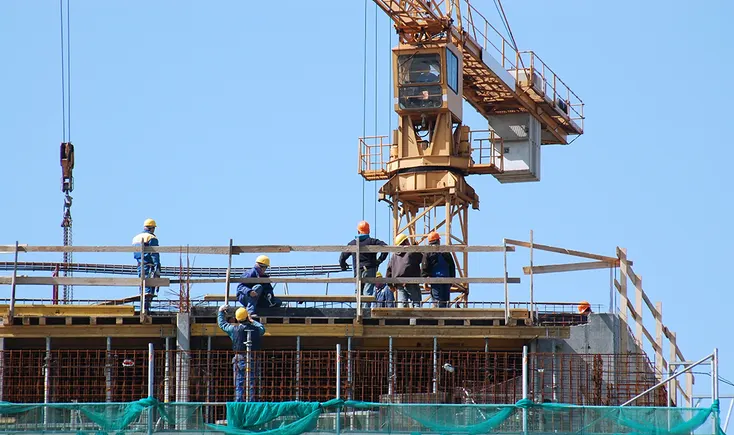
In 1996, Nextel launched the Direct Connect iDEN network, a move that profoundly changed how construction sites operated. Foremen could reach their entire team by voice or text within a second, without dialing or waiting for a ring. Motorola's iDEN handheld devices on this network were designed specifically for industrial and construction environments, featuring ruggedized, dustproof, and moisture-resistant properties, rather than being simple adaptations of consumer products. For construction workers, this was an unprecedented dedicated communications infrastructure in the industry.
At its peak, Nextel had over 20 million users, most of whom worked on job sites—where reaching the right person promptly was not just a convenience but a safety requirement. However, after Sprint acquired Nextel in 2005, the incompatibility of the two networks and the operation of both led to billions in losses, proving unsustainable. On June 30, 2013, Sprint shut down the iDEN network, choosing its own network to drive future growth.
Without a better alternative, construction teams were forced to use consumer-grade phones or fall back on two-way radios. These tools filled some gaps but each had limitations: radios had limited range without repeaters, were voice-only, and had poor signal quality; phones were not rugged, were difficult to use with gloves, and many sites banned them to prevent distraction. This gap carried real operational costs, manifesting as delayed safety responses, coordination failures on large sites, and a lack of real-time communication records for teams—problems that only the next generation of networks could solve.
The infrastructure that ended Nextel in 2013 is now precisely what makes its vision possible: 4G and even 5G are the foundation Nextel's vision required. Wichita, Kansas-based weavix offers a solution whose Walt smart radio runs on modern networks and can be rapidly deployed on job sites without the infrastructure investment iDEN required. Today's networks have matched the needs of the environments Nextel once sought to serve.
Device capabilities have also far exceeded what Nextel imagined. Real-time AI translation now supports multilingual teams across more than 40 languages or dialects, eliminating decades of communication barriers on job sites. Within the same push-to-talk interface, photo and video sharing enable teams to document and resolve issues without sending someone to the site for inspection.
Safety and operational advances are equally significant. Traditional two-way radios use licensed frequencies, requiring coordination, application fees, and ongoing renewals for each frequency assignment under FCC industrial/commercial licensing requirements. Walt operates on LTE and Wi-Fi, requiring no FCC license, and can create unlimited, customizable, permission-based channels without regulatory burden, deployable the day devices arrive. Timestamped AI transcription leaves a searchable record of every communication, providing supervisors with accountability and documentation that voice-only radios cannot offer.
For today's construction managers, the case for modernized job-site communications spans safety compliance, operational efficiency, and workforce retention. In these three areas, the gap between teams using dedicated tools and those still improvising will only widen. Early movers will have clear visibility into every conversation, safety incident, and coordination decision on their sites, gaining the visibility needed to maintain efficient operations.
Nextel proved this instinct correct. The infrastructure to fulfill its vision has finally arrived, and construction leaders who recognize this first will gain the most significant advantage.