
Precision Investment and Technology Empowerment: A Sustainable Path for Critical Infrastructure
U.S. critical infrastructure faces pressures from aging, inadequate maintenance, and frequent extreme weather. At the Construction Innovation 2025 conference, experts called for a shift from 'restoring to original condition' to 'functional recovery,' using precision investment and technologies like AI and digital twins to improve the resilience and sustainability of infrastructure.
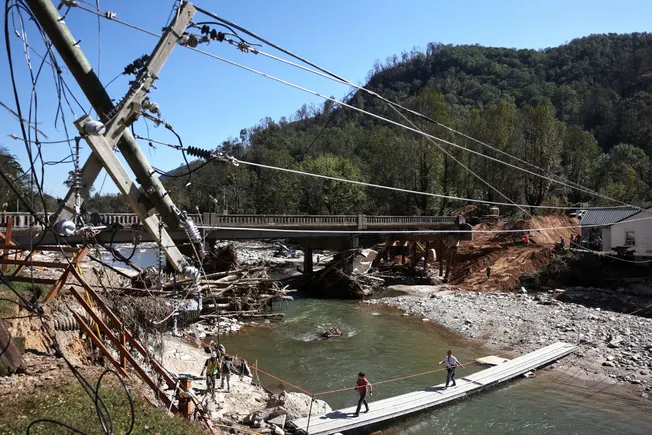
McLean, Virginia — Lifeline infrastructure systems provide indispensable services such as water supply, power, and transportation, but people often only realize their importance when they fail.
Aging, deferred maintenance, and increasingly frequent extreme weather events are stressing these structures, making strategic planning for disaster resilience critical, according to experts at the "Building Innovation 2025" conference hosted by the National Institute of Building Sciences.
Most U.S. infrastructure was built in an era before people understood redundancy and resilience, said Joey Hopkins, North Carolina's Secretary of Transportation, at last month's conference. Recent climate-induced disasters, such as Hurricane Helene and the Los Angeles wildfires, have highlighted the criticality of these characteristics.
"Much of our infrastructure is so old that it was built to standards that no longer apply, so it no longer functions properly," Hopkins said. For example, "in the 60s, we built ramps on the left side of highways. Acceleration and deceleration lanes were very short. Vehicles were smaller and slower then. Today, things are vastly different."
However, most U.S. funding programs for disaster recovery only provide money to restore structures to their pre-disaster state, leaving them vulnerable to the same forces that caused the initial damage, said Madhu Beriwal, founder and chairman of IEM International, a disaster preparedness consulting firm based in Raleigh, North Carolina, during a panel discussion.
"Infrastructure was built in the 1950s through the 1970s for a different climate, and we're trying to deal with 21st-century climate issues, not to mention what might happen in the next century," Beriwal said. A single infrastructure failure can trigger cascading effects, yet "each infrastructure is owned or operated by a different entity, and there's a lack of coordination among them to identify problem points."
Targeted Investment
Functional recovery — the ability of a building or lifeline infrastructure system to maintain or quickly restore essential functions after a shock — is key to planning resilient communities, said Ronald Eguchi, CEO and co-founder of ImageCat, a risk management company based in Long Beach, California, at the conference.
"[Functional recovery] is an important concept, not just for buildings, but we should start institutionalizing it for lifeline systems," Eguchi said. "I think it's very important because we are now, in some ways, shifting how we measure performance."
To that end,the NIBS Lifeline Infrastructure Centerfosters collaboration among federal, state, and local governments, non-profits, and industry groups to better manage extreme weather impacts and help communities recover after disasters. The center launched last year to identify critical infrastructure gaps and cost-effective ways to fix them.
Rebuilding infrastructure networks to meet modern demands is costly but urgently necessary, according to the American Society of Civil Engineers' 2025 Infrastructure Report Card. The 2021 Infrastructure Investment and Jobs Act helped offset inflation, but the nation's lifeline systems remain "severely underfunded" amid declining gas tax revenues, Hopkins said. North Carolina has turned to public-private partnerships to fill the funding gap.
"Inflation over the past few years has affected us all, setting us back further than before," Hopkins said. "Now, we have about six communities in our state asking: 'Would you be willing to toll this road so we can move the project forward? We want it so badly that we're willing to accept tolls.'"
New Orleans is learning from past disasters and near-misses to guide its infrastructure upgrade priorities, said Steven Nelson, general superintendent of the New Orleans Sewerage and Water Board.
"It's not the oldest parts of the city that fail the worst or most often," Nelson said. "So, I think there's a significant need for targeted investment."
Technology Enablement
Artificial intelligence and machine learning can help jurisdictions and utilities understand how to use limited resources for maximum impact, such as addressing water main breaks, Nelson said.
With AI, "we can use limited resources to develop capital improvement plans based on actual and expected failure rates, targeting those areas most likely to have catastrophic impacts," Nelson said.
Digital twins are another underutilized technology that can help plan more resilient infrastructure, Eguchi said.
"I don't think we've fully leveraged [digital twins] on complex issues like lifeline systems and their operation," Eguchi said. "I think digital twin models and the application of that technology can serve us well in understanding potential failures, the impacts, and the likelihood of these different scenarios."