
Why High-Rise Construction Carries Higher Liability Risks
American city skylines continue to extend upward, but the liability risks associated with high-rise construction are significantly higher than those of ground-level projects. Based on the industry insights of trial lawyer Ken Fulginiti, this article outlines common disputes in fall accident litigation, the scope of liable parties, and the importance of systematic protective measures.
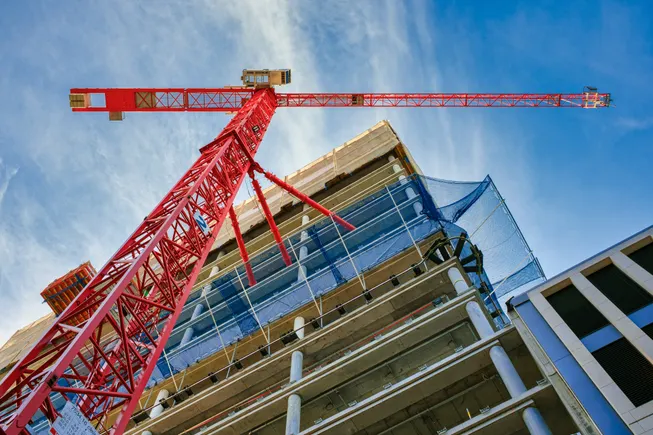
Across the United States, city skylines are reaching upward once again. Office buildings are being converted into residences, housing shortages are driving mixed-use development, and urban cores are choosing vertical reconstruction over outward expansion. Meanwhile, the U.S. construction industry employs more than 8 million people, with major cities seeking higher density within limited spaces.

However, the vertical expansion of buildings comes with a stark reality: as America builds upward, the probability of catastrophic injury lawsuits related to high-rise construction rises accordingly. Unlike the common practice where project parties typically push risk down to lower-tier entities, in high-rise buildings, risk is transmitted upward.
High-rise construction amplifies risk to a degree that ground-level projects cannot match. A missing guardrail on the ground may cause injury, but at the 40th floor, the same omission can be fatal.
Data from the U.S. Bureau of Labor Statistics consistently shows that construction is among the most dangerous industries in America, with falls from heights remaining the leading cause of worker deaths. In 2024, more than 300 construction workers died from fall-related incidents, many occurring at height on multi-story projects. Such incidents often end up in court.
The Common Misconception of "Worker Error"
In the defense narrative of fall cases, the focus is often directed toward the worker's own conduct, such as failing to attach a lanyard, not securing a hook, or stepping into an open area. Individual behavior matters, but these accidents are rarely caused solely by a single worker's mistake.
Instead, when cases go to trial, juries typically face a direct question: Were reasonable precautions taken to prevent foreseeable fall consequences? Based on this framework, juries rarely accept the notion that a catastrophic event was just a worker making a mistake while earning a living.
Juries are more inclined to scrutinize the systems that project parties established to avoid injuries. They will ask:
- Were anchor points actually available and usable at the location where work was assigned?
- Was the anchorage system engineered, or was it improvised on the spot?
- Were guardrails continuous without gaps?
- Were safety nets installed below the leading edge of work?
- Was lighting adequate for night operations?
- Were crews rushed to meet schedule bonuses?
- Were multiple trades stacked excessively on the same floor?
Based on this level of scrutiny, liability cases on high-rise projects depend on multi-layered defenses. When systemic protections are absent, blaming the person closest to the edge often fails to be convincing.
When a Worker Falls, Who Bears Responsibility?
A notable feature of modern high-rise litigation is the breadth of defendants. Beyond owners who impose aggressive schedules, such cases increasingly target developers who keep parts of the building occupied, general contractors who coordinate overlapping trades, and construction managers with full on-site authority.
Furthermore, liability can extend to safety consultants who draft safety protocols, scaffolding companies, equipment suppliers and manufacturers, and maintenance contractors responsible for inspections.
Courts carefully examine control, foreseeability, and retained authority. Relevant questions include: Who has the power to stop work? Who is aware of recurring hazards? Who receives near-miss reports? And which parties approved temporary conditions or controlled site access. In other words, if you play any role in these projects, liability can easily spread to you.
Contracts are crucial in allocating indemnity and insurance obligations, but they do not absolve parties who actually control hazardous conditions. Juries tend to look at internal emails about schedules, logs showing repeated complaints, and inspection reports flagging unresolved dangers, even including weather warnings ignored to meet deadlines.
These documents shape the case long before trial. They tell a story not of an isolated accident, but of a process where risk was normalized.
Steps Parties on High-Rise Projects Should Take
Owners and project leaders seeking to reduce risk should focus on systemic protective measures. These measures first save lives—which is critical to everyone—and they also become central to whether courts find reasonable care was exercised.
Specific measures include:
- Using engineered anchorage systems rather than improvised tie-off points.
- Installing redundant perimeter guardrails and hole covers.
- Placing safety nets below the leading edge of work.
- Clearly defining wind speed work stoppage thresholds.
- Assigning dedicated hoist operators and traffic controllers.
- Conducting lighting audits for early morning and night operations.
- Implementing independent safety inspections.
- Tracking the service life and maintenance records of harnesses and lanyards.
- Granting safety personnel the authority to stop work without penalty.
How Juries View Fall Cases
When a high-rise fall case goes to trial, the defense often reminds juries that the construction industry is inherently dangerous. Juries understand this, but they also recognize that danger does not excuse preventable risks.
Construction workers should be able to work in an environment that follows established safety rules designed to protect them. What juries ultimately examine is whether these rules were treated as a priority or as an obstacle.
They look for clues as to whether the system was designed in a way that could lead to failure, whether warnings were ignored, and whether schedules overrode prudent judgment. Ultimately, they want to know if someone had the ability to solve a problem but chose not to act—and that is where these cases are won or lost.
America's skyline may continue to climb. Along with this trend, owners, contractors, and manufacturers all face an unavoidable fact:
In high-rise buildings, risk travels upward, and so does liability.