
Almost no building in New York City is free of violations: engineers say it is 'impossible' to find fully compliant buildings under comprehensive inspections
New York City has recently strengthened inspections of office building renovation projects following structural accidents, leading to work stoppages at multiple sites. Experts say that while this strict review is expected, its scale is unprecedented. Engineers note that under such meticulous inspections, it is almost impossible to find buildings without violations.
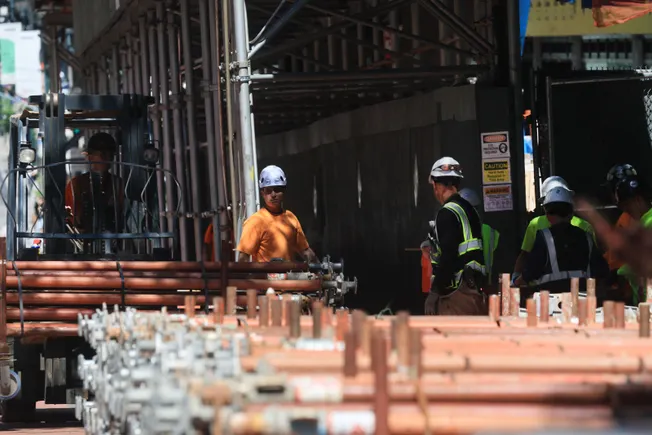
According to the Wall Street Journal, New York City officials ordered a partial halt to work on the third office-to-residential conversion project in Manhattan on July 28. The project is located at 750 Third Avenue. Previously, on July 30, another conversion project at 222 Broadway was also halted. Both stoppages stemmed from the city's Department of Buildings (DOB) intensifying outreach and inspections after a structural failure occurred at the former Pfizer building renovation project before July 7.
Experts told Construction Dive that the heightened scrutiny and multiple work stoppages were both expected and unprecedented. While it is normal for agencies like the DOB to increase enforcement and outreach after a high-profile incident, the scale and scope of this response are unique.
"Whenever a major accident occurs, the government typically increases scrutiny, which is normal," said Dan Rosenberg, principal at Chicago's Much Shelist law firm. "But the scale and scope of this incident are shocking."
Sources partly attribute the heightened response to New York City's status as the largest and most densely populated city in the U.S., with high real estate values and a large number of properties undergoing conversion.
"When the DOB finds structural issues, they inspect similar projects to ensure they are proceeding safely. In such cases, inspectors prioritize safety and halt any construction that deviates from code or approved plans," said Carol Sigmond, partner at New York City's Nossaman law firm. "That is exactly what is happening now."
Every building has violations
Experts say New York City's building codes and regulations are so extensive that it is not surprising for a building to not be fully compliant initially.
"In New York City, it is nearly impossible to find a building without violations," Joe DiPompeo, president of New Jersey-based civil engineering firm Structural Workshop, told Construction Dive. "If you go and thoroughly inspect every large construction project in Manhattan, I would expect most or all of them to have violations."
Many violations in Manhattan are minor and often related to compliance. Trent Cotney, partner at Adams & Reese in Tampa, Florida, said that when existing buildings are converted into new structures, unexpected site conditions are common and require design changes.
"The key issue is whether these changes are properly documented, inspected, and approved. If the necessary processes are not followed, even reasonable site modifications can create compliance issues," Cotney said.
In fact, in the second halted office-to-residential project (222 Broadway), according to the Wall Street Journal, a beam that developed cracks in March was quickly repaired but not reported to the city. The stop-work order stemmed from a timeline discrepancy rather than a serious safety issue.
Building codes are constantly evolving
Sigmond said the DOB has a responsibility to continuously identify safety issues to update codes. "If they find problems with conversion projects, they may modify codes for public safety reasons," Sigmond told Construction Dive. She cited that the DOB might consider ensuring structural steel in conversion projects is strong enough to support the building.
Meanwhile, DiPompeo believes inspections and work stoppages are, in a sense, an outreach effort to let the public, builders, and owners know the DOB is paying closer attention. He cited the fatal 2023 parking garage collapse on Ann Street in New York as an example of a "message-sending" campaign.
In response to the parking garage collapse, "the DOB sent out a wave of inspectors issuing violation notices for everything," DiPompeo said.
Given this, DiPompeo does not believe a lack of oversight caused the failure of the structural beam at the former Pfizer headquarters. Instead, it may be that construction workers or inspectors failed to follow existing procedures at some point.
"I don't think we need to reinvent the wheel here," he said.
Long-term impact on similar projects
Even if codes do not change, other impacts could still hit the office-to-residential market and the broader New York City construction sector.
"I think everyone in New York City should prepare for more and stricter inspections," Rosenberg said. "For projects under construction, this could mean slower progress. As is well known in the construction industry, time is money. I don't think this will stop most ongoing projects, but it will slow them down."
While halted projects may continue after additional engineering reviews, these delays could increase costs and lead to disputes with owners, Cotney said. Such impacts on individual projects could ripple to other buildings. Changes in inspection standards may also extend beyond the standards followed by the DOB.
"Developers, lenders, and insurers may also become more cautious, placing greater emphasis on independent structural reviews, strengthening inspection controls, and setting aside larger contingency funds," Cotney said.