
McCarthy and Palantir Form AI Partnership to Advance Construction Site Intelligence
McCarthy Building Cos. announced a multi-year, multi-million-dollar strategic collaboration with Palantir, adopting its Artificial Intelligence Platform (AIP) to develop a connected AI operating system aimed at strengthening internal AI capabilities across design, estimation, and on-site construction. The partnership centers on McCarthy's AI-native system, Pulse, which is built on Palantir's Ontology technology, providing real-time insights and decision support to field teams.
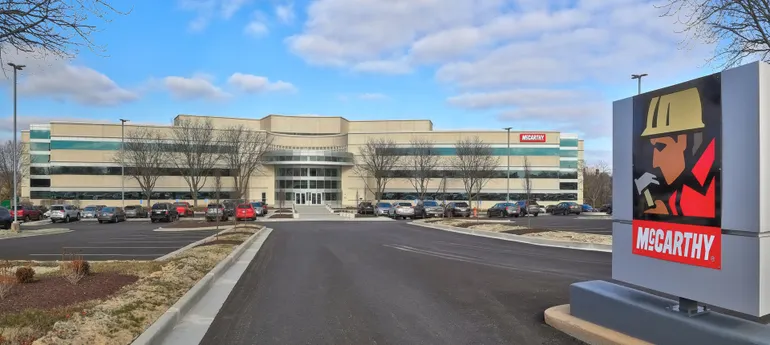
At a Glance
- McCarthy Building Cos. is seeking an edge in artificial intelligence applications and has signed a cooperation agreement with a well-known software development company.
- St. Louis-based McCarthy signed a multi-year, multi-million-dollar agreement with Palantir to enhance its internal AI capabilities, as announced by Palantir on Thursday.
- According to Palantir, the contractor will use Palantir's Artificial Intelligence Platform (AIP) to develop a connected AI operating system that helps McCarthy employees work across everything from design to on-site construction.
In-Depth Insights
At the core of this collaboration is Pulse—McCarthy's AI-native system, which, according to the announcement, provides on-site teams with real-time insights, scenario planning, risk analysis, and decision orchestration capabilities.
Miami-based Palantir provides AI-based software solutions to clients across industries including military, retail, food manufacturing, and investment management. The company gained recognition as a defense contractor through its "Gotham" software platform.
Pulse's model is based on the Ontology component of Palantir's AI business, which Palantir describes on its website as a "factory of tools" that allows people to develop applications, set parameters, and prepare for use. On McCarthy's side, Pulse helps field supervisors, project managers, and field operators make decisions and evaluate on-site options.
McCarthy will use AIP to connect various aspects of the business, such as contracts, estimating, and execution, through the same Ontology.
This collaboration also marks a turning point for the builder—McCarthy will structure its internal technology team around embedded Palantir engineers and natively develop enterprise-grade software with its internal application team.
"Beyond the ontology and the technology itself, Palantir brings exceptional engineering talent and strategic thought leadership, which accelerates our ability to turn complex operational concepts into scalable solutions at an unprecedented pace," said Justin McFarland, McCarthy's Chief Digital Officer, in the announcement.
This "build versus buy" trade-off is not a new consideration in the construction industry. As construction companies become more knowledgeable about technology, they often find that their needs are better understood than what third-party vendors can offer.
To this end, builders have begun partnering with late-stage startups, especially those that can tailor solutions to their specific needs.
In fact, Turner Construction, the largest U.S. contractor by revenue, has taken a further stance on this issue. The builder questions the economic rationale for paying startups that provide solutions rather than building them in-house.
Turner moved toward the latter last fall when it announced a company-wide partnership with OpenAI.