
$1.2 Trillion Infrastructure Bill Expires September 30, Construction Industry Worried
The U.S. $1.2 trillion Infrastructure Investment and Jobs Act is set to expire on September 30, and Congress must pass a new transportation authorization bill before then. Construction industry executives and economists say the act is crucial for public infrastructure projects, and if it is not renewed in time, projects may be delayed and jobs are at risk. Polls show 78% of voters support the new bill, but legislative time is tight.
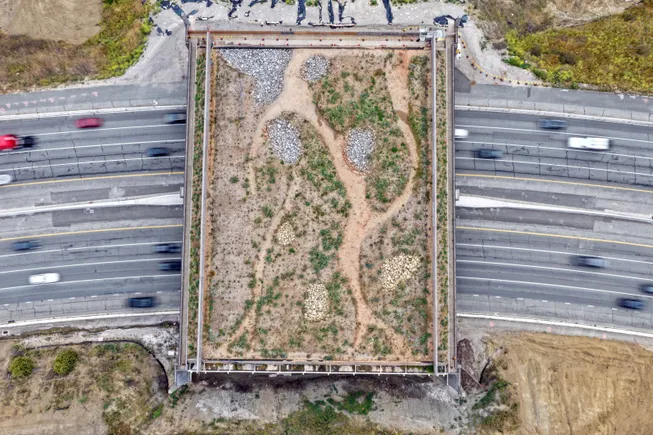
High summer is in full swing, but for the construction industry, an autumn deadline has been circled in red.
Congress has until September 30 to renew the national transportation bill, as the current $1.2 trillion Infrastructure Investment and Jobs Act (IIJA) is nearing the end of its authorization period.
The bill is crucial to the construction industry because infrastructure projects have largely offset, for most of this year,weakness in multiple private construction sectors.Apart from thedata center construction boom, economists say public infrastructure remains one of the few reliable pillars of construction activity.
A poll by the Associated General Contractors of America (AGC) found that78% of American voterswant Congress to pass "Build America 250"—the new transportation reauthorization bill. The poll, released July 2, was conducted with Morning Consult and surveyed more than 10,000 voters nationwide.
But AGC CEO Jeffrey Shoaf said that any delay or legislative turbulence regarding the new transportation bill in the coming months could bring higher uncertainty to the future of the infrastructure construction sector.
"If they are going to pass it, there isn't much time," Shoaf said during a July 2 media briefing. "Congress always seems to take the path of least resistance. They can't just forget about this. They can't avoid addressing this gear that is so important to the nation's economic growth."
Shoaf noted that this multi-year federal bill provides about 80% of funding for major transportation projects. Without that money, contractors across the country would be forced to shelve projects.
"If federal funding is reduced or fails to keep pace with growth and inflation, our projects will be delayed," said Lynn Hansen, CEO of Crowder Constructors, a general contractor based in Charlotte, North Carolina, during the briefing. "Construction jobs will be at risk."
Some notable multi-billion-dollar infrastructure projects in this sector include the Gateway Development Commission's$16 billion Hudson Tunnel Project(in New York and New Jersey), and the Chicago Transit Authority's$2.1 billion Red and Purple Line Modernization. Both projects recently won court victories, with judges ordering the U.S. Department of Transportation to restore funding after the Trump administration withheld funds for the work.
Although the impending expiration of the IIJA heightens urgency for contractors, it will not completely cut off the funding spigot.
For example, even if Congress fails to pass a new bill before the September 30 deadline, funds already authorized under the IIJA will continue to flow, said Anirban Basu, chief economist at Associated Contractors and Builders.
"There are other construction segments that are performing reasonably well and generating demand for contractor services, many of which are related to the IIJA," Basu said during a July 8 economic update webinar. "The money is still there waiting to be spent. Those funds could last into the early 2030s, so that's the situation."
Still, Basu agreed that a new transportation bill is essential to maintaining infrastructure momentum and offsetting weakness in other private construction.
"Some publicly funded segments are doing okay, but basically on the private side, as far as I can tell, it's just data centers and energy," Basu said. "There isn't much else shining right now."