
California High-Speed Rail Project Funds May Run Out by End of 2027, Inspector General Report Warns of Financing Risks
A July 31 report by the California High-Speed Rail Authority's Inspector General warned that if borrowing against the anticipated $1 billion per year cap-and-trade funds through 2046 is not possible, project funds could be exhausted by December 2027. The report highlighted issues with the Authority's optimistic assumptions and cost estimates, and mentioned challenges such as terminated federal funding and higher private financing costs.
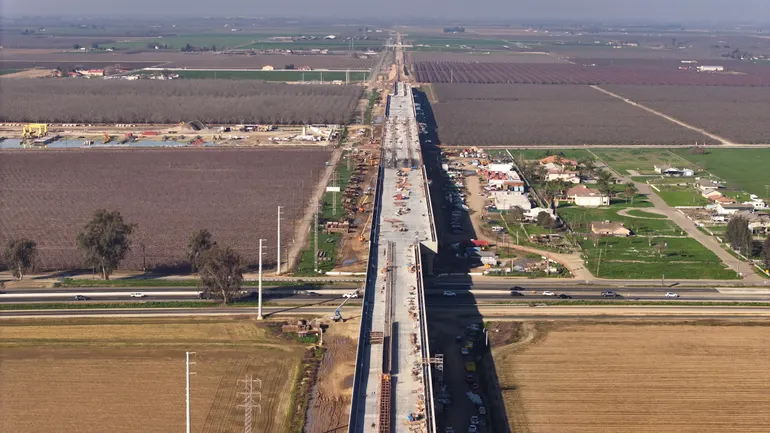
A report released on July 31 by the Office of the Inspector General of the California High-Speed Rail Authority stated that if the Authority cannot borrow against funds expected from the state's cap-and-invest program at $1 billion annually through 2046, project funding could run out by December 2027. The report link is availablehere。
The approach to using cap-and-invest funds is similar to theNew York congestion pricing plan, which allows its transportation authority to borrow against future revenue through municipal bonds, and the Authority is currently considering this avenue.
The Office of the Inspector General stated that for this proposal to work, the California Attorney General must approve the Authority's eligibility to use revenue bonds, and the state legislature must pass legislation ensuring that future laws cannot reduce cap-and-invest revenue.
The Office of the Inspector General said the Authority "continues to assume that legislative changes designed to improve project conditions will occur almost immediately" and continues to "make overly optimistic assumptions."
The Authority's2026 Business Planestimates that the interest cost of borrowing against future cap-and-invest funds would be $3.6 billion, but the Office of the Inspector General said the cost could be as high as $6.6 billion. The Authority responded in an email that it did not include "speculative interest costs or improperly incorporate interest costs into capital estimates," explaining that these costs may depend on future policy choices, so it only cited the lower figure.
The California project is alsoseeking private investor funding, and has signed a joint development agreement with a consortium of high-speed rail, infrastructure, and investment companies,to attract external investors. These funds may come with interest rates higher than state loans or revenue bonds.
The Authority stated in its 2026 Business Plan that it "remains optimistic that future federal funds will be available for the project." But under the Trump administration, this is unlikely. The Federal Railroad Administration, under the direction of Transportation Secretary Sean Duffy,terminated approximately $4 billion in unspent federal funds previously awarded to the Authority。
Washington is currently negotiating the next multi-yearsurface transportation legislation, but according to the American Public Transportation Association, a temporary funding measure valid through December 11 wouldcut passenger rail funding by 83%, below current levels.
The Authority said in an email statement that it "continues to engage with stakeholders and pursue financing opportunities, and intends to address funding risks and scheduling considerations in the (upcoming) 2027 Project Update Report, based on ongoing legislative and policy discussions."