
Five Strategies for Construction Companies to Reduce Tax Burden
According to Construction Dive's analysis, in 2020, the 19 largest profitable construction companies had an average effective federal tax rate of only 16.8%, below the statutory rate of 21%. This article explores five main legal tax reduction strategies these companies employ, including asset depreciation, stock compensation, research and development tax credits, loss carryforwards, and the 179D energy-efficient deduction.
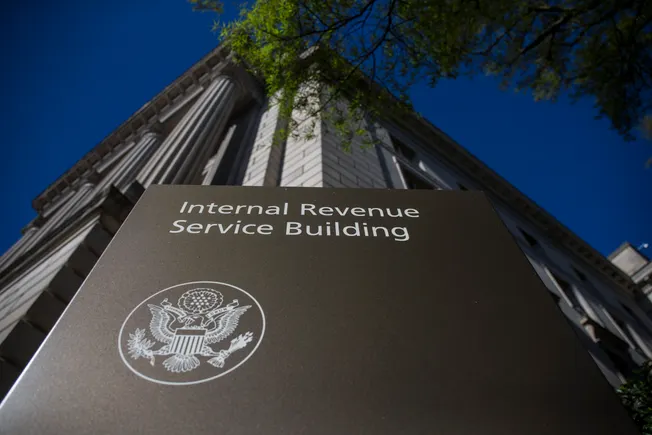
This article is the second in a series examining the federal taxes paid by public and private construction companies and the techniques some of these companies use to reduce their tax burden.Click hereto view the full series.
A recentConstruction Dive analysisshows that public construction companies have among the lowest effective federal tax rates of any industry. In 2020, the 19 largest profitable firms in the sector paid a combined 16.8% in federal taxes on their U.S. profits, one-fifth lower than the 21% statutory rate set by Congress.
Of those, 12 companies—nearly two-thirds—paid rates below the statutory rate.
These construction firms rely on several provisions to reduce their tax burden, all of which are completely legal. Here are the main techniques they use:
1. Asset depreciation
According to Andrew Kahn, a CPA specializing in construction finance at Concannon Miller, a consulting firm in Bethlehem, Pennsylvania, the significant capital investments made by construction companies are one of the primary ways these firms lower their tax burden.
"The reason their effective tax rate is below 21% is favorable depreciation write-off provisions," Kahn said. "So, if you have a construction company that adds $5 million in new assets—like buying machinery, equipment, and vehicles—those assets get written off."
While specific expenses are often not included in public companies' 10-K filings, clues to the use of depreciation write-offs can be found in the deferred tax expense section of these annual reports. That section lists taxes the company believes it may owe in the future based on actions taken in the current year.
So, if a company writes off a bulldozer for tax purposes in the current year but then recaptures some of that expense when it sells it in the future, the difference between those two figures falls into the deferred tax category.
For example, engineering and construction firm Jacobs reported a federal deferred tax expense of $53.5 million in 2020, slightly below its total reported tax obligations of $55.3 million across all federal, state, and foreign levels.
"The amount of federal income tax liability the company was able to defer this year is almost equal to its total worldwide income tax provision," said Matthew Gardner, a senior fellow at the Institute on Taxation and Economic Policy, a left-leaning think tank. "That tells me the main mechanism the company used to bring its tax rate down to zero is likely related to depreciation."
According to Construction Dive's analysis, Jacobs received a $37 million federal tax refund in 2020, bringing its effective federal tax rate to -17.4%. The company did not respond to requests for comment for this series.
While in theory deferred tax expenses are just taxes a company will pay in the future, that is not always the case.An ITEP studythat analyzed companies' tax payments over eight years found that deferrals can, in some cases, be extended indefinitely.
"Every year there is a deferral, there should be another year paying the deferral from previous years," Gardner said. "But at the same time, in other cases, it does seem to be permanent."
Overall, the companies analyzed reported $197 million in deferred tax expenses in 2020, including:
| Company | Deferred tax expense |
|---|---|
| Jacobs | $53.5 million |
| Tutor Perini | $39 million |
| Orion Group Holdings | $23.9 million |
| Sterling Construction Company | $19.4 million* |
| Great Lakes Dredge & Dock | $17.5 million |
| MasTec | $14.8 million |
| Infrastructure and Energy Alternatives | $10.1 million |
| Integrated Electrical Services | $9.3 million |
| Comfort Systems USA | $5.5 million |
| Tetra Tech | $2.2 million |
| Construction Partners | $2.2 million |
*Combined federal and state deferred tax expense
Source: Company 10-K filings.
2. Stock compensation
Of the 12 companies in Construction Dive's analysis that paid below the statutory corporate rate in 2020, nearly all took advantage of writing off employee stock compensation.
This typically involves companies granting executives stock options—the right to buy shares at a fixed price in the future.
For example, a company might grant an executive the right to buy 1 million shares at $10 per share over a 10-year period. If the company's stock is trading at $50 when the executive exercises that right, the company can write off the full value of those shares—$50 million—on its taxes.
While this is a legal and effective way for companies to reduce their federal tax burden, Gardner said it is also an area where companies can receive tax credits without actually incurring any real expenses.
"There is a feature in the tax code that allows companies to basically write off costs associated with stock compensation, quote-unquote, exactly as if the company had written checks to those employees," Gardner said. "But there is obviously no directly related cash outlay."
In 2020, the contractors analyzed here reported a total of $48.5 million in stock compensation expenses, including:
| Company | Stock compensation expense |
|---|---|
| MasTec | $21.9 million |
| Jacobs | $10.2 million |
| Infrastructure and Energy Alternatives | $4.4 million |
| Tetra Tech | $4.3 million |
| Tutor Perini | $3.2 million |
| Sterling Construction Company | $1.8 million |
| Great Lakes Dredge & Dock | $1.2 million |
Source: Company 10-K filings.
3. Research and development tax credit
Construction companies also employ the so-called research and development tax credit, which can return up to 12% of their spending in this area to businesses.
According to Cole Marr, R&D director at Sensiba San Filippo, a California accounting firm,qualifying construction-related activitiesinclude design improvements for LEED or energy-efficient projects, development of unique construction methods and processes, experiments with new building materials, or developing improved construction equipment.
Among the companies analyzed, mechanical, electrical, and plumbing contractor Comfort Systems USA used the credit to gain $26.1 million, while Tutor Perini reported a $3 million R&D tax credit in its 10-K filing. Great Lakes Dredge & Dock, Tetra Tech, and Infrastructure and Energy Alternatives also received smaller credits in this area.
The credit is designed to incentivize companies to invest in exploring new products and technologies, with the goal of fostering innovation and, in turn, driving economic growth.
"In the government's view, they are trying to improve and increase process efficiency to drive business and economic development, which benefits everyone," Kahn said.
But the R&D tax credit is often criticized for its complexity, which effectively limits its benefits to larger companies that can afford to hire armies of accountants.
"There are things in the tax code that could be made simpler," said Garrett Watson, senior policy analyst at the Tax Foundation, a right-leaning think tank. "The R&D tax credit is one example. It is very complex, so many small companies struggle to take advantage of it."
4. Loss carryforwards and carrybacks
Another tax benefit that can help reduce what a company owes the government is the net operating loss carryforward. This allows companies to use past excess losses—when they owed little or no tax—to offset future profits when they might owe more. Such losses can be carried forward indefinitely.
For example, Ron Ballschmiede, CFO of Sterling Construction Co., based in The Woodlands, Texas, explained in an email how the company applied losses dating back to 2011 to offset current profits, bringing its effective federal tax rate to zero in 2020 for the second consecutive year.
"Due to net operating loss carryforwards, the company expects to owe no federal income tax cash in 2020 and 2019," the company reported in its 10-K filing.
MasTec and Integrated Electrical Services (IES Holdings) also reported using the technique in 2020.
Additionally, the Coronavirus Aid, Relief, and Economic Security (CARES) Act allowed companies to carry back net operating losses from 2018, 2019, and 2020 for five years. This enabled them to effectively amend past tax returns and receive refunds for those losses, if doing so was advantageous from a tax perspective.
Gardner said that because the corporate tax rate was 35% before former President Donald Trump's Tax Cuts and Jobs Act was passed in late 2017, carrying current losses back to earlier years now can help companies recover more taxes they might have paid at the higher rate.
Tutor Perini's 10-K filing provides a good example. "Under the CARES Act, enacted on March 27, 2020, NOLs (net operating losses) generated in 2019 can be carried back up to five years, whereas under previous rules, NOLs were only allowed to be carried forward," the company said in its 10-K. "This enabled the company to realize the benefit of the rate differential by carrying back NOLs to tax years with a federal statutory rate of 35% rather than the current 21%."
5. 179D energy-efficiency deduction
Another deduction particularly applicable to construction companies is the 179D incentive, which allows qualifying builders to claim a tax deduction of up to $1.80 per square foot for installing qualifying energy-efficient systems. The measure wasfirst established in 2006and was recently made permanent as part of the Consolidated Appropriations Act of 2021, signed into law on December 27, 2020.
Jacobs claimed a $7.3 million deduction under the rule, while Comfort Systems USA claimed $1.1 million.
The tax experts interviewed for this series emphasized that all of the above methods are completely permissible within the tax system. "There is no indication that anything these companies did is not fully compliant," Gardner said.
The tax code is set up to allow companies to seek these kinds of deductions to incentivize them to invest in their businesses and employees, thereby driving overall economic growth.
"You often hear about all these very large companies paying zero taxes even when they make money," Kahn said. "But obviously, to generate investment and progress, the tax code allows you to deduct certain things faster for tax purposes."