
Rise of Supply Chain Diversification Trend, 'Made in China' Label Faces Re-evaluation
Multiple risks such as rising costs, trade wars, and the pandemic have prompted American companies to reassess their procurement strategies from China, shifting from single-source dependence to diversified layouts, but China's core position in the global supply chain is difficult to replace in the short term.
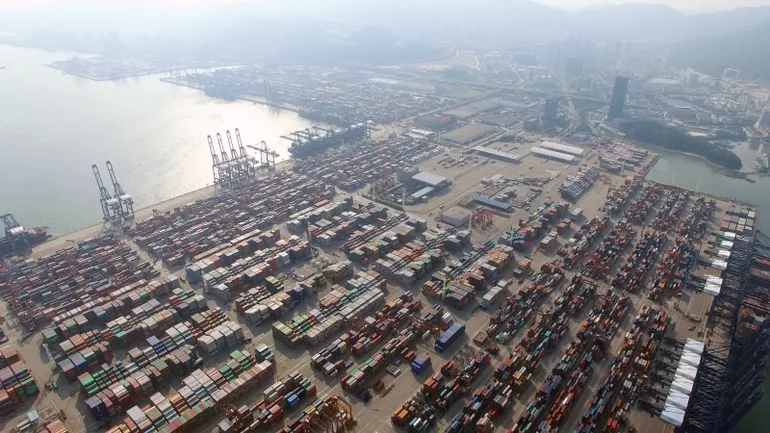
In the United States, the label "Made in China" is ubiquitous, from industrial machinery to a pair of flip-flops, almost everywhere. However, rising costs, trade wars, and multiple risks such as the pandemic are prompting companies to re-examine their relationships with suppliers and China.
"We realized we had concentrated too much power in a single country," said Dawn Tiura, CEO of the Sourcing Industry Group.
This shift in tone in the U.S. supply chain is not a mass exodus from China, but a strategy of embracing diversification.
The risks of single-sourcing from China have been brewing for years but were further highlighted during the COVID-19 pandemic. In early 2020, manufacturing and supplier operations in multiple regions of China came to a standstill, with effects rippling across the Pacific, leaving U.S. importers unable to source goods.
Camille Batiste, Senior Vice President of Global Supply Chain and Procurement at Archer Daniels Midland (ADM), witnessed such disruption firsthand. The company had multiple major suppliers for a key ingredient used for its energy drink customers, but all of these suppliers were located in China.
When the pandemic disrupted production and exports in China, Batiste and her team had to "scramble around, trying to find other suppliers."
The procurement team eventually found a suitable ingredient in South America, but it was not exactly the same as the product they were accustomed to importing from China. ADM had to adjust its internal manufacturing processes to use the material.
This short-term solution allowed ADM to maintain product supply, but it also revealed the long-term risks of having major suppliers in a single region or country.
"This fundamentally changed the supply chain of our nutrition business," she said.
Batiste said she will continue to seek other sources for this key ingredient.
"We need to build a supply chain that can also receive materials from other places," said Batiste. "We just need to always... have multiple sources."
Alternatives to single-sourcing from China
As the pandemic continues, no sourcing destination is immune. One region lifts lockdowns, and another imposes them. Supply chain executives are caught in a game of whack-a-mole that is still ongoing. Single-sourcing from China is not the only risk; sourcing from any single region carries risk.
"You need to hedge your bets," said Dale Rogers, a business professor of supply chain management at Arizona State University, during a Resilinc webinar in July. "You can't source entirely from one place."
This realization is prompting supply chains to diversify their supplier bases, and certain geographic regions and strategies are standing out.
Southeast Asia
When the U.S. imposed Section 301 tariffs on Chinese imports, many companies turned to Vietnam.
Eddy Malesky, director of the Duke Center for International Development, said during a Flexport webinar in July that the country has a high literacy rate and relatively low labor costs.
Malesky said foreign investors view Vietnam as relatively politically stable with stronger property rights protections. Electronics and auto parts are growing industries in Vietnam.
"This could be Vietnam's moment," said Malesky.
Trade with Vietnam surges
Tom Gould, global vice president of customs at Flexport, said during the same webinar that Vietnam is also upgrading its capabilities in a way that is attractive to businesses. This means that suppliers in Vietnam, rather than buyers, are responsible for addressing sourcing, production, quality assurance, environmental issues, and labor concerns.
"Vietnam has been... able to say to customers, 'You want the product; I will deliver the product to you,' rather than 'You want the product; tell me how to make it, and I will produce it for you,'" said Gould.
Companies are also looking for suppliers in Bangladesh, Thailand, Indonesia, and Malaysia.
But across Southeast Asia, human rights issues persist. Many countries in the region also lack developed transportation infrastructure and ports, which only adds to lead times and risks.
Asia dominates U.S. sourcing
Reshoring/Nearshoring
The same risk factors driving supply chain diversification are also prompting them to consider bringing production back to the U.S. Geographic proximity enables shorter shipping times, lower emissions, and the ability to promote a "Made in the USA" label. Import tariffs are no longer an issue. Total cost of ownership is often lower.
A study by Thomas surveyed respondents in March and found that 83% of manufacturersare likely, very likely, or extremely likely to reshore, up from 54% in March 2020. But after decades of building manufacturing bases in Asia and Latin America, rebuilding a manufacturing base in the U.S. can be challenging.
"Reversing the trend of outsourcing and offshoring manufacturing to emerging market countries over the past 30-plus years is extremely difficult," said one chemical manufacturer in the Thomas survey. "We no longer have the talent, expertise, and capital equipment to effectively manufacture key components of our major products."
Because labor costs are higher in the U.S. and Canada, nearshoring to Mexico is more common and can offer significant cost advantages compared to China.
Nevertheless, experts are also quick to point out that sourcing nearby does not equate to resilience.
"If I'm in North America and my only supplier is in North America, that's a problem," said Batiste. "We would be in trouble."
Latin America
Mexico remains the United States' largest trading partner, but procurement executives are also looking at other countries in Central and South America.
Rogers said Nike produces a variety of products in Asia, but some products require shorter lead times. Nike adjusted its sourcing strategy so that NFL-related products are imported from Central America, shipped by vessel to the Port of Miami, with shorter transit times.
Tiura, meanwhile, is looking at Nicaragua. She said the country has a strong labor market and higher education levels, although political instability has deterred many buyers.
Sourcing from Latin America also offers additional transportation options. Cross-border rail can move goods from Mexico to the U.S. The Pan-American Highway extends from Alaska to the southern tip of South America, with only the Darien Gap interrupting the route.
Nevertheless, infrastructure in many parts of Central and South America remains limited.
"There is a road. But the road is not in great condition," Rogers said of the Pan-American Highway. But with enough investment to build transportation infrastructure, Rogers said the highway could compete with China's Belt and Road Initiative.
Do all roads lead to China?
Diversification is not limited to tier-one suppliers. Tiura said some members of the Sourcing Industry Group thought they had diversified by adding a supplier in Vietnam, only to discover that the supplier sourced materials and components from the same places as their Chinese suppliers.
"At the end of the day, almost every road leads to China," said Tiura.
In today's world, it is hard to imagine a supply chain completely decoupled from China, whether that connection is at tier one or tier four.
According to the United States Fashion Industry Association's 2021 Fashion Industry Benchmarking Study, China is themost commonly used sourcing destination for U.S. fashion companies. Machinery, toys, and plastics are often sourced from China. The pharmaceutical supply chain relies heavily onoverseas production。
U.S.-China trade booms
China has abundant manufacturing hubs, a variety of raw materials, a strong labor force, and well-developed port infrastructure. The supplier relationships that global companies have established could be damaged by disruptions.
Additionally, China has a large population and consumer base, and companies want to do business with the country, said Tiura. China's e-commerce salestotaled $2.4 trillion last year, far exceedingthe U.S. online sales of $792 billion in 2020.
These deep roots are why China may always be a major source of procurement.
"You can't replicate the scale of China's manufacturing base," said Rogers.
But that does not eliminate the need for redundancy as a resilience measure.
"Who knows where the next earthquake, hurricane, pandemic, or political upheaval will be," said Rogers. "You have to think about that and find ways to keep products flowing when these disruptions occur."
This article first appeared in our weekly newsletter, Supply Chain Dive: Procurement.Sign up here。