
Food and beverage manufacturers set off a boom in new factory construction
The pandemic has changed consumption patterns, leading food and beverage manufacturers to expand factories to meet home consumption demand. In 2021, there have been over 70 expansion projects, with industry investment recovering, but facing challenges such as material shortages and rising costs.
Last year, when consumers across the country were stuck at home due to the pandemic, they drank more Woodchuck Hard Cider and craft beer, said Ben Calvi, chief operating officer of Green Mountain Beverage.
In June, the company announced it would expand its canning capacity sixfold, from 100 cans per minute to 600 cans per minute. The expansion will be built on the company's existing facility, which is equipped with advanced equipment, and is expected to be completed in January next year.
Green Mountain has undergone multiple expansions, departmental adjustments, and name changes over its three decades since its founding. Calvi said the company has long anticipated such an expansion. In May, the company received financial support after its parent company, Vermont Hard Cider Company, was acquired by the holding company Northeast Drinks Group. But Calvi noted that the pandemic accelerated at-home drinking consumption—especially of premium beverages—which quickly highlighted the need to expand the canning line.
"If there wasn't already a strong business case before, the pandemic was a rubber-stamp approval that this was absolutely the right direction to go," Calvi said.
Green Mountain is not the only company that chose to expand its production footprint in 2021. According to a Food Dive analysis, more than 70 manufacturing expansion projects have been announced or completed this year.
Richard Branch, chief economist at Dodge Data & Analytics, said manufacturing construction activity in the first seven months of 2021 grew 40% compared to 2020. He noted that food and beverage is one of the three most active business sectors in industrial construction right now.
According to CBRE data, as of August, the food and beverage industry had completed nearly 33.5 million square feet of industrial space construction this year, accounting for 8.7% of all commercial construction volume this year.
Related reading:Tracking food and beverage plant construction
Geoff Freeman, president and CEO of the Consumer Brands Association, said there are good reasons food and beverage manufacturing construction is so hot. The pandemic completely changed the direction of the industry. Food and beverage companies went from pre-pandemic stagnant growth, internal cost-cutting, and poor sales of once-reliable flagship products to huge commercial success stories. Now is the time to invest in improving these businesses and the products they offer to consumers.
"What you're seeing is a traditional industry that is being reborn in many ways," Freeman said.
From sales to investment
Freeman doesn't like using the term "perfect storm" for good things, but the pandemic did create that situation for the CPG industry.
Sales grew substantially across the board, with McKinsey & Company reporting a 12% year-over-year increase in food and beverage sales in 2020.
As the pandemic closed offices, entertainment venues, and restaurant dining rooms, consumers flocked to grocery stores and began stockpiling. This shopping behavior continued through 2020 and into 2021, even as supply chain issues are keeping store shelves tight. Despite unprecedented sales growth in 2020, some large food companies have still posted solid quarterly growth this year.

"Month after month and year after year, the demand has proven to be sustainable. This shows that the changes we saw early in the pandemic are at least semi-permanent," Freeman said.
Before the pandemic, companies faced stagnant growth, leading to layoffs, plant closures, and painful restructurings in the name of cost savings. Freeman said Wall Street at the time wanted food companies to make such cuts to maintain profits.
Now, he said, Wall Street wants food companies to invest in the future.
"They want to see us prepare for the long term," Freeman said.
Preparing for the long term is one of PepsiCo's main business goals. Laura Maxwell, senior vice president of supply chain for PepsiCo Foods North America, said the company's manufacturing strategy can be summed up as "being everywhere." The company wants its products to always be in every place where consumers are looking for them.
The soda and snack giant's Frito-Lay division has a long-term expansion plan. The pandemic boosted the company's snack sales and also accelerated several long-planned expansion projects across the country, including a production line expansion at its Rosenberg, Texas plant, a new distribution center in East Fishkill, New York, and a new distribution center in Kissimmee, Florida.
The Texas project is the largest, costing $200 million. Maxwell said a new Funyuns production line will be added in 2022, and it may supply more snacks to the southeastern United States. A tortilla chip production line is planned to be added within two to three years. This is the second major expansion announced at the plant since 2019. The first expansion (adding a Cheetos production line and warehousing) is nearly complete.
"What you're seeing is a traditional industry that is being reborn in many ways."

Geoff Freeman
President and CEO of the Consumer Brands Association
The expansion comes during a strong year for PepsiCo snack sales. In the fiscal year ending December 26, 2020, Frito-Lay North America sales grew 7%. This reflected higher consumer prices, but the company also reported 3% volume growth. In the most recent quarter, Frito-Lay sales grew 6% year over year with 1% volume growth, continuing the momentum.
Although the Texas expansion had been planned for some time, Maxwell said pandemic-driven demand helped accelerate the project timeline. The company considers a range of questions before moving forward with construction.
"Where are products sold? Where does there appear to be growth where we might not have facilities positioned in that region to meet the growth?" she asked. "...I think of Texas and those southern states. Those markets are growing, so adding Funyuns, fried Cheetos, and tortilla chip lines there makes perfect sense."

Maxwell said pandemic-related consumer behavior has influenced the type of equipment that will be installed at the expanded plant. Over the past year and a half, consumers bought more individually packaged snacks to avoid sharing packaging with others, so Frito-Lay will add equipment to produce such packaging.
Other companies have also turned sales growth and pandemic demand into expansions. In May, sous vide product manufacturer Cuisine Solutions opened a $200 million facility in San Antonio, Texas. Sous vide is a method of cooking food in vacuum-sealed bags in precisely controlled hot water. Because Cuisine Solutions pre-cooks its food, it is easy to prepare at home or in restaurants, especially during times of labor shortages.
Chief Financial Officer Mark O'Donnell said the 315,000-square-foot facility will produce products for both retail and foodservice.
"We're seeing growing demand for sous vide products from national restaurant chains to consumer products," he said. "The trends we're seeing in the market are increasing demand for convenience foods and food safety."
Cuisine Solutions broke ground on the new facility in February 2019. Although the company calculated capacity needs and finances before the pandemic, O'Donnell said demand and consumer trends during the pandemic solidified its decision to expand.
The business case for expansion
Many food and beverage companies proved their value during the pandemic by keeping production lines running and adapting to new health and safety protocols. Freeman of the Consumer Brands Association said the pandemic exposed how stretched manufacturing facilities were and revealed the level of modernization the industry needs.
The pandemic also disrupted supply chains, making it difficult for companies to obtain raw materials and ship finished products, said Jay Biggins, executive managing director of site selection firm BLS & Co. He said risk diversification has always been a concept he supported in manufacturing, but the pandemic made its importance clear.
"In addition to expanding capacity, they are also readjusting, potentially moving some capacity from concentrated locations to more dispersed locations to build a more diversified production platform with more manageable risk," Biggins said.
Biggins said planning for new facilities stalled in the first six to eight months of the pandemic. The site selection process typically takes three to six months, depending on how thoroughly companies research raw materials, packaging manufacturers, transportation and distribution networks, and incentives when evaluating locations.
As things recovered, Biggins said this may be part of the reason so many expansion projects have been announced: companies are catching up on 18 months of planning delayed by the pandemic.
Challenges of expanding during the pandemic
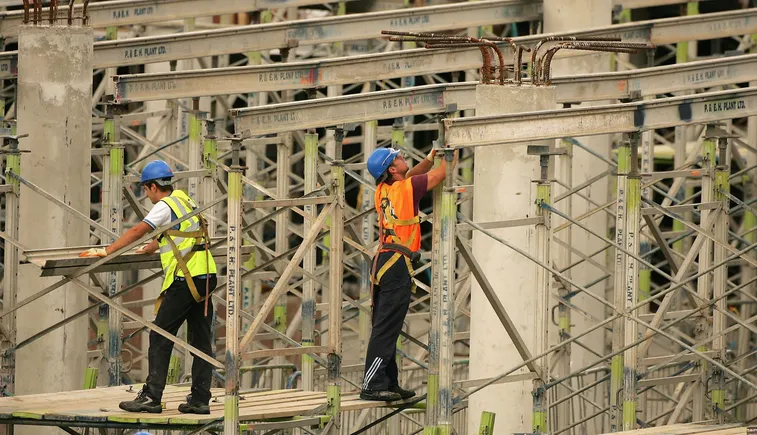
Despite the increase in new project announcements, rising costs and shortages of building materials such as lumber, metal, and plastics have slowed actual construction of projects, Branch said. The shortages stem from labor and transportation issues as well as backlogs of material orders.

Although there have been no high-profile cases of food plant construction being halted, Green Mountain's Calvi, Cuisine Solutions' O'Donnell, and PepsiCo's Maxwell all said construction during the pandemic encountered delays and other challenges.
Calvi encountered shortages of equipment and parts needed for the new canning line. Transparency is critical in this environment.
"We work as closely as possible and communicate as much as possible," he said. "If something is going to be delayed, you have to let customers know it will be delayed and why, and what the new ready dates and ship dates are. We need to be more transparent, communicative, and patient with suppliers than ever before."
Compared to Green Mountain's previous expansions, there is now almost no room for price negotiation, Calvi said. The company pays list price for everything. Shipping costs, especially for overseas products, have also risen significantly.
However, Calvi does not believe suppliers are taking advantage of the situation for profit. Despite some material shortages, he said there is still considerable competition in the market.
"They've passed on higher raw material costs, and so far I think most of it is related to freight," Calvi said.
Looking ahead
O'Donnell said pandemic-related delays pushed back Cuisine Solutions' facility construction project by about six months. Due to international shipping and manufacturing challenges, it was difficult to obtain all necessary equipment on time. There were also labor shortages and rising costs on the construction side.
However, O'Donnell said the timing was just right. Demand for sous vide products is climbing.
"We're very glad we went through that process and can have capacity today to meet some of the market demand, rather than pausing the project entirely and only starting now," he said.
At PepsiCo, Maxwell said the company designed its expansion process with challenges in mind. The company builds in time to address supply chain issues and develops contingency plans to ensure it obtains the materials, equipment, and labor needed. She said current construction work is on schedule.

A survey of food and beverage industry leaders conducted by Mattson in spring 2020, shortly after the pandemic brought most daily life to a halt, found that half believed their businesses would emerge stronger from the pandemic. New facilities, increased capacity, and promising return on investment prospects all contributed to this outlook.
Freeman of the Consumer Brands Association said the CPG industry will not continue growing at the pace of 2020, but he believes in the industry's ability to adapt.
"If you tried to guide the American public in some way to help the CPG industry become stronger, you couldn't write a better roadmap than the environment we're in now and what we expect to continue for the foreseeable future," Freeman said. "Again, more at-home consumption and other aspects of the pandemic are within the strengths of this industry, and that's why I'm confident in the investments you're seeing."