
Five years after the pandemic, contractors are still waiting for building material prices to fall
Five years after the COVID-19 outbreak, nonresidential construction input costs in the U.S. remain about 40.5% higher than in February 2020, far from returning to pre-pandemic levels. While supply chains have partially recovered, new tariff threats in 2025 are driving material prices up again. Industry experts expect that unless a 'black swan' event occurs, construction costs are unlikely to decline significantly in 2025.
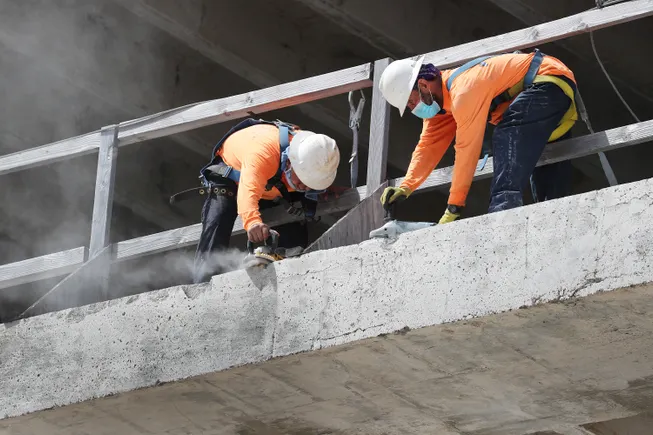
Since 2020, many events have been labeled as "pre-pandemic" or "post-pandemic," and this is especially evident in the construction industry.
Contractors once hoped that construction prices would fall back to pre-pandemic levels. However, five years after the outbreak of COVID-19, costs have still not declined. More concerning, industry insiders arepreparing for a new surge in material costs, due to ongoing and upcoming tariffs.
On March 11, 2020, the World Health Organization declared COVID-19 a global pandemic; on March 13, the United States declared a national emergency, and states subsequently implemented lockdown orders. Now, as this date approaches again, the virus's profound impact on the construction industry remains clearly visible.
"Initially, we thought the lockdowns would only last a few months. When people started returning to the office, we thought manufacturers would need just a few months to replenish their workforce and work through backlogs," said Les Hiscoe, CEO of Boston-based general contractor Shawmut Design and Construction. "We didn't anticipate the long-term loss of labor and ongoing supply chain disruptions."

Hiscoe is not alone in this view. Between 2020 and 2021, prices for key materials such as iron, steel, brick, and switchgear soared, peaking in June 2022 at 46.4% above February 2020 levels. Sharon Wilson Géno, chair of the National Multifamily Housing Council, said during a Marcus & Millichap economic and construction real estate outlook webinar earlier this year that many contractors at the time expected prices to gradually return to pre-pandemic levels.
But the reality is that the increased prices have not truly come down.
"After the pandemic, people expected construction costs to fall back closer to previous levels, but that hasn't happened," Wilson Géno said. "While we haven't seen the price volatility of the pandemic period, prices have largely flattened in most markets, just at a much higher level."
According to the Producer Price Index, nonresidential construction input costs are currentlyabout 40.5% higher than in February 2020. Most of this increase occurred in the initial years following the pandemic outbreak. Since 2022, costs have largelyremained around the same level。
Material costs up 40.5% since February 2020
"Supply chain conditions have improved, with many suppliers reporting better availability and shorter lead times," said Rob Mineo, managing director at FMI Capital Advisors, an investment firm in Raleigh, North Carolina. "However, although things have normalized to some extent, there are no clear indicators confirming a full return to pre-pandemic status. Many operators are still placing equipment orders months in advance to guard against potential future disruptions."
Supply chain restructuring
Dave Steffenhagen, project executive at Chicago-based general contractor McHugh Construction, noted that before the pandemic, the construction industry relied heavily on global manufacturers for building materials. In response to pandemic-induced supply chain disruptions, companies like McHugh have established more partnerships with local North American material suppliers.

"No one knew how long the material supply chain delays would last. It was a period of uncertainty no one was prepared for," Steffenhagen said. "Now, we can offer clients multiple equivalent alternatives to overseas-sourced products."
In addition to shifting to closer manufacturers, federal spending has also helped support supply chain stability, Mineo said. Prices that had risen rapidly eventually stabilized. Lead times for some materials, such as asphalt, even improved after 2022, which had sparked optimism that construction costs would gradually decline.
But that optimism has faded. By 2023 and 2024, construction prices leveled off at high levels with little sign of significant decline. Now, three months into 2025, five years after the disaster, contractors are coming to terms with a new reality: prices are not only staying high but are rising again.
Tariff impact
On March 4, U.S. President Donald Trump imposed 25% tariffs on most goods from Mexico and Canada, and added a 10% tariff on Chinese products. On March 6, the Trump administrationsuspended these tariffsfor all imports compliant with the USMCA agreement, until April 2.
But on March 12, nearly five years after COVID-19 was declared a pandemic, the Trump administration plans to impose 25% tariffs on all global steel and aluminum imports, and 50% tariffs on Canadian metals.
Although these measures are not yet permanent, the mere threat has already impacted the construction industry. In January,contractors rushed to buy materials, causing prices to surge.
Mark Zandi, chief economist at Moody's Analytics, said at the Marcus & Millichap event thatthe new tariffswould "cause some damage."
U.S. construction market cost growth forecast
| 2020 | 2021 | 2022 | 2023 | 2024 | 2025 | 2026 | 2027 | |
|---|---|---|---|---|---|---|---|---|
| Building materials | 1.5% | 26.9% | 12.6% | -2.9% | -1% | 2.4% | 2.2% | 2% |
| Construction machinery | 1.8% | 4.5% | 10.4% | 9.4% | 2.5% | 2.1% | 2% | 1.9% |
Source: MOCA Systems
The U.S. relies heavily on imports of lumber, steel, and cement, making these materials particularly vulnerable to price increases, said Brandon Michalski, construction economist at Boston-based construction consulting firm MOCA Systems. In fact, Michalski forecasts that building material costs will rise 2.4% year-over-year in 2025, compared to a decline of nearly 1% in 2024.
In other words, although nearshoring has made contractors more resilient than before the pandemic, these changes have not yet made the U.S. construction industry self-sufficient in materials.
"This outlook already includes the risks from tariffs," Michalski said. "The U.S. reliance on imports of lumber, steel, and cement products could significantly impact construction costs in 2025."
The impact could be particularly severe in the cement and aggregates sector, Mineo said.
"In recent years, U.S. cement consumption has exceeded domestic production, leading to a significant increase in imports," Mineo said. "With domestic capacity already at full utilization, higher import costs will naturally push up domestic prices, as producers have little incentive to keep prices low."
For aggregates, prices are expected to continue rising steadily but without spikes, Mineo said. Most U.S. aggregate production is domestic, but regions that rely on imports from Canada and Mexico will be affected.
Margins narrowing, but projects not stopping
This news comes ascontractor profit margins are already narrowing, according to a survey by Associated Builders and Contractors. Rising material costs combined with ongoing labor shortages are adding extra pressure to budgets.
"Unless there is a 'black swan' event, construction costs are unlikely to decline significantly in 2025," Michalski said.
However, projects in certain sectors are still moving forward.The Project Stress Index(which tracks delayed and cancelled projects) andstarts datashow that despite high costs, some market segments remain stable. This indicates that developers are finding ways to move projects forward in a high-cost environment, Wilson Géno said.

"There is some anecdotal evidence that certain deals are starting to move forward," Wilson Géno said. "These deals have adapted to the new environment, realizing that given sustained demand, it's better to accept higher costs."
Michalski agrees, adding that while some projects will be delayed or scaled back, most developments are adapting to a permanently higher-cost environment. For example, data centers in Januarycontributed more than 75% of the monthly increase in construction spending, according to an analysis of U.S. Census Bureau data by Associated Builders and Contractors.
"While some projects may be delayed or cancelled, most are expected to continue as companies adapt through value engineering and strategic planning," Michalski said. "Despite these challenges, the industry remains resilient."
Now, as the construction industry navigates the fifth year since the lockdowns began, with the shadows of supply chain chaos and material shortages still looming, contractors are preparing for what feels like a familiar "rerun."
"Inventory management has permanently changed—we are now operating under new standards," Hiscoe said. "Project lead times are still much longer than before the pandemic, so partnerships and early collaboration with clients, architects, and engineers are crucial."