
Construction Robots Accelerate Deployment: Multiple Funding Rounds and On-Site Applications Draw Attention This Week
Construction robots are moving from concept to construction sites. This week, SoftBank invested $200 million in Gravis Robotics, and Bedrock Robotics announced its equipment is already operating at contractor sites such as Sundt Construction. Industry reports show contractor robot usage has increased 45% year-over-year, but experts caution that data quality and talent gaps remain key barriers to widespread adoption.
The construction industry is witnessing accelerating penetration of robotics. Two announcements this week highlight the strong demand for this solution on construction sites.
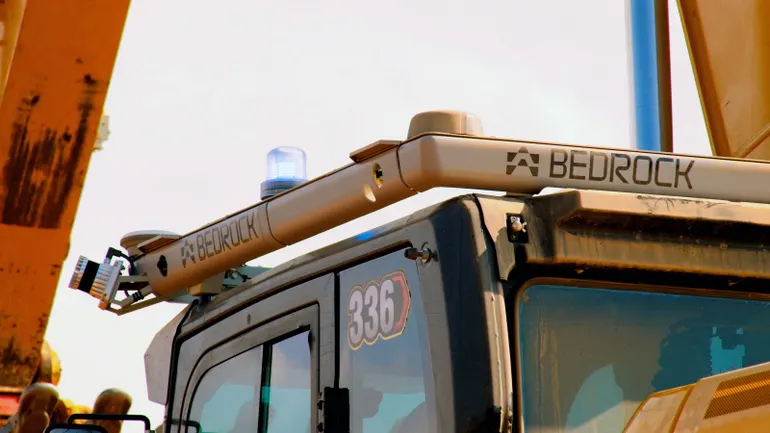
On Monday, global investment giant SoftBank announced it led a $200 million Series A funding round in Zurich-based Gravis Robotics. The same day, Bedrock Robotics, founded by alumni of autonomous driving company Waymo, announced its fully autonomous excavators are already in practical operation on sites of established contractors including Sundt Construction and Zachry Construction.
These are just part of the latest developments in this field. Last year, FieldAI, known as a manufacturer of the "robot brain," raised a total of $405 million across two consecutive funding rounds. And Bedrock's site application announcement follows its completion of a $270 million Series B funding round in February.
The attention on construction robots not only reflects traditional investors' interest in the automation sector, but also mirrors contractors' urgent need for labor—whether human or machine. As Bedrock CEO Boris Sofman told Construction Dive this week: "We're seeing more and more projects that require moving millions of cubic yards of earth."
In fact, these two factors have driven the three construction robotics companies—Bedrock, Gravis, and FieldAI—to accumulate nearly $1 billion in funding, with capital coming from heavyweight institutions in the tech and venture capital worlds. Chip giant Nvidia and Microsoft founder Bill Gates jointly invested in FieldAI, while Nvidia's venture capital arm NVentures, along with real estate company Tishman Speyer, invested in Bedrock.
Meanwhile, SoftBank, in investing in Gravis, stated its commitment to the concept of "physical AI"—technology that enables machines to perform complex actions in the real world, exactly the application scenario contractors need.
A growing phenomenon
Historically, interest in robots has often grown faster than actual adoption. Last year, contractors expressed optimism about using robots on site, but actual adoption rates did not keep pace, according to the "2025 Equipment and Robotics Benchmark Report" released by BuiltWorlds.
However, in the 2026 edition of the same report, the Chicago-based research firm found a significant rise in adoption. It found that among surveyed contractors, the share using robots to some degree increased 45% year over year, while the group only in pilot phase nearly tripled.
Despite recent news showing increased use of robots in the industry, Daniel Ahmoye, a partner at consulting firm McKinsey, said robotics in construction is still in its early stages.
"Robotics has made tremendous progress overall, and I think the industry is realizing that construction is the next frontier where value can be created," Ahmoye told Construction Dive.
In fact, in a report released in October, McKinsey noted that builders should begin preparing for robots to enter construction sites. While this week's robotics news focuses on applying technology to existing equipment such as heavy machinery, McKinsey specifically pointed out that humanoid robots could become a potential solution to the industry's growing labor shortage.
Putting it into practice
Of course, obstacles remain. Most prominent is the construction industry's data crisis—builders have historically struggled to effectively leverage the vast amounts of proprietary data in their files. Ultimately, it is this data that will drive the machines performing the work.
According to a panel of experts at the New York Construction Conference in March, those who are adept at using high-quality data to drive robots will see positive results; conversely, problems will keep arising. Vincent Poon, VDC manager at New York-based general contractor Structure Tone, summed it up with a classic saying: "Garbage in, garbage out."
However, just as apprentices can assist skilled tradespeople by completing smaller or simpler tasks, Ahmoye noted that contractors have already deployed smaller robots to take on such work. For example, Dusty Robotics offers a small robot that automates construction site layout; Canvas makes a robot specifically for drywall work.
"We're seeing a lot of positive trials around smaller robots that handle repetitive tasks like blueprint drawing, drilling, painting, bricklaying, and so on," Ahmoye said. "Their form factor allows them to move around a site in a controlled environment."
Ahmoye predicts that companies adopting construction robots will fall into two categories: specialized firms focused on a single trade such as electrical or mechanical, and integrated EPC contractors capable of overseeing and owning the entire work chain.
"Those mid-tier companies that don't fit either of those profiles will face challenges," Ahmoye said.
But that doesn't mean mid-sized contractors are doomed in robot adoption. He said they need to be more strategic in choosing where to apply the technology.
"These contractors are less likely to invest in technology development, but they are more likely to adopt technology when it matures in terms of capability, functionality, and so on," Ahmoye said.