
Analysis of the Actual Impact of the Supreme Court Tariff Ruling on the Construction Industry
The U.S. Supreme Court ruled 6-3 that the Trump administration lacked the authority to impose global reciprocal tariffs under emergency powers, which may result in a moderate decrease in prices for building materials such as specialized equipment, HVAC systems, and electrical systems. However, the White House immediately stated it would seek alternative tariff tools, and tariffs on specific materials like lumber, steel, aluminum, and copper remain unaffected. Industry experts warn that the market may face a new round of uncertainty and a wait-and-see attitude.
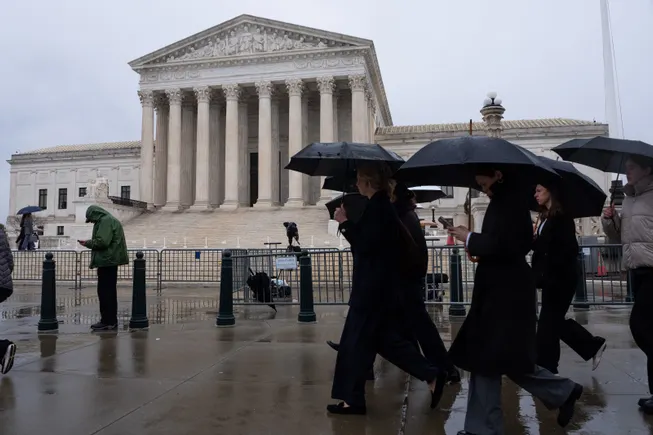
The U.S. Supreme Court last Friday, in a 6-3 vote, rejected President Trump's claim to impose reciprocal tariffs on global trading partners under emergency powers. For contractors in specific segments of the construction industry, this move is expected to bring a "moderate but tangible" decline in material prices.
According to analysis by Anirban Basu, chief economist at Associated Builders and Contractors, price increases for materials such as specialty equipment, HVAC systems, and electrical installations will see a "moderate but meaningful" reduction as a result. The Associated General Contractors of America also stated that contractors should feel some relief in material costs in the short term.
However, the White House quickly responded after the ruling, planning to usealternative tariff measures. The Associated General Contractors of America also noted that industry-specific tariffs on materials such as lumber, steel, aluminum, and copper remain in effect and are unaffected by last Friday's ruling.
Basu warned that, overall, the Supreme Court's ruling "may be short-lived and could be completely offset by heightened market uncertainty during the transition between tariff mechanisms." Such policy reversals often lead owners and contractors to hesitate and wait, which in turnslows down construction project progress。
Ken Roberts, partner and chair of the construction practice group at Washington, D.C.-based law firm Venable, said: "If these tariffs are struck down, but three weeks later the president reinstates them, that will bring more uncertainty to the market. I think the market will take a wait-and-see approach."
Brian Kassalen, principal and construction industry leader at Chicago-based consulting, tax, and assurance firm Baker Tilly, pointed out that as long as businesses can understand the "rules of the game," they can adapt to changes in tariff rates; but without a clear framework, long-term planning becomes difficult. He described: "This 'back-and-forth effect' of tariffs creates a lot of chaos. If the Trump administration turns around and seeks other avenues to reimpose tariffs... that inevitably brings uncertainty, and contractors and project owners don't like that situation."
For projects where tariff costs have already been passed through under contracts, whether funds can flow back depends onthe specific terms of the contract. Roberts reminded contractors not to expect automatic refunds. Brian Turmail, vice president of public affairs and workforce at the Associated General Contractors of America, stated clearly in an email to Construction Dive: "We have been reminding our members for some time that they are unlikely to receive any refunds for materials purchased over the past year."
Synthesizing various viewpoints, although the Supreme Court ruling brings short-term benefits to some material prices, the uncertainty of policy direction may still dampen the momentum of recovery in the construction market. Industry participants need to closely monitor the administration's subsequent tariff alternatives and carefully assess contractual risks.